

Shopping At Best Buy Looked Completely Different In The '90s
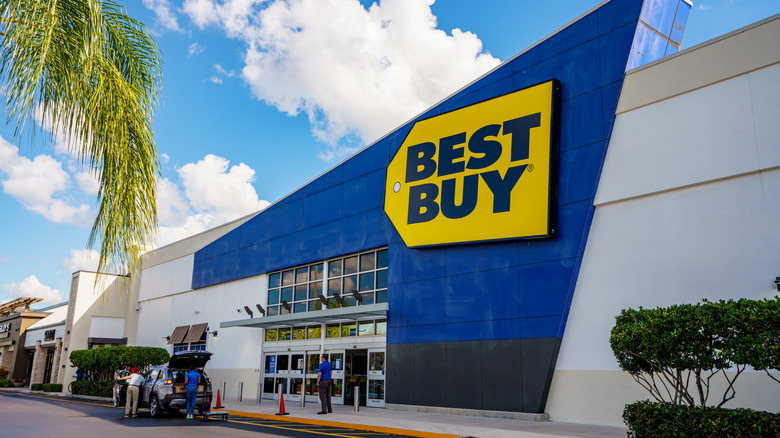
If you walk into a Best Buy today, you may walk by dozens of TVs, a Magnolia section, and a selection of smartphones, drones, and Ring doorbell cameras. A small portion of video games may be in the back alongside a section featuring car radios, but compared to a Best Buy in the 1990s, you'd think they are completely different stores. It was one of the most popular electronics businesses around and one where people would buy the latest tech, gear, and line up outside to get their hands on the latest games and consoles.
You see, shopping at Best Buy back then was an experience. The aisles and check out registers would be bathed in yellow light from the iconic yellow price-tag logo that hung from the rafters. Dedicated aisles contained physical CDs, DVDs, TVs, and video games complete with game stations to play the latest release to try out before you bought it. There was an entire section dedicated to car audio for you to dream about your next stereo upgrade or radar detector purchase, and there was a window to the installation area to watch the installers work their magic.
Today, online shopping has largely replaced physical electronics store, but while rivals such as CompUSA, Radio Shack, and Circuit City have all perished, Best Buy has adapted with smaller stores and new tactics, including Best Buy Tech Fest. Yes, it may be more convenient to shop on Best Buy's website, but there was nothing like browsing aisles of this iconic retailer in the 1990s.
Digital shopping has replaced a lot of that magic
The shift from the '90s to today's more modern Best Buy stores is due to how consumers shop. Shopping for technology or the newest game is all about convenience now, and there are countless ways to shop for a product online. While Capital One data shows that in-store shopping is still the preferred method for consumers and a bigger revenue earner for companies compared to digital shopping, it's not hard to see the impact e-commerce has had on brick-and-mortar retailers over the last 20 years.
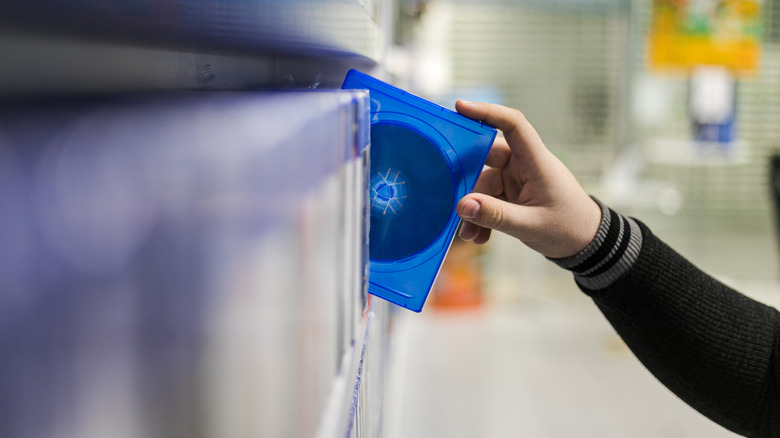
One of the biggest changes for Best Buy is the removal of DVDs, CDs, and video games, once the heart of its stores. here were tangible games you could play and CDs and movies to pick up and read the back of. In 2024, the company phased out physical media both in its stores and online, and this trend appears to be spreading as PlayStation is also ditching physical games. Data shows that in 2023 physical media revenue was at around $754 million, which was much lower than 2022's $1.05 billion, a 28% drop. Now, instead of shelves stocked with movies and music, you are more likely to see smartphones and TVs.
Ironically, this is the exact opposite of what media consumers seem to want, as Gen Z is ditching streaming to get physical entertainment. You may no longer be able to walk into a Best Buy to get a Blu-ray like the 1990s, but the 60-year-old retailer is finding ways to carry on. It's unlikely we will see Best Buy at its '90s prime again, but the company is opening smaller stores across the country in an attempt to bring in new customers.