

These Next-Gen Apple Products Will Be Upgraded To OLED Displays By 2029
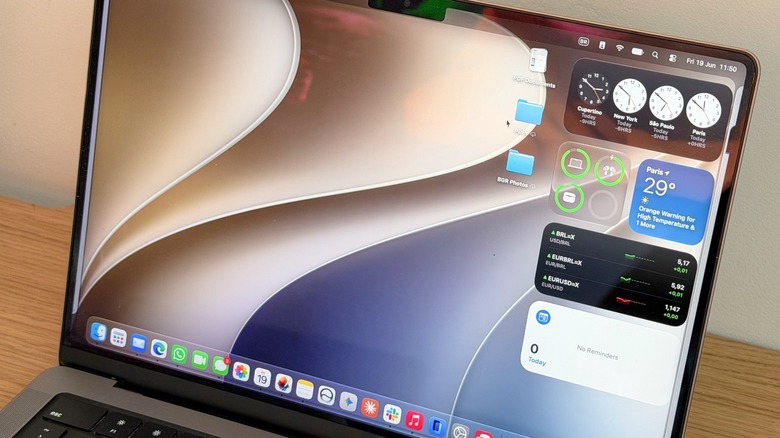
Apple has five new products it wants to upgrade from the current display technology to OLED, as the tech giant pushes more of its devices to show sharper visuals. According to a DigiTimes report, the company plans to update several of its Macs and iPads to this technology from late 2026 through 2029. The iPad mini is currently slated for the revamp in 2026, followed by the MacBook Pro in early 2027. The iPad is expected to receive an OLED display in 2027, with the iMac and MacBook Air seeing the update somewhere between 2028 and 2029.
Currently, Apple's iPhone, the Apple Watch, and iPad Pro have OLED displays. The company started implementing this technology back in 2015 with the release of the first Apple Watch, expanding upon it in 2017 with the iPhone X. Aside from the MacBook Pro, which features a mini-LED display, the other Apple products expected to get an OLED screen in the next few years currently use an LCD panel. With the planned next-gen versions, buyers can expect more accurate colors, higher contrast ratios, and true blacks, as OLED displays use individually illuminated pixels.
New OLED displays come with a catch
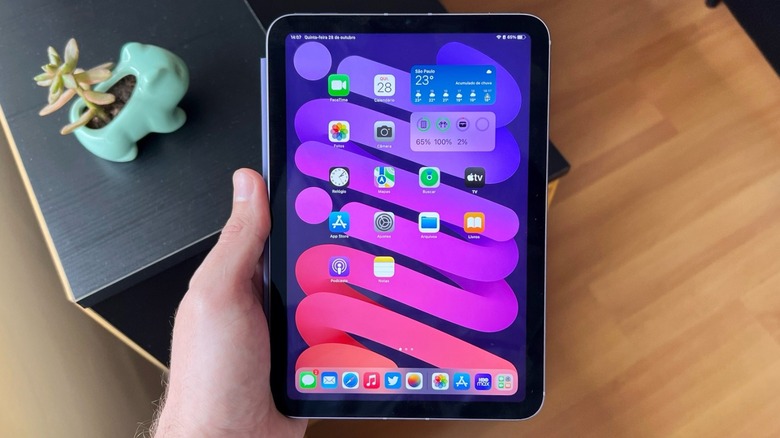
Rumors about the iPad mini getting an OLED display aren't new. However, the panel technology will differ from that found in the current iPad Pro. Apple is expected to use a single-stack low-temperature polycrystalline silicon (LTPS) panel, while the iPad Pro features two-stack low-temperature polycrystalline oxide (LTPO) panels. This means that the iPad Pro has better contrast, viewing angles, response times, and can be brighter. At the moment, it's unclear if the upcoming iPad mini will have a 120Hz ProMotion panel, or if it will maintain the existing 60Hz refresh rate.
Besides that, the processor expected for this tablet is the A19 Pro, which powers the iPhone 17 Pro and iPhone Air, though rumors suggest Apple might go with the A20 Pro chip instead. As for the MacBook Pro with an OLED display, Apple is expected to introduce it with an eighth-generation panel. These OLED MacBook Pro's are expected to feature 5G connectivity and touchscreen capabilities as well. Both devices could be introduced as early as October 2026, given Apple often holds events around this time of year. That said, the next-gen MacBook Pro might skip the M6 chip in favor of M5 units to start.
iPad Air, iMac, and MacBook Air revamps
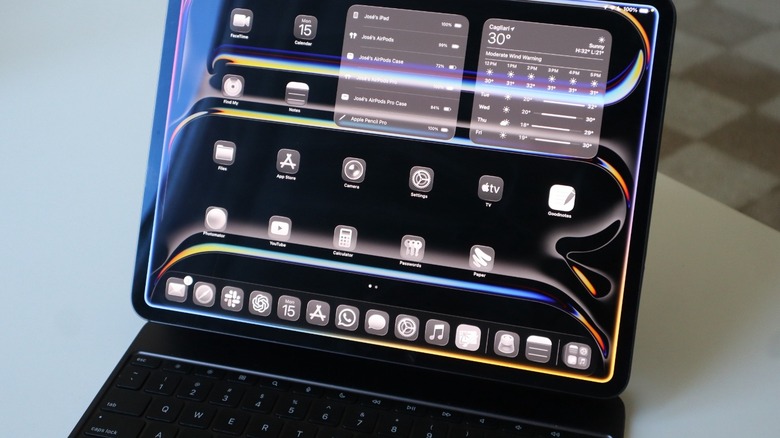
When Apple adds a new display technology, it usually means a revamped product. Though the MacBook Pro has changed over the last five years, in 2021 it was overhauled with a mini-LED display and an all-new industrial design. So, there's a possibility that the company will revise the iPad Air, iMac, and MacBook Air once they receive an OLED display. While these devices may not see the same high-end OLED panel from Pro models, there will likely be improvements compared to the current LCD technology.
For example, with an OLED display, Apple could make the iPad Air its thinnest and lightest iPad. Since the iMac got a redesign in 2021 with the M1 chip, by the time the company adds the OLED panel to this computer, it will have maintained the same design for at least seven years. Finally, it's possible that once the MacBook Air features an OLED panel, it could also get a complete revamp. If we look at how the company handled design with the Apple Silicon Macs, both the MacBook Pro and Air got the M1 chip in 2020 with the same design from the Intel models.
Then, the MacBook Pro received a redesign at the end of 2021, and by mid-2022, the MacBook Air was revamped with a similar design language to the MacBook Pro. With the new Pro model coming in late 2026 or early 2027, a 2028 or 2029 timeframe for a MacBook Air redesign and display improvements seems reasonable.