

I Miss When Smart TVs Used To Be Dumber
Every now and then, a software update can brick a TV. It happened to several of my customers when I was a home theater installer, and the frustration they experienced was palpable. After all, software updates are supposed to enhance your smart TV, not render it useless. And short of replacing the main board, there wasn't much my peers and I could do to salvage a dead TV.
For that reason, my LG C5 OLED is usually offline, as is my bedroom smart TV. I watch movies and TV shows with Roku streaming devices. It's been this way for many years, but I started to feel borderline superstitious. My LG C5 is covered by an extended warranty, so I'd previously decided that I would at least install software updates as they were released; this also meant I'd need to connect my smart TV to the internet.
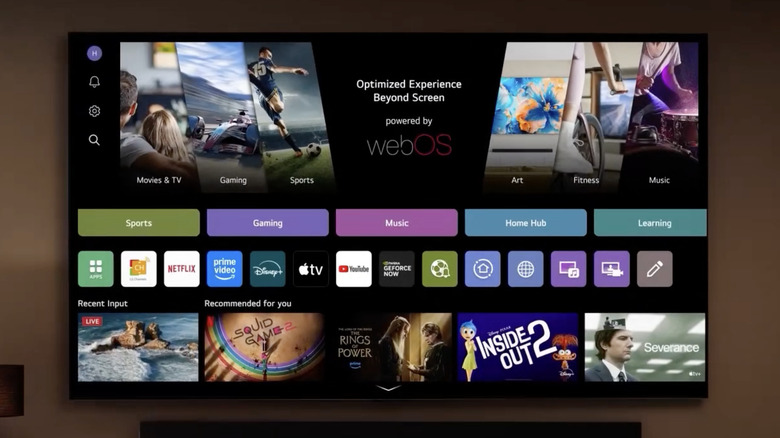
For those unaware, LG's smart TV platform is called webOS. It's Linux-based software that the brand's been optimizing and improving for a long time. One day not that long ago, I was updating my LG C5 and thought to myself, "Let me just quickly see how webOS looks and feels these days." I did so and was instantly overwhelmed and not in such a great way. Compared to the webOS I knew quite well from my installer days, the LG C5's version felt far less simple and intuitive, and much more invasive.
If judging a book by its cover is how you roll, LG's webOS likely won't fare well
Both LG and Samsung use in-house software for their smart TVs; the latter has been using Tizen OS for a minute. Brands like Sony, Hisense, and TCL license third-party TV software, including Google TV, Roku OS, and Fire OS. You'll find major streaming services like Netflix, HBO, and Disney+ across multiple platforms, but it took me longer than I'd like to admit to locate them in webOS. Apps are actually front and center as soon as you load up the interface, but modern webOS is just so packed with UI elements.
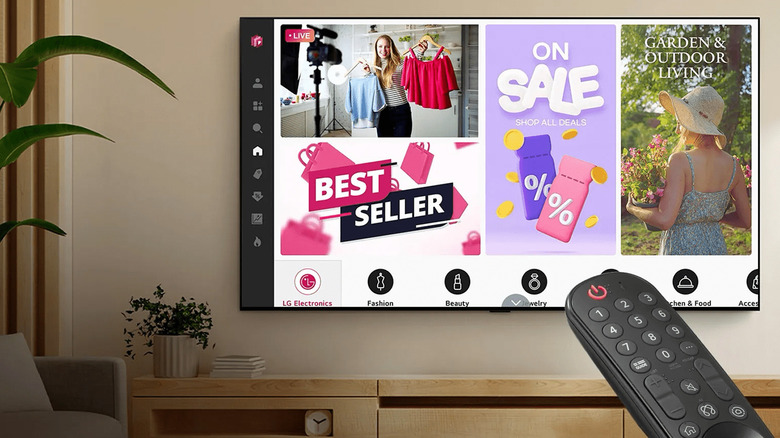
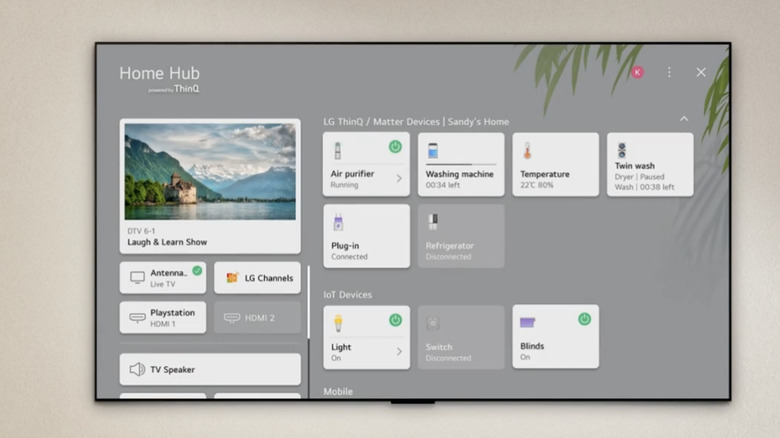
Everything looks colorful, bold, and important. There are numerous app and content tiles arranged in dizzying rows and columns. There's AI this and AI that. There's an entire smart home dashboard, courtesy of LG's ThinQ platform. There's a Multi-View mode for consuming media, picture-in-picture style. There's LG Channels, a free, ad-supported means of watching live TV via an internet connection. There are also ads, and unfortunately, you can't even disable personalized tracking.
Long story short, webOS is, at least in my opinion, uncomfortably stuffed with stuff. It also doesn't feel very snappy, and I imagine that must have something to do with how many moving parts LG's software requires. Even something as simple as navigating from one app tile to another can take several seconds, and for whatever reason, YouTube just refused to launch. TL;DR: modern webOS is too much, at least for me.
The grass isn't necessarily greener with non-first-party smart TV software
As mentioned, I'm a longtime Roku OS user, and guess what? I'm liking Roku's software less and less, too. I used to love the interface, and I still think the brand's app library is one of the best in the business. But at the end of the day, Roku OS is smart TV software, and there's really only one trajectory for smart TV software: smarter. I miss when things were "dumber," and I'm probably not the only consumer who feels this way.
There was almost something endearing about the clunky screens and menus of smart TVs of yesteryear. I honestly can't recommend that we all jump ship, though, because the waters aren't less choppy anywhere else. Apple's smart TV tech, tvOS, is arguably the most polished smart TV OS you can use in North America, but the platform is locked to Apple TV devices. I think Google TV and Roku OS are tied for "next best options," but both platforms are starting to feel overstuffed and less intuitive, especially if they're running on an entry-level TV or streaming device.
Fire OS is my bottom-rung pick, but I'd still choose it over LG's webOS or Samsung's Tizen any day — at least the former is somewhat navigable after you've gotten used to all the ads and Amazon Prime marketing. As for me, I'll be sticking to my guns; no internet for my LG C5 until it's time for my update, and Roku OS shall remain my daily driver until it pushes me away some day.
Nostalgia for an era we likely won't return to
One of the best parts of writing this op-ed was looking back on smart TVs that released nearly a decade ago. LG and Samsung were still using webOS and Tizen OS, respectively, but these earlier versions were complementary to your TV-watching experience, not the star of the show. The LG C8 Series (released in 2018) was a TV I frequently installed, which ran webOS version 4.0. If only we could go back, friends. How I miss the simple bottom ribbon that listed all your favorite apps; how I pine for the days when the interface was broken down into apps, settings, and inputs (my LG C5 remote doesn't even have an input button).
Yes, there were ads, but they weren't shoved in your face from every conceivable direction. Yes, the software glitched once in a while, which sometimes required you to reset the TV. But within the small bucket of bugs was an interface that felt like a true home theater add-on, rather than an attention-grabbing match with you, the user, at the center. Unfortunately, I believe we're too far along now for developers to start simplifying TV software, especially now that AI features and functions are a staple of most smart TV systems.