

Where Should You Put A Motion Sensor In Your Home?
We may receive a commission on purchases made from links.
When it comes to adding a security system inside a home, there are a plethora of smart home sensors every homeowner should have, but the physical location of the system's keypad and motion sensor are two of the most important things to consider. If the keypad is in a bad spot, accessing it can take precious seconds when trying to deactivate or trigger the system, and, likewise, the position of a motion sensor can be the difference between catching or deterring the bad guy or missing the burglar altogether. Motion sensors are essential for tracking anything that moves in a designated area, so it is best to place them in strategic locations.
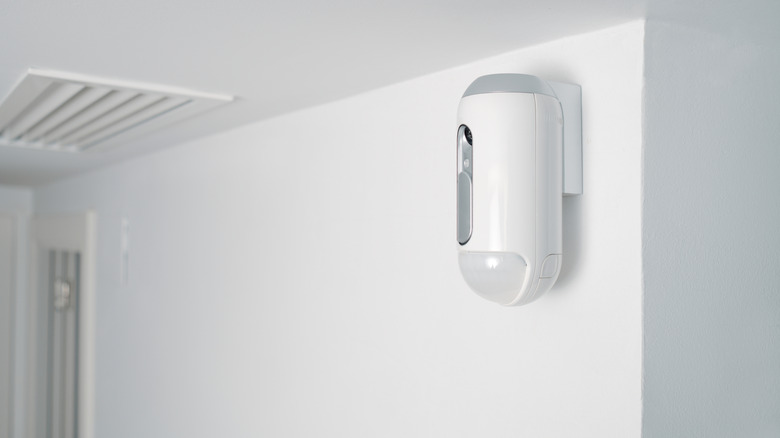
Motion sensors work by using infrared signals, known as PIR sensors, that can detect heat signatures and begin tracking when anything enters its line of sight. Since the sensors are set up in a fan pattern that gets wider further from it, it's recommended to place them in a place people tend to use a lot. Consider putting it in a corner that faces a doorway or high traffic area about 6 to 8 feet off the ground.
Another area to consider is behind valuable objects, which would make the sensor even more sensitive to movement since it would trigger the system anytime that item is moved. Placing a motion sensor near entry points, including windows and basement doors, is also a wise decision.
Where to place motion sensors in your home

A motion sensor is best placed in an area of your home — or outside — that intruders could use to get in. They should be placed in an area with a clear, unobstructed view of the room, and you can even pair it with a security camera to get a visual sense of the field of view. A Reddit thread suggests placing a motion sensor in an area that can capture a person walking perpendicular across its field of view. This way the sensor can track the person's movement as they walk from one side to the other, effectively crossing the entire distance of the motion sensor's viewpoint.
If you expect an intruder can gain access to your home via the front door or a window near it, consider placing the sensor where it could view that entire area. To ensure the area you pick is ideal, you can test the motion sensor yourself to see what it can pick up. Set the motion sensor where you think is best and then walk in front of it as if you were an intruder. If it captures movement, it will go off and the placement is successful. It's just another smart way to use motion detectors around your home.
The types of motion sensors available
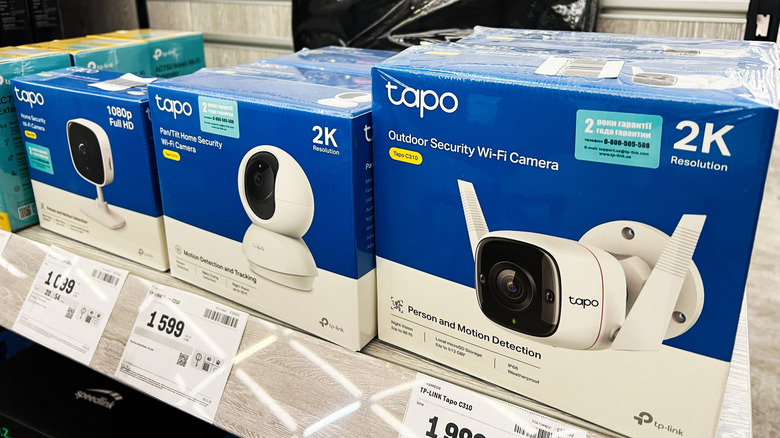
All motion sensors work similarly as they use PIR, infrared signals to detect movement. You may come across both a wired and wireless motion sensor system as well that differ in how they are set up and where they can be placed as ones with wires may be limited on location.
Tapo makes one of the best-rated indoor security cameras on Amazon, the TP-Link Tapo motion sensor. It's also rather inexpensive and costs $17.99 on Amazon. The motion sensor connects to Tapo Hub which connects all Tapo-related devices such as buttons, motion sensors, and lights together to be controlled more easily. It is capable of detecting motion within a 120-degree angle and up to 23 feet away.
The Philips Hue Motion Sensor is another device that can detect motion as part of your security system. It pairs with a Hue Bridge that connects with other Hue products such as lights and Hue cameras. All of this is done over Wi-Fi, and you can even have the lights trigger certain colors when the motion sensor detects movement. It's able to detect motion up to nearly 40 feet away. Note that these products at these prices were available as of this time of writing, and it is best to research to see which specific motion sensor works best for you.