

8 Useful Smart Home Sensors Every Homeowner Should Have
We may receive a commission on purchases made from links.
The march of home automation technology is relentless. Slowly but surely, as you replace your appliances or upgrade your home's core infrastructure, it's likely becoming smarter by default. But what's the point of all that smarts if your system is blind? With no information about your home, having all that brain power ends up being of very limited value indeed.
If you want a smart home that can automatically make changes to your living space or keep you informed about what's going on indoors, you need sensors. These devices measure or monitor some aspect of your home environment and then let you do something useful with that information.
This can range from keeping your environment comfortable to critical functions like detecting harmful substances or problems with your plumbing. Every year, the range and sophistication of these sensors grows, but these examples are probably the closest to essential for anyone looking to take their home into the 21st century for real. Once you have the sensors, you'll find that there are endless clever uses for them around your house. Here are some key areas to focus on.
Water leak sensors
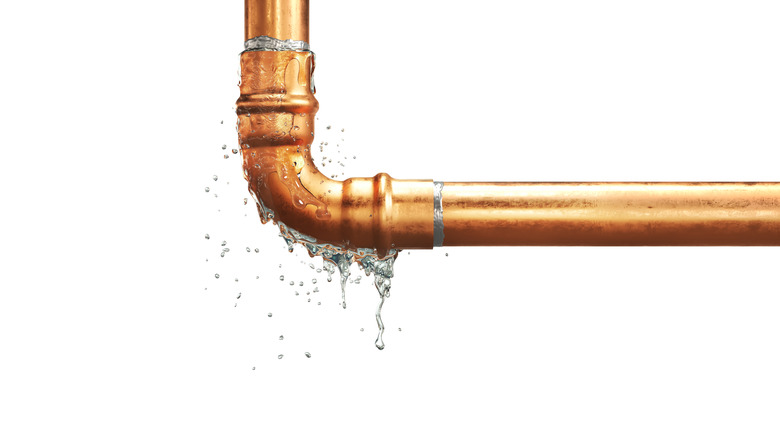
There are few things that can run up your utility (or repair) bill like a water leak that you don't know about. So what if there was a way to detect that your pipes are literally draining your wallet? That's what a water leak sensor is designed to do.
The way these sensors work is absolutely fascinating. While there are some high-end systems that clamp onto pipes and use ultrasonic waves to detect leaks, and some that have a turbine in the water flow to detect unusual flow when the tap is closed, most of the sensors you'll find online work with metal probes on top of and below the sensor. The probes below can detect flooding. As soon as both probes are connected by pooling water, it completes an electrical circuit, and the alarm is triggered.
If the sensor also has drip detection, it will have probes on top, and as water drips down on it, this will also trigger the alarm. This smart home upgrade can definitely save you money, and smart leak detectors like Aqara's Zigbee water leak sensors are fairly affordable. If one of these gadgets detects a leak before it becomes a flood all over your house, the value of that damage prevention can run into the thousands of dollars. Keep in mind that some sensors require the purchase of a smart home hub, while others can connect to your home network directly via Wi-Fi. If you're going to install a lot of them, going for a hub-based solution often works best.
Door and window sensors

Have you ever driven off and wondered if you actually closed your back door before you left? For anyone who uses their Ring camera to check if they remembered to close the garage door on a regular basis, this is a scenario that comes up all the time. Luckily, contact sensors that can tell you if a window or door is open have been around for ages. They're a staple of traditional alarm systems and work with magnets. The sensor consists of two parts, linked by magnetism. A permanent magnet influences a Hall Effect sensor or a reed switch. When the door or window is opened, the two parts move too far apart, and the magnetism becomes much weaker, resulting in the sensor letting you know the door or window is open.
The smart version of this technology simply adds wireless connectivity to a smart hub or a standard network connection. This gives you instant information about which of your doors or windows are open or closed at any given time, wherever you are.
Obviously, these sensors can still perform a security function, but once you have this information, it can be integrated into custom automations. For example, if the door to a room is open, you might set it up so the air conditioner doesn't turn on. If you think a little outside the box, there are numerous clever ways to use door sensors around your house.
Motion sensors
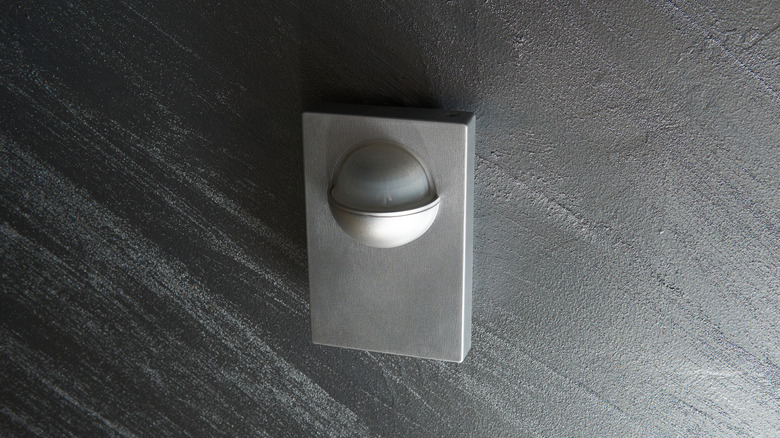
Like door and window sensors, motion sensors are another classic technology that long predates the modern smart home. We've been able to buy outdoor lights with motion sensors for ages, and of course, passive infrared (PIR) motion sensors like the Aqara Zigbee 3.0 are a key part of alarm systems, smart or otherwise. Indeed, PIR sensors are the most common type used for in-home security setups. These devices essentially look for body heat, and they're decently effective and affordable.
However, there are also microwave sensors, but don't worry — they're not designed to cook intruders or anything. Instead, these devices send out very low-power microwaves, and when something (not just a warm body!) moves in the sensor's range, it detects it through changes in the reflected radio waves. Microwave sensors are interesting and useful partly because they don't depend on heat or visible light. This means you can put them behind anything that microwaves can pass through, making it easy to hide them.
Ultrasonic sensors, on the other hand, use high-frequency sound to detect motion and work just like the parking distance sensors in your car. There are also dual-technology sensors that include more than one type of sensor to make a false alarm less likely, but of course, these cost more. All in all, there are several smart ways to use motion detectors around your home. You can automate your lighting, track your pets, or set alerts so you know when someone's home. Any automation where motion can be the input will benefit from having the right motion sensor.
Presence sensors
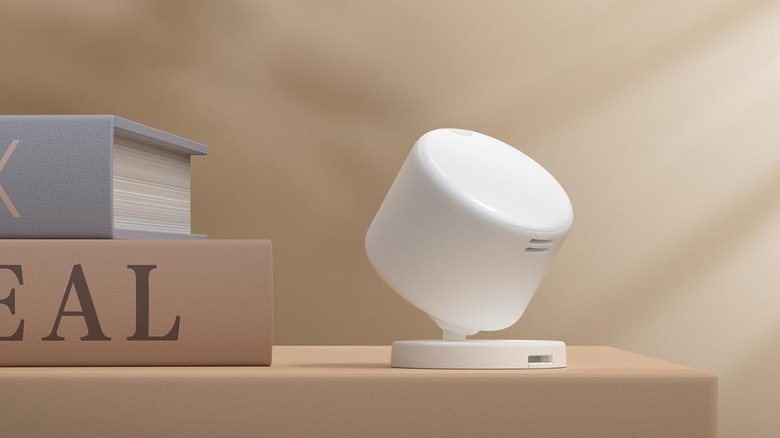
The microwave sensors we just discussed use radio signals in the single-digit-gigahertz range, but presence sensors push that frequency into the tens of gigahertz. This significantly reduces the distance range at which these sensors work, but also massively improves their precision. That's why this millimeter-wave technology can be used for presence sensors.
Motion sensors detect a change in something like IR or microwave signals, but those changes need to be relatively large. If you stand very still, then the sensor won't know you're there. This is why automatic lights with motion detectors will turn off eventually if you don't move around enough. A presence sensor, though, is precise enough that it can detect you even if you try to hold very still. That makes it perfect for controlling events you want to happen while someone is in a room. If there are no people in a room, then you can change the climate control, switch off smart plugs, and disable the lights. With a comprehensive presence sensor network in your home, you can dynamically automate your home so that no one ever has to manually touch any controls, while you never waste electricity on empty rooms.
You can get really creative with these sensors, too. For example, when we reviewed the Aqara FP300 presence sensor, it was mighty impressive at its main job, but it also shows how you can combine additional environmental sensors to craft sophisticated automations built on multiple data points.
Air quality sensors

How often do you think about the quality of the air you breathe? Unless someone is burning the cooking next door or you live in a very smoggy city, you probably don't think about it at all. Yet low air quality caused by pollution is responsible for a staggering amount of illness around the world. Some of that pollution, like car exhaust or industrial byproducts, makes its way into your home from the outside world. And you might even be contributing to your own air quality problems without even knowing it. For example, scented products release as much air pollution as your car.
This is one silent killer you'll want to make visible, which is why air quality monitors are an essential modern sensor to have in your home. For example, Ring makes an air quality monitor that works with Amazon Sidewalk and can track temperature, humidity, carbon monoxide, and particulate matter. However, this is not a CO alarm and should not be used as one.
If your air quality sensor shows that things aren't right, then you can do a few things about it. For example, the Smartmi P1 Air Purifier we reviewed a while ago will remove particulate matter from the air in a room, improving its quality. Some air conditioners also have air purification built in. If you have the right smart setup, you can even automate the activation of air purification when your air quality numbers hit a specific threshold.
Smoke and carbon monoxide detectors
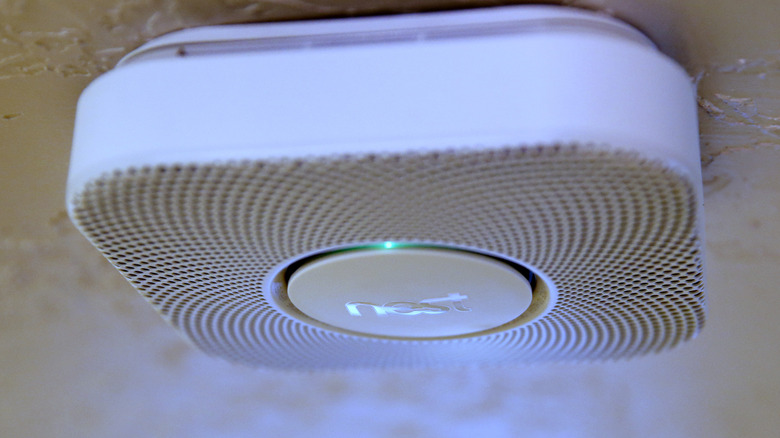
Even though air quality monitors can detect particulate matter and carbon monoxide (CO), you'll notice that their manufacturers put a disclaimer in the product information that these devices cannot be used as CO or smoke alarms. That's because there are legal regulations for these types of alarms.
Smart smoke and CO detectors are actually a little complicated to understand. You'll see modern wireless smoke alarms like the X-Sense Interconnected Smoke and CO Detector, but these devices form their own mesh network instead of connecting to, for example, your Zigbee network or Wi-Fi. They have sealed batteries and have to be replaced when the battery runs out. The point of the wireless mesh is that all alarms go off when one detects smoke or high CO levels. If you wanted to get a phone-based alert from sensors like these, you'd have to combine them with something like the SimpliSafe Smoke & Carbon Monoxide Alarm Listener, which literally uses a microphone to detect when these alarms go off, and then alerts you.
However, a device like the Kidde Hardwired App-Enabled Smart Smoke and Carbon Monoxide Detector does have its own smart capabilities. Unlike most sensors in your home, these devices will only ever go off if they detect an emergency situation, so it makes sense that you don't need constant updates. That's also why it's useful to have a separate dedicated air quality sensor that will show you CO levels live, not just when they cross the line.
Energy monitoring sensors
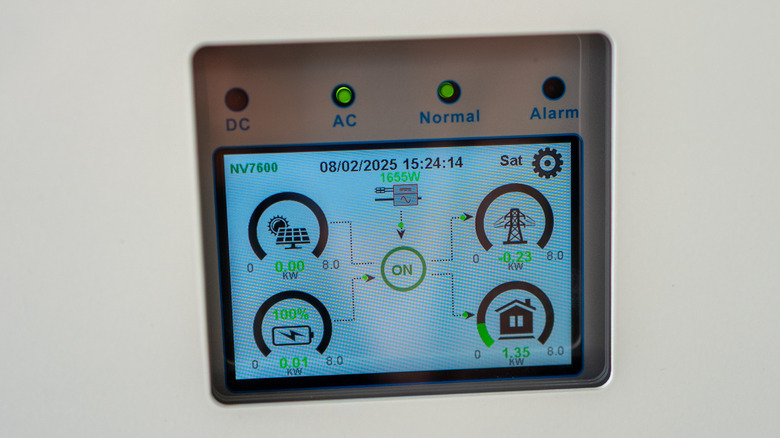
No one likes a nasty surprise at the end of the month when the power bill arrives, especially since power just seems to get more and more expensive as time goes on. People who have solar power setups or smart electric meters already know the joys of having their exact power consumption data available at their fingertips, any time they want it. Luckily, energy monitoring sensors fit this bill for the rest of us. Once you can see how much power your house is using, it makes it far easier to identify waste ... and hopefully save some money.
There are a few ways to go about this. With a device like the Shelly EM Gen3 +, you wire the energy monitor into your electrical distribution box (where all your breakers are) and then connect the clamp sensor around your main supply. Then the device connects via Bluetooth or Wi-Fi, and you can get detailed logs or real-time views of your power usage. This is best done using a professional, certified electrician to perform the installation.
The Meross Smart Energy Consumption Monitor is in the same place (with your breakers), but in this case, there are up to 18 individual clamp sensors, which give you a much more granular view of your energy consumption. For example, this setup could allow you to separately monitor the power usage of your EV charger or pool filtration system. The potential savings of having this information are enormous, and it's a one-off cost, so it could even pay for itself in short order.
Glass-break sensors
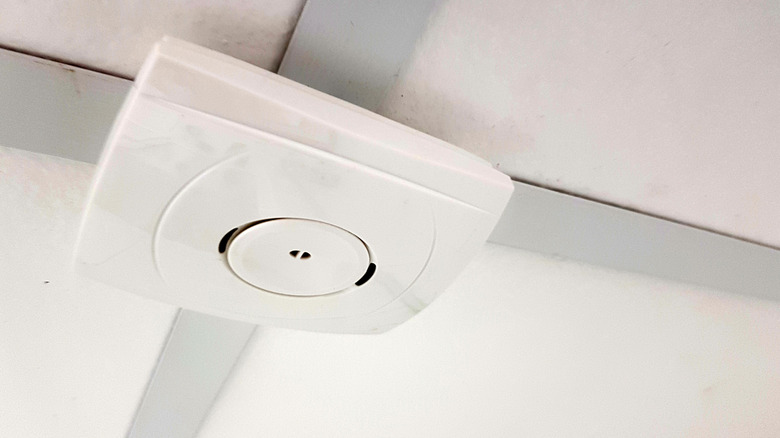
The last useful sensor we have on this list is the humble glas- break sensor. These are interesting because they don't make contact with your window, but are effectively a microphone tuned to listen for the distinctive sound of glass breaking. An intruder might get around a window-opening sensor by breaking the glass itself, but this sensor will hear that breakage and raise the alarm.
Of course, these sensors don't have to be smart and connected to anything, as some are just standalone devices. However, something like the Ring Glass Break Sensor can be hooked into your smart home system as a whole, and that means you can make it part of custom automations.
You might be surprised, however, to learn that you might already own a glass-break sensor without knowing it. Both the Amazon Alexa (via Alexa Emergency Assist) and Google smart speakers (via a Google Home Premium subscription) can use their microphone arrays to detect glass breaking. Not only that, but these devices can listen for smoke or CO alarms too. Once they detect these sounds, you'll get an alert, and whatever automations you've linked to that event can play out as well. There are still reasons to buy dedicated glass-break sensors (they're cheaper than a house full of Alexas!), but if your windows are in range of all your applicable smart speakers, it's a nice bonus.