

How Cellphone Service Prices Have Changed Since The '90s
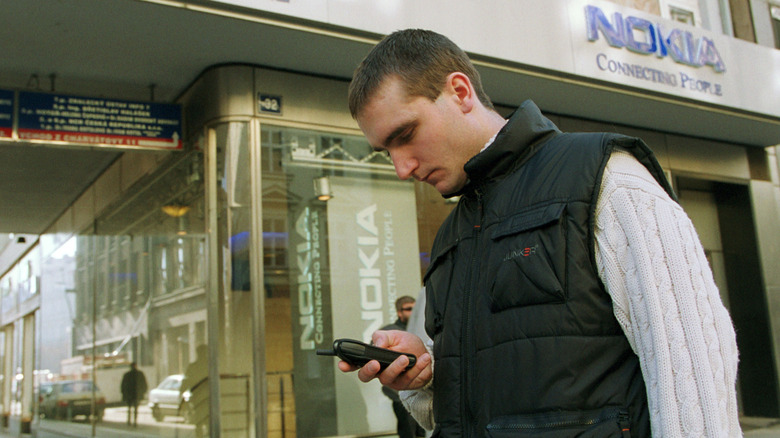
The world's first mobile phone call was made on April 3, 1973, and by the end of the century, there were 86 million wireless subscribers in the U.S. Fast forward to today, and now there are more than 400 million accounts. Along the way, many things have changed about how we use our cellphones, and one of the biggest changes is how we're paying for it.
The 1990s was a decade of whirlwind change in the tech industry, and that was especially true when it came to mobile phone service. Wireless telcos faced stiff competition with a rush of local players like Houston Cellular, Bell Atlantic, and NYNEX taking shares in their respective markets before they were eventually gobbled up in constant succession to become the Big Three of cellular service: AT&T, T-Mobile, and Verizon.
Back then, though, a crowded field and changing technologies — text messaging between networks and mobile internet access debuted in 1999 — meant that rate plans, add-ons, and fees were never the same between any two carriers. For the average consumer, though, it wasn't gigabytes or texts they were paying for: it was call minutes.
How much did cellphone plans cost in the '90s?
A couple of snapshots illustrate how quickly prices changed. In 1997, Comcast-owned MetroPhone published brochures advertising monthly plans on its fresh digital network for $20 (or $42 when adjusted for inflation) for 15 minutes of talk time — beyond that, local rates of 10 cents per minute during off-peak hours and 40 cents at peak times. The more you pay, the more free minutes you get, and the lower your peak local overage rate is — though your long-distance and roaming rate will still be 55 cents a minute.
In 1999, Mother Earth News sampled plans that were slightly more generous: $30 ($60 today) could get you 100 or so minutes in a month, but you could also pick up a dedicated package of 500 or more minutes to use during evenings and weekends for an extra $7 to $10 a month. Of course, overages and roaming charges still applied as well as other nickel-and-dime fees for voicemail access, account maintenance, and other random bits and pieces. And when text messaging became a thing, that was an extra charge!
In the 2020s, we've been spoiled by cheap wireless plans that includes unlimited texting and long distance, but there will be some of us who gravitate towards those luxuriant $100 plans with bundled extras like streaming subscriptions. Keep in mind most of us aren't paying for landline telephone service along with our mobile bill anymore, so there is a decent amount of savings in that regard.
How much did cellphones cost in the '90s?
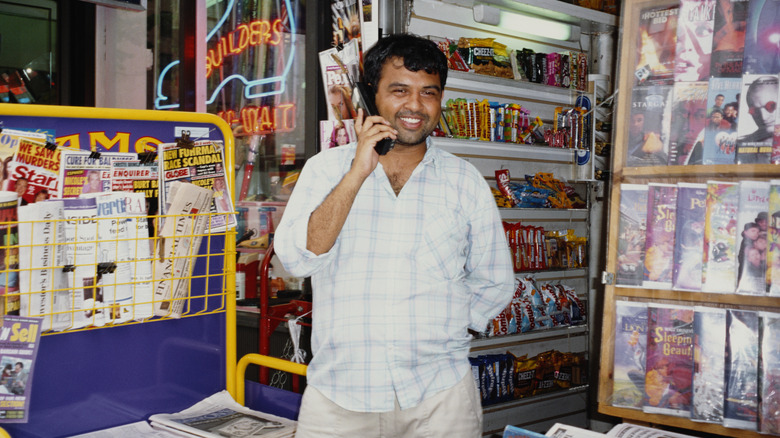
Similar to today's phone plans, wireless carriers subsidized the sale of cellphones in the '90s to get you onto their networks and paying for all those minutes and fees. They weren't quite as flashy as the free phone deals (with new line of service on an eligible service plan, applied through monthly credits on an equipment installment plan) we have today, but the discounts were still fairly substantial.
Defunct electronics retailer RadioShack, which produced and sold its own-brand devices alongside ones from Motorola and Nokia, was happy to knock off $300 from the full price if you activated the device with service at the store. Subsidized prices as advertised in a 1999 catalog ranged from free up to $50. A former Sprint customer posted their first bill from May 2000 on Reddit which featured a $200 charge for a nondescript phone. The highlight feature on these phones? Maybe not the LCD or seven-segment displays, but how many phone numbers they can save in their memory.