

Who Owns Poco, The Android Phone Brand?
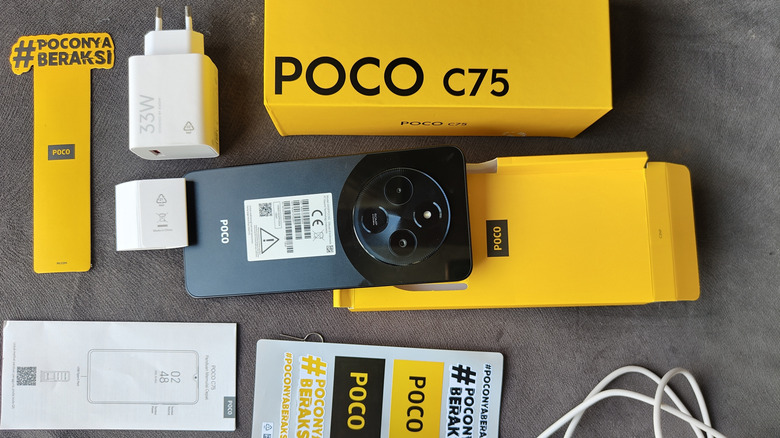
The moment you start looking at Android phones beyond the big manufacturers like Samsung and Google, you're in a colorful world of brands that often seem confusing. For instance, peek at phone brands owned by Chinese companies, and you'll quickly notice that a bunch of them started life under the umbrella of bigger companies before being spun into separate brands. Remember when Redmi used to be Xiaomi's product line? Well, Xiaomi still owns Redmi, but it operates as an independent brand. If your memory serves you well, POCO used to be a Xiaomi model too. Are POCO and Xiaomi the same today?
The story is nearly identical to Redmi's. Xiaomi, the famous Chinese phone company, still owns the POCO brand. In 2018, Xiaomi released the first POCO F1, which made waves in the industry. Designed as a high-end phone sporting all the best specs of the day, it gave Samsung Note 9 a run for its money at a significantly lower price. POCO quickly became famous, and after just two years, Xiaomi spun it into an independent brand. Much like Redmi became a budget-to-mid-tier phone brand for the manufacturer, POCO focuses on delivering powerful specs in a more affordable package.
POCO went "solo" to push original designs and has a completely different marketing and sales team from Xiaomi. However, the brand shares manufacturing and after-sales resources with its parent company. POCO products are most likely made at Xiaomi's Beijing plant, and some products may also be assembled in India, where Xiaomi is one of the top manufacturers.
Are POCO, Xiaomi, and Redmi phones similar?
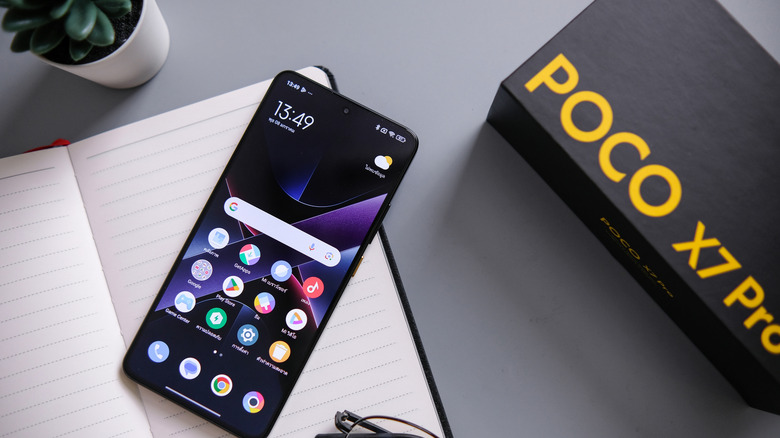
Xiaomi is more than just a phone manufacturer, since it has branched out into everything from kitchen appliances to electric vehicles. Nonetheless, all of its smart devices (including wearables) use the same operating system: the Android-based HyperOS, formerly MIUI. The similarities don't end there. Smartphones coming out of Xiaomi's factory are generally reliable on both the hardware and software front, but may suffer from a short update window. This is apparent when stacking Redmi against POCO, both of which get around two years of updates.
The similarities don't end there. When POCO went independent, the brand's promises included the phrase "Technology that matters", leading many to believe that the brand would only push out original stuff. While this is mostly true, Redmi and POCO share related DNA, which isn't that surprising. For instance, models like the Redmi K90 Pro and POCO F8 Ultra used the same Snapdragon 8 Elite 2 processor and were bundled under the codename Myron.
Shady? Not exactly, as this information is public. Despite a few variations, mostly in terms of battery capacity, the POCO X8 Pro was a rebrand of Redmi Turbo 5 (which was marketed for the Chinese territory). In the same vein, POCO F7 was rumored to be a K80 in disguise ahead of the former's release. In the end, the model differed from its older brother in4terms of certain specs. Some were supercharged, while others were nerfed to keep the two phones aligned with different brand strategies. Makes sense: why waste extra R&D resources when you can make a few tweaks and deliver two different products for different types of consumers?