

Raspberry Pi's New Programming Jig Lets You DIY Your Own Computer Factory
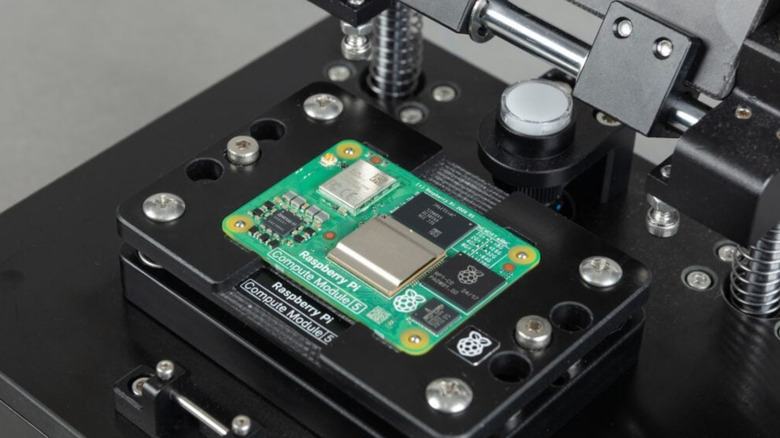
The new Raspberry Pi Compute Module 5 Programming Jig is a fairly unique product from the single-board computer company. Specifically designed for the Compute Module 5 variation of the Pi lineup, it's intended for bulk flashing the module when prepping it for various projects. Devices like this have existed for years, allowing companies like Apple to update iPhones in the box en masse.
So why would anyone need it? Well, the CM5 differs from other Raspberry Pi devices in that it requires a carrier board to gain access to inputs and outputs. Without that, it would require the user to insert the CM5 into a carrier board one at a time if they wanted to flash in bulk. Raspberry Pi has designed the Jig to allow the Compute Module 5 to sit flush, with metal connectors on the base of the CM5 registering with those on the Jig. Once powered on and set to work, it'll flash the CM5 to the specifications required by the project.
As detailed in a Jeff Geerling video, current offerings in the same space are only rated for 30 insertions before they degrade. Geerling also showed how the CM4 was being flashed, hammered into a board, flashed, and then sent down the conveyor belt. It's possible that Raspberry Pi itself was having reliability issues with this method, hence the new non-hard connection method with the Jig.
Raspberry Pi's Programming Jig probably isn't for you
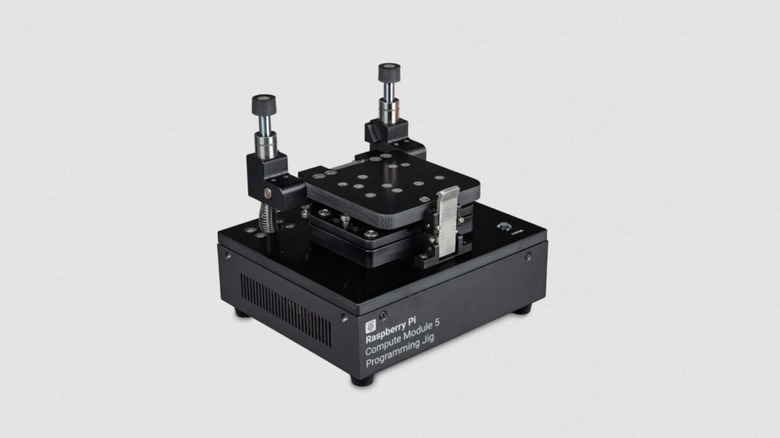
The Compute Module 5 Programming Jig is regularly priced at $600, but already has a markup on the U.S. site, PiShop, raising that number by $150. It's highly unlikely anyone on the consumer side of things would ever need this, as most of us with a CM5 for tinkering will rarely move to needing mass flashing. Plus, getting hold of any Raspberry Pi hardware at a reasonable price has become nearly impossible thanks to RAMageddeon, so it'll be interesting to see if this product moves any needles for makers in the retail space.
However, aside from the carrier boards and other similar setups, the Jig is actually relatively cheap in comparison to another brand. Everypin has a $2,500 (€2,200) jig of its own, which is open-source. Outside of that, there was also the Balena Etcher Pro, which can flash multiple USB devices at once for operating system installs. This is now end-of-life.
Handily, Raspberry Pi has already released some extensive documentation if you're curious about the Jig in any further capacity. Maybe once things get back on track with RAM and storage production, these will come in handy for some projects.