

Why Are The Most Powerful Graphics Cards So Expensive?
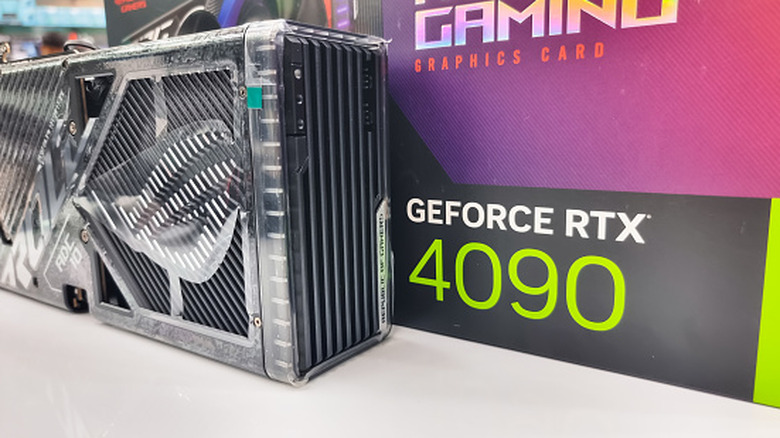
Unfortunately, if replacing your aging graphics card was on your itinerary for the year, you're probably out of luck. The memory shortage we can thank AI for has pushed prices to the stratosphere. For instance, a GeForce RTX 5070 Ti (a powerful graphics card that outpaces consoles like the PS5 by a wide margin) is priced north of $900, a price hike of over 36% when compared to June 2026 — not to mention that the card originally launched at just $549. Of course, the RAM crisis is clearly the main culprit in why graphics cards are so expensive now, but it started way before AI decided to eat all our memory.
Stating the obvious: graphics cards are complex. At the heart of a top-of-the-line GeForce RTX 5090 (a card that had a launch MSRP of $1,999) is the GPU, a dedicated processor that performs graphics rendering. A graphics card also has its own dedicated memory. In the case of the aforementioned RTX 5090, you get 32 GB of VRAM to work with. Other components include an I/O interface, a printed circuit board, a cooling system, and even its own BIOS. When you think about it, this is its own little computer, so it's always going to cost more than just one processor.
You also have to account for the extra costs that come from third-party manufacturers. GPU manufacturers like AMD and Nvidia sell their chips to third-party companies that ultimately produce graphics cards and add their own custom components like PCBs and coolers. Add on top of that the price increase, courtesy of cryptocurrency mining and component shortages stemming as far back as the COVID-19 pandemic, and that's why powerful graphics cards have been akin to solid gold for almost a decade.
How graphics cards became more expensive over the years
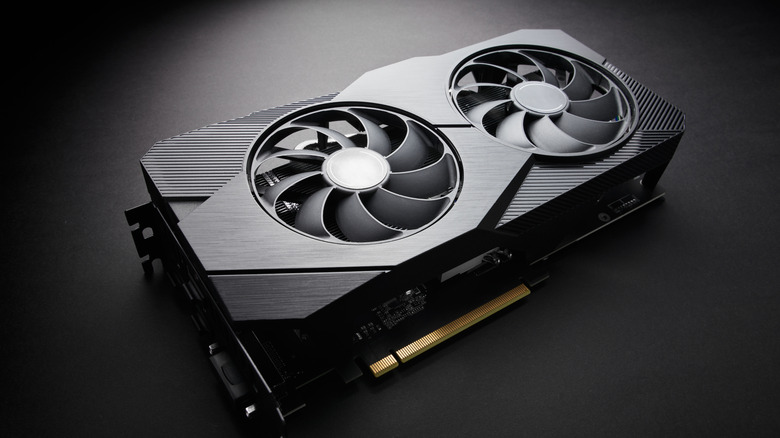
Speaking of cryptocurrency mining, it refers to creating new crypto coins by validating transactions on the blockchain networks. As bad luck would have it, graphics cards speed up this process. Around 2017 or so, cryptocurrency miners began to purchase multiple cards and run them in parallel to validate blocks faster and boost their profits. This led to significant shortages and, consequently, a massive spike in price. By how much? A GTX 1080 Ti card originally cost around $900, but the growing demand pumped its price to $2,700 at one point.
Only a few years later, the COVID-19 pandemic hit and decimated supply chains even further, which certainly didn't help the already existing component shortage. The world eventually recovered, but the prices never went back to the way they were before. People continued buying graphics cards even when things were at their most extreme, so a great deal of retailers and manufacturers never bothered to adjust their pricing. Ultimately, supply and demand with a dash of greed took over, and high-end graphics cards costing over a thousand dollars became something gamers grew to accept.
It's impossible to tell when (or if) the current memory crisis will end. An RTX 5090 is over $4,000 (the price of a used early 2000s Toyota), so if you didn't build an elite gaming rig before this last price hike, you're likely too late to the race — unless you mind cashing out a premium, that is. Fortunately, GPUs can last a long time according to owners, meaning that even if you've got something underpowered, you can still play plenty of fun games until the memory crisis blows over, or at least when things get a little bit more affordable.