

Making A Spreadsheet With '80s Tech Looked Totally Different Than Today
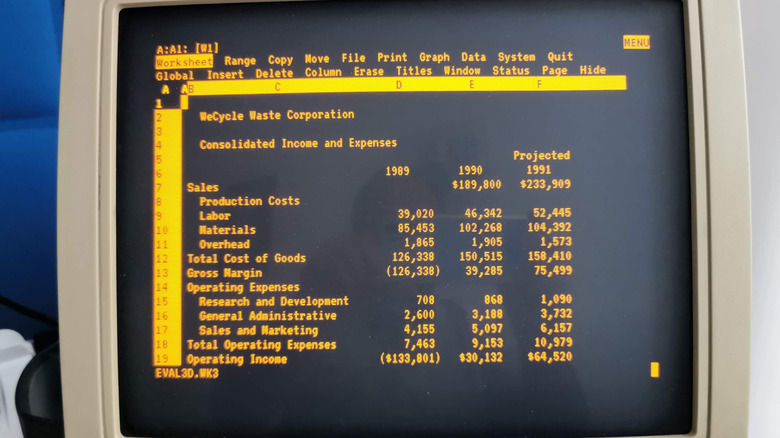
Spreadsheets were a key selling point of personal computers in the '80s and '90s as a quick, easy, and accurate way to fill out reports and track data. One of the first spreadsheet programs was VisiCalc on the Apple II (also coming to other 8-bit machines), becoming one of the primary selling points of Apple's second computer. As the PCs from the '70s, like the Apple II, often used monochrome, the program is often viewed today in black and green. That said, you can see the foundations of modern software like Excel or Google Sheets (which still have their differences) starting to form here. The lettered columns and numbered rows are present, and formulas were started with a + instead of =.
What you will notice is the lack of traditional "windows," with graphical desktop interfaces a hot-button issue through most of the late '80s and early '90s, before modern operating systems totally figured it out. Windows and Mac OS hadn't solidified the desktop environment just yet in the general public. Hence why VisiCalc's killer, Lotus 1-2-3, despite being far more advanced than its competitor, still looks like raw terminal output. That was what graphical user interfaces were before standardization.
Microsoft Excel is the best, but meet the rest
Lotus 1-2-3 reigned supreme for years, becoming the dominant spreadsheet software through the rest of the 1980s. Others popped up, including SuperCalc and Multiplan, the precursor to Microsoft's Excel. These all followed from VisiCalc and Lotus 1-2-3's design ethos, which was a major reason for Lotus taking over. With more features, but a similar interface to that of VisiCalc, bringing users over was fairly easy.
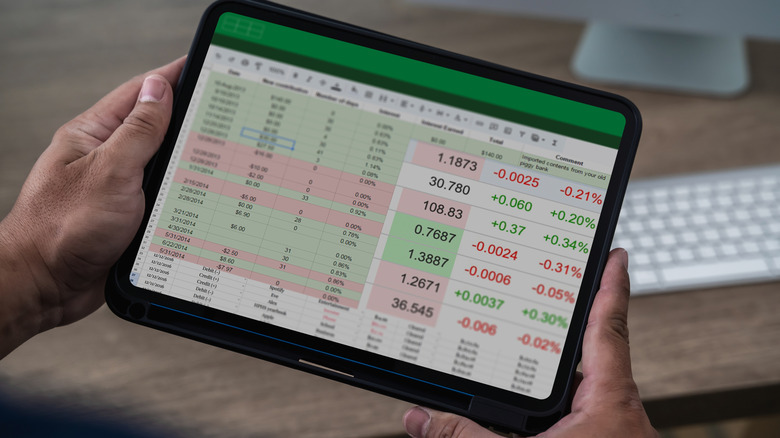
Once graphical user interfaces became more mature, the software available became far more readable. One element missing from early spreadsheet software is readability. Everything still belongs in columns and rows, but there are no lines or visual indicators for easy reading. Even menus were just "hovering" above. However, Lotus couldn't hold onto the crown forever, as Microsoft developed its successor to Multiplan.
The true "winner" of the spreadsheet wars wouldn't emerge until 1985, with Excel debuting on Macs first, and then Windows in '87. Excel immediately gained popularity thanks to its clean user interface and various features not seen on Lotus 1-2-3 or Multiplan. Here, the general look of spreadsheet software was effectively finalized, with the only major overhauls coming from Microsoft's Ribbon menus with Office 2007, which is still a disadvantage for some users.