

4 Popular Action Camera Brands, Ranked

Action cameras gained popularity in the early 2000s when GoPro introduced the Hero as a simple, small, and rugged 35mm film camera that could be taken along on outdoor adventures to capture photos in almost any condition. When the digital version came out in 2006, simply known as the Digital Hero, it started what would become an epic chapter in the history of videography. Outdoor and adventure enthusiasts could capture moments from a first-person perspective like no other camera has been able to do in the past.
GoPro dominated the action camera category from the early 2000s until 2019, when DJI entered the market with the Osmo Action. Since then, other brands in this category such as Insta360 and a slew of other cheaper brands became available, but it was always going to be tough to dislodge GoPro from its dominance in the category it created, and only a few brands were able to keep up (and in some cases exceed) the GoPro's quality. We researched the different action camera brands, and came up with a top four, ranking them from worst to best in this category. Here are our top picks.
4. Akaso
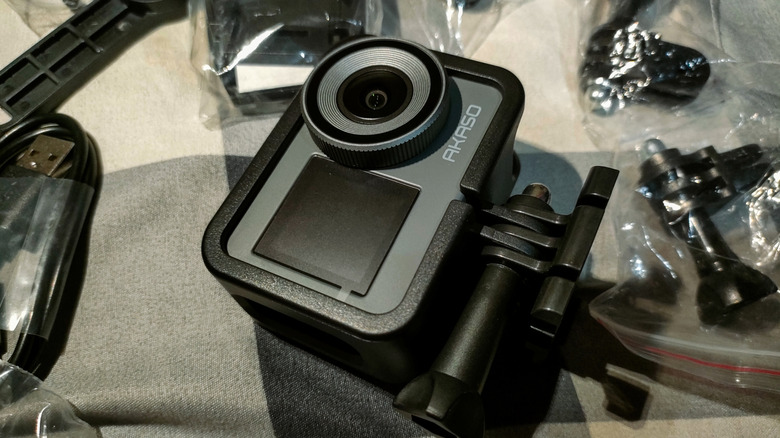
Akaso's pitch has always been to offer a GoPro-spec action camera at a much lower cost, and if you looked at the price of the line up and the specs, it would be easy to see where Akaso had the potential to disrupt the market, that is until you had some hands-on experience with the brand. Akaso is a Shenzhen-based action camera brand that launched in 2016, building industry-standard parts into an action camera format. The Akaso EK7000 was first launched as a direct competitor to the GoPro Hero 4, but was priced at $60, which was a fraction of the Hero 4's price at $499. It came with 4K, 25-30 fps capability, a 20MP camera, 170-degree field of view, and waterproofing of up to 98 feet.
The Hero 4 at the time had similar specifications, which lagged behind the Akaso in terms of still camera pixel density. The specs were good on paper, but didn't translate into a superior-quality product. Besides the fact that GoPro had super image processing capability, Akaso couldn't beat the GoPro's app ecosystem, and fell short on build quality. Today, Akaso's Brave 8 is the brand's best shot at competing directly with the GoPro Hero 13 Black, and even though it matches or beats the GoPro Hero 13 Black on spec, it falls short on the mobile application, image stabilization, and GoPro's extensive accessory ecosystem. Akaso also recently entered the 360 market, offering the Akaso 360 as a cheaper alternative to the Insta360 X5, but lags behind it in terms of battery life, video capture, and waterproofing. Akaso ends up last on our list, as the lower price is nice but can't justify its shortcomings versus its competitors.
3. Insta360
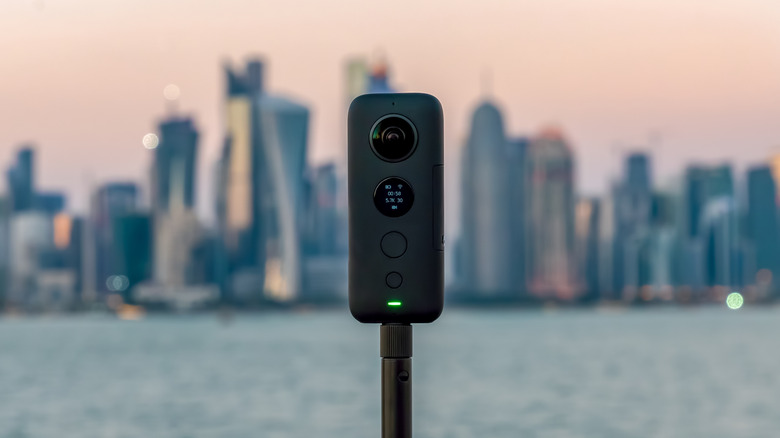
Insta360 comes in at third on our list as the brand that shaped the 360-degree action shooting category, pitching a "shoot now, frame later" product that has proven quite versatile. The company entered the action camera market in 2017 with the Insta360 One, and initially occupied a niche that was underserved among its competitors. The Insta360 One came out with a 4K 30fps 360-degree camera with a lower resolution 60fps mode. Its real strength was its mobile application, where 360-degree footage could be edited and the point of view adjusted throughout the video as needed.
Today, Insta360 has an extensive line of camera platforms, and has the Ace Pro 2 that competes directly with the GoPro Hero 13 Black and DJI Osmo Action 6. It offers comparatively good video and build quality and falls into the same price range. The Ace Pro 2 can be considered alongside the models from GoPro and DJI, but lags behind these single-lens models in terms of waterproofing, heating while shooting at 8K, and accessory ecosystem . Insta360's X6 is its modern-day flagship that now dominates the GoPro Max 2 and DJI Osmo 360, and still sets Insta360 apart from its rivals in terms of 360 degree shooting and post-capture processing.
2. DJI
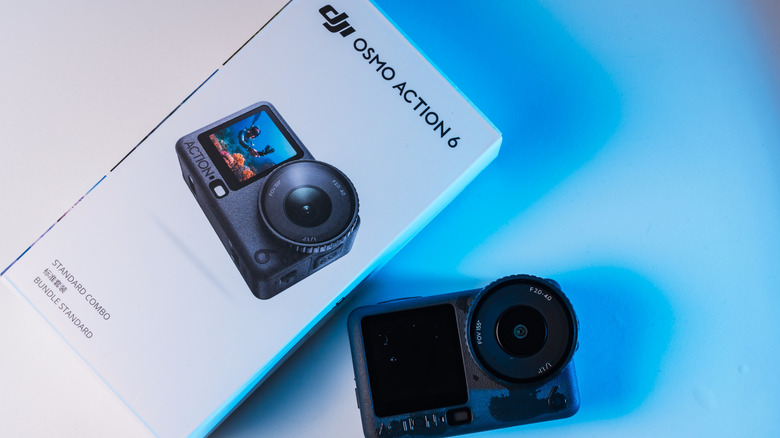
DJI came in second place on our list as a consumer drone manufacturer that started producing action cameras that today offer better quality than GoPro's Hero 13 Black. DJI launched its first drone in 2013, but the Phantom 1 was built to carry a GoPro. That dependency was quickly removed when the Phantom 2 arrived with DJI's first gimballed camera. The DJI Osmo Action camera was announced as a direct rival to the GoPro Hero in 2019. DJI had cut its teeth on camera technology on its Phantom drone series, and took on the action camera category as part of its market expansion strategy. At the time, the Osmo Action compared well with the GoPro Hero 7 Black. Both the DJI and GoPro models came with 4K 60fps video and 12MP still camera capability. Both models had good stabilization, but the Osmo Action was behind on video quality, and didn't have a comparable accessory ecosystem.
Today, things have changed, and DJI's Osmo Action 6 dominates the Hero 13 Black on video and image quality. It comes with a 1/1.1-inch CMOS sensor that is larger than the 1/1.9-inch sensor on the Hero 13 Black, offering superior low-light performance. It also has almost twice the battery life of the GoPro and is rated to go twice as deep underwater. The Osmo Action 6 is one of the seven best cameras from DJI, and features online reviews of eight out of ten consistently. DJI's Osmo 360 II also compares well against the Insta360 X6, offering similar video capabilities and better storage, but falls short on battery life. Overall, DJI performs really well in the action camera category, but GoPro recently launched a product that took the category to a completely different level of capability.
1. GoPro
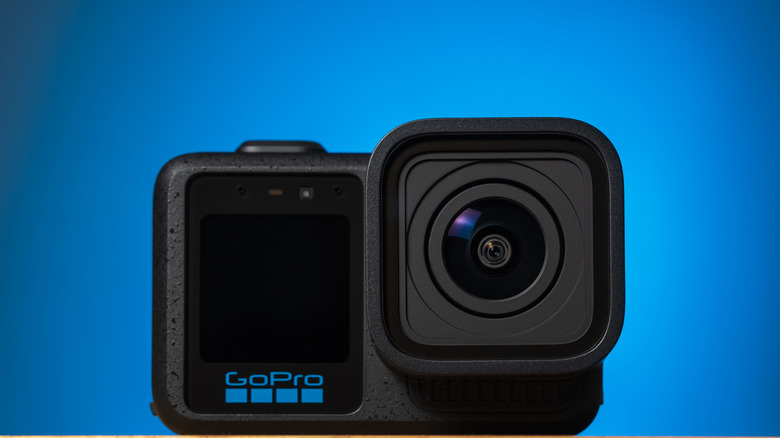
GoPro is responsible for the action camera category, and today takes the top spot in our list not necessarily because of standout spec, but because of the brand's balance between high-spec cameras, a well-designed downloading and editing app, and extensive range of accessories, like these five useful accessories GoPro owners swear by. As we've seen in the previous contender comparisons, the latest Hero model compares well on spec, but beats its competition on overall robustness and benefits from years of experience and market exposure, but the days when the Hero retained flagship status are over.
GoPro would have realized that competition like DJI was hot on its heels, which is why it's no surprise that it offered a niche action camera described as a compact cinematic camera system. GoPro launched the GoPro Mission 1 series in May 2026, and is without doubt the greatest action camera ever made. Comparisons become difficult when you consider that the Mission 1 costs $599.99 (or $499.99 for subscribers), pushing it into an entirely different price bracket. The Mission 1 features a one-inch sensor that enables very good low-light performance and is capable of capturing 50MP still images and 8k 60fps or 4k 120fps video. Future Hero models will undoubtedly benefit from the advancements seen on the Mission 1, and as long as the brand can contain category cannibalization, GoPro could reclaim market share from DJI and Insta360.
How we chose our top 4

The action camera market is relatively narrow in terms of high-spec, robust action camera brands. In order to choose our top four, we focused not only on photo and video specs, but also overall robustness, ease of use, and available range of accessories. Availability of accessories like gimbals, mounts, lenses, storage options, external lighting, and microphones expands action camera capabilities, and can significantly improve results if used correctly. We also looked at mobile applications used to download and edit footage, where GoPro and Insta360 were standouts. An honorable mention has to go to the Sony FDR-X3000, which at the time of its release in 2016 beat the GoPro Hero 5 Black thanks to its outstanding optical quality, better low light performance, and good image stabilization.
While there are many budget action cameras out there, not many compare favorably to GoPro, DJI, or Insta360. We included Akaso as a "best of the rest" example. If you're in the market for a consumer-level action camera, it's no longer as straightforward as getting a GoPro and being on your way. Use case or even sport type plays a big role in selecting the right action camera for your needs. End-user support is another essential piece of the puzzle, and you have to consider the benefits of buying into a brand's ecosystem, where accessories and subscription options are often important value-adds.