

5 Disadvantages Of Mounting Your TV On The Wall
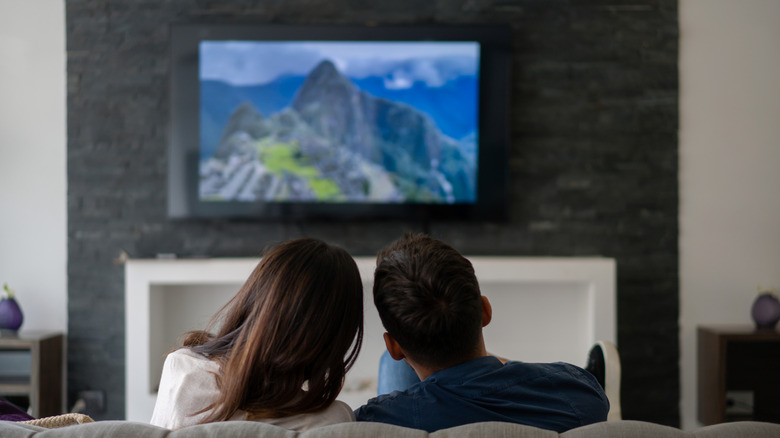
If you're thinking about upgrading your living room setup, slapping a shiny new flat-screen TV on the wall is probably one of the first ideas that comes to mind. After all, floating screens offer the ultimate tidy look, like an idea right out of decor magazines and TikTok videos, especially since there are several ways to mount your TV. Whether you're trying to save some floor space in a tiny apartment or create the ultimate minimalist media room, it's hard to resist the appeal of a wall-mounted TV.
However, that picture-perfect aesthetic comes with a darker side you might not hear anyone talking about. Sure, it looks nice, but did you know that the installation process can be a nightmare? That it can mess up your walls? Or that it makes future room renovations tough?
Understanding these hidden drawbacks before buying a mounting bracket and firing up your drill can save you some serious time and effort. From neck strain to cable-management nightmares, that floating TV-screen aesthetic might not be what you want. Let's break down the five biggest disadvantages of wall-mounting your television and explore why sticking with an "old-fashioned" TV stand might be the smarter move.
The frustrating reality of this tough installation
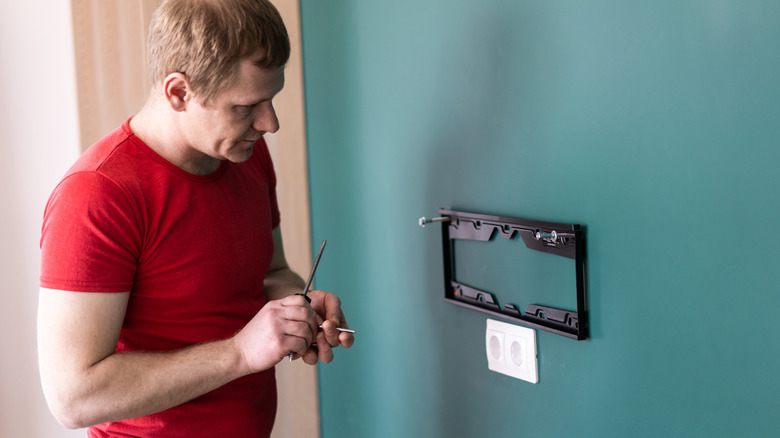
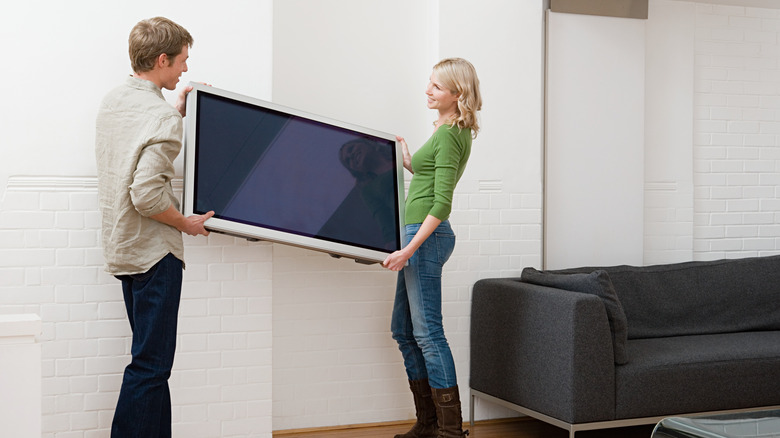
One of the biggest annoyances with wall-mounted televisions is the brutal installation process. Unlike simply plopping a TV onto a regular media stand, hanging a TV requires a surprising amount of work and exertion. Today's televisions may have incredibly thin displays, but they are heavy and awkward to handle. And when mounting them on a wall, heavy lifting is a must; to safely hoist a 55-inch OLED into the air, you'll need two or more people working in sync to hold the display safely and avoid a disastrous, expensive drop.
Beyond the heavy lifting, you also need to measure precisely to avoid a crooked TV. A bracket installed even a fraction of an inch off-center results in a permanently crooked screen, and let's be honest: that'll ruin every movie night forever. And as for where you're mounting it, skip the drywall; it's a blend of paper and gypsum, and it can't hold much weight. Trying to do this will almost guarantee a busted TV. Heavy TVs ought to be mounted onto wood studs, so make sure you have the proper tools on hand for locating the studs and securing your TV. For what it's worth, it's not unheard of to just hire professional installers, though this adds to the overall cost of your new TV.
Wall damage and what happens once you remove the TV
Everyone wants a flawless living room, but mounting a flat-screen means you're signing up for some amount of damage to your walls. After all, securing a heavy TV bracket on a wall means driving sturdy lag bolts deep into your house's framework. This permanently alters the wall, and the structural damage becomes glaringly obvious the second you want to relocate the TV. Renters need to be especially cautious here since landlords love to withhold security deposits for surprise drywall repairs.
The damage from wall mounting doesn't usually rear its ugly head until you move out, or want to redesign the room or upgrade the mount for a newer TV. When you finally take down the television and its heavy metal support system, you're left with large, gaping holes in your drywall. You can expect a couple of hours of work to repair those deep gouges; they definitely can't be covered with a quick dab of leftover paint.
Fixing this aftermath requires patching, sanding, and meticulous repainting to get it looking good as new again. If you decide to move out entirely, patching up the living room becomes an unavoidable, pain-in-the-keyster chore that adds to an already stressful moving day. Anyone who frequently rearranges their interior decor will likely hate having a setup that's literally bolted to the wall.
The lack of mobility for any needed future adjustments
When a TV sits on a media console stand, sliding it a few inches to fit a new soundbar is a cinch and takes only one person and a few seconds. On the other hand, a wall bracket fundamentally anchors the entertainment setup to one specific spot, even if you splurge on a premium full-motion mounting bracket. Articulating arms help slightly by letting you pull the screen out or swivel it a bit side to side, but they still limit your TV to one part of your room.
A year from now, if you decide to buy some new living room furniture and it happens to sit lower to the ground than your previous stuff did, you can't just slide your TV down. Adjusting the screen at this point means removing the bracket, drilling new holes, and patching the now-exposed drywall. If you're set on a wall-mounted setup, make sure you put your TV somewhere you really like; you won't have wiggle room to tweak the height or angle once it's mounted.
Another problem is that even minor upgrades get messy with this bolted-in choice. Upgrading to a larger TV on your current mounting bracket can mean that the original center point no longer lines up perfectly with your couch. And while a swiveling mount can compensate for this slightly, it can't hide the fact that the hardware is off-center.
The headache of dealing with messy dangling cables
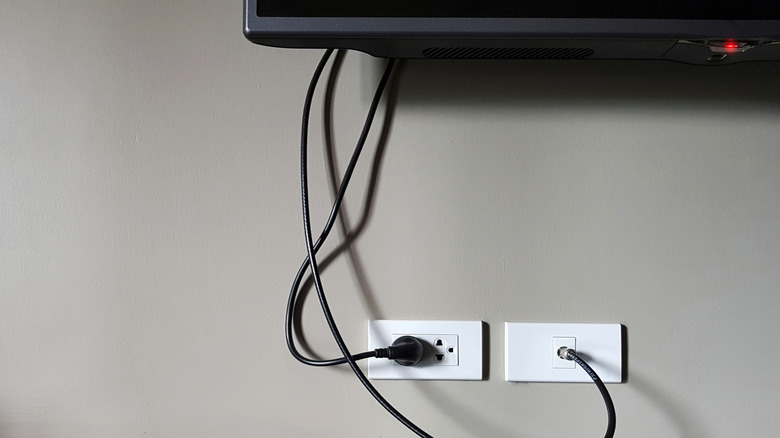
Hands down, the biggest selling point of having a wall-mounted TV is the minimalist, ultra-clean aesthetic it offers. However, getting that floating look takes more than mounting your TV on a sturdy bracket, since you'll also need to hide the power cord. This chaos multiplies if you have other cords, too, like for HDMI or connecting gaming consoles and streaming boxes. Left untamed, these cords will dangle from the bottom of the screen, ruining the clean vibe you were going for and only enticing curious kids and pets.
You've got options for hiding these cords, but they come at a cost. The easiest option is using a wall-mounted TV cord channel. These come in several lengths and colors, do a decent job of tidying up your cords, and don't cause much damage to your wall. The trade-off is that you'll still see the cable channel; you won't get that 100% clean aesthetic.
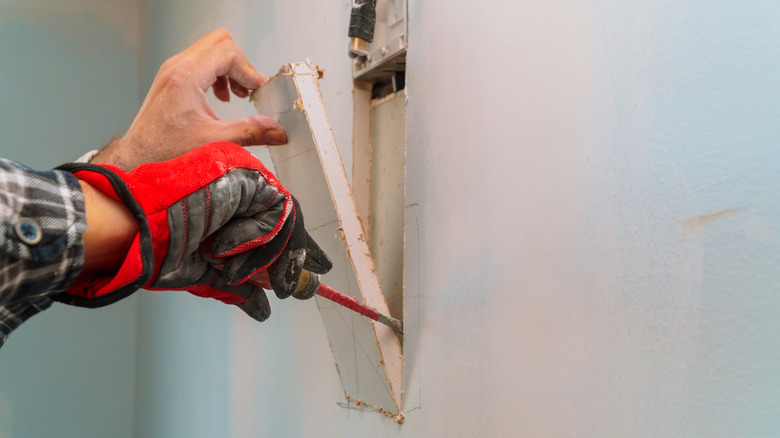
To actually achieve that, you need to hide your cords inside the wall behind your TV. Hiring an electrician is the easiest way to do it. Otherwise, opt for an in-wall TV power kit. These plug-and-play kits don't require electrical wiring skills, and work like an extension cord built into your wall. You cut two holes in your wall: one up top and another lower by an outlet. You'll plug your cables into the top piece, and then the kit's in-wall connector cable comes out of that second box, which you'll power up in the nearby outlet. It's tidy, but does wall mounting beat a TV stand?
Neck strain and the miserable consequences of bad placement

The least talked-about downside of wall-mounting your TV is the neck discomfort it can cause over time. Why? Because open wall space is usually higher up, like above your stone fireplace or other decorative features. This means you'll always be looking up to watch your shows instead of comfortably forward, at eye level. For movie nights and game days, you'll tilt your head back and up every time you want to watch something; holding that odd angle for too long can cause lingering neck pain.
Basic ergonomics says a TV screen should be placed so its center sits at eye level when you're comfortably plonked down on the couch. Mounting your TV that low can get tricky if there's furniture or wainscoting in the way. Also, mounting it that low puts it close to where your TV would be on a console stand, so why not save yourself the fuss?
Mounting it super high, however, will all but guarantee your television sits completely out of the ergonomic zone. That can potentially turn daily binge-watching sessions into a painful medical issue. So even if an elevated display looks great during a quick house tour, daily use can turn it into an ergonomic nightmare that has you rubbing your neck all day. But is it enough to make you want to skip wall-mounting and consider an alternative setup?