

Sony's New TV Is Its Most Affordable OLED Model So Far

We may receive a commission on purchases made from links.
Sony's flagship OLED TVs are some of the best on the market, but they're not what anyone might consider affordable or budget-friendly. Ultimately, that makes sense — if you want a premium product, you're going to pay premium prices. At least, that was the reality until Sony's latest product series, the Bravia 6 OLED TVs, which are both entry-level and accessible. Starting with the smallest size, the 48-inch 4K HDR Bravia 6 OLED is a smart Google TV with Gemini AI, and it's priced at $1,300. The largest screen in the series, the 83-inch Bravia 6 OLED, also a 4K smart Google TV, is $4,000 at full cost. Featuring Sony's Triluminos Pro technology for true color reproduction, the series also supports cinematic standards like Dolby Vision for the ultimate home theater setup.
For a quick price and feature comparison, some of the best-selling OLED TVs on Amazon that are worth buying include the 2025 LG C5, which is now about $1,170 for the 48-inch, Samsung's S90F from 2025, which is $848 for the 48-inch, and Sony's own 2024 Bravia 8, which is $1,600 for the 55-inch. The 2025 LG G5 at the top of the range is $1,900 for the 55-inch, meanwhile, and the 2026 LG B6 is $1,000 for the 48-inch. You can see by these prices that Sony's newest lineup is competitive, especially for something newly launched.
What sizes and models are available in the Sony Bravia 6 series?
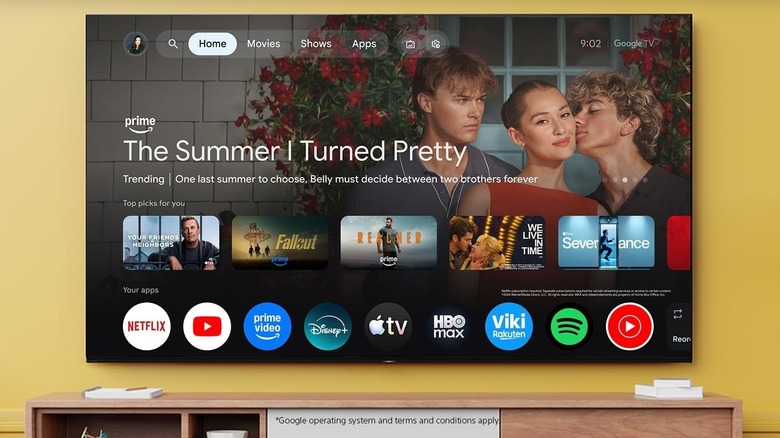
Starting with the 48-inch, there are five models in total, topping out with the 83-inch version. All feature OLED panels, 4K resolution, and smart Google TV features, including Gemini. As mentioned, the 48-inch Bravia 6 is $1,300, and from there you have a 55-inch option for $1,500, a 65-inch option for $2,000, a 77-inch option for $3,000, and finally, a whopping 83-inch OLED panel for $4,000.
They come with four HDMI 2.1 ports for 4K quality at 120 Hz, with VRR, ALLM, and SBTM functionality. Also, the Bravia 6 series supports Dolby Vision and Atmos, as well as DTS:X, for those truly cinematic audio and video experiences (Atmos and DTS:X give you spatial audio). Plus, you get access to Sony Pictures Core and built-in Google TV that itself includes access to "over 700,000" movies and shows. Google's Gemini AI can help you sift through all that content with smart searches and voice assistance.
While there are many benefits to an OLED set, like true colors and darker shadows, there are a handful of OLED disadvantages you'll want to consider, too. Burn-in is still a concern with some panels, which gives the impression of lower longevity than other panel technologies, and they're not generally bright, so you'll want to use them indoors and not in direct sunlight. That being said, OLED's benefits generally outweigh its drawbacks these days, which is why most TV makers have switched to OLED panels and why they're so popular, despite generally being one of the most expensive types of TVs to manufacture.