

Don't Panic Over Grainy-Looking Movies On Your LG OLED TV - Here's Why
LG OLEDs offer stunning picture quality with rich contrast and vibrant colors, but even the world's leading OLED manufacturer isn't perfect. Every individual panel is different, and even identical models can have different image quality and brightness levels due to natural variance. That's usually not a huge deal in real-world scenarios like living room viewing, however, and LG OLEDs continue to soar in popularity thanks to their gorgeous appearance.
Still, no matter how much time you spend fiddling with the TV's settings to boost picture quality, you might still end up finding something wrong with your LG OLED. These quirks can pop up as TVs get older, even with LG's built-in protection tools meant to preserve image quality, but you may even spot some imperfections on a brand-new display. One of the most common issues that LG OLED owners encounter is a grainy-looking effect over movies, for example.
If your OLED TV is looking especially grainy, there's no need to worry. A bit of fuzz is natural with certain content like movies, so there's not a problem with your TV. You may also be experiencing mura defects; small panel variances that create a dirty, uneven picture.
Why do movies look grainy on OLED screens?
When people are in the market for a new TV, size and image quality are typically their most important concerns. With OLEDs being renowned for their dazzling picture quality, and entry-level models like LG's B series making larger screens more affordable, a lot of people are upgrading to huge OLEDs in their living room. A big, high-quality display like an LG OLED will make most content look amazing, but that crystal-clear picture can also expose some flaws in things that looked fine before.
That's where the grainy complaints start to show up, especially when watching movies. Most movies have film grain, a textured effect that happens naturally when shooting on film. Even movies shot with digital cameras will try to emulate film grain since digital noise doesn't have the same effect. Since LG OLEDs display content at a crisp 4K resolution and have virtually instant pixel response times that minimize smearing, it's easier to see all that grain.
Film grain can also look very different depending on the source of your content. Streaming services like Netflix offer 4K plans, but a 4K stream has a significantly lower bitrate than a 4K Blu-Ray. Fine details like film grain can get lost in the mix due to compression artifacts, making it much less noticeable. The opposite is true with high bitrate sources like physical discs. Since they contain much more data, all the original details are visible without compression.
What is the mura effect?
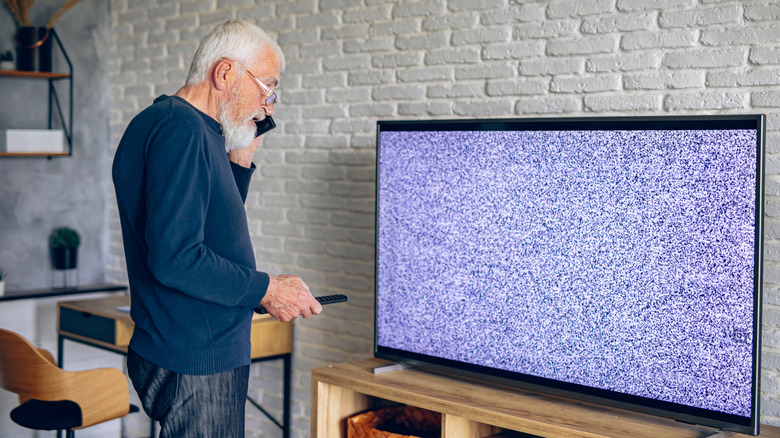
Another important issue that can contribute to a fuzzy picture on OLED TVs is the mura effect. "Mura" is a Japanese word meaning unevenness or inconsistency. The mura effect creates a grainy haze over the screen that gives it an uneven, blotchy look, hence the name. It may not be too noticeable when watching content, but bright white screens and solid colors will shine a spotlight on your TV's issues.
Mura defects can show up in several different ways. Tiny physical quirks specific to your specific TV can create shifted tints, color banding, and other artifacts. One of the most common mura effects is the dirty screen effect, which makes it look like there's a layer of fingerprints and smudges on your TV that won't go away. This is especially apparent on gray backgrounds and dark scenes.
Unfortunately, there's not much you can do to fix a TV with visible mura defects, since it's a hardware issue tied to your specific TV. Even TVs of the same model can have different pictures side-by-side because of mura, which is where the term "panel lottery" comes from. Some TV manufacturers may be able to help if your TV is under warranty, but warranties can get complicated with LG OLEDs.