

5 Common Reasons Customers Regret Buying A Budget TV
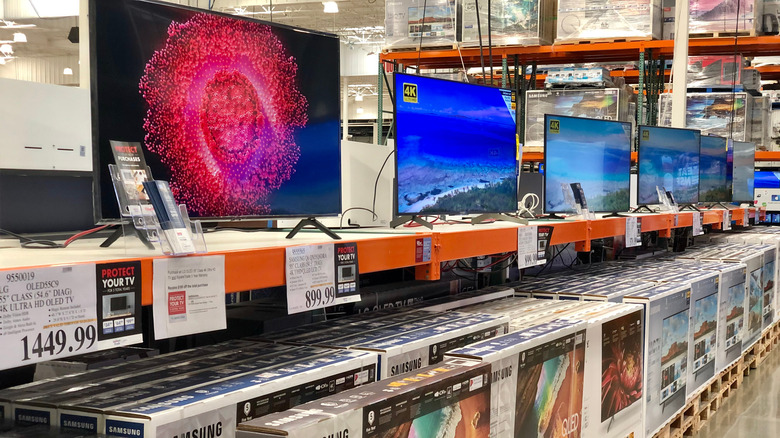
Buying a new TV is always an exciting process. Whether you're upgrading to a model with a gorgeous OLED panel or simply buying something way bigger for the Super Bowl, most people want to get their shiny new display into their living room as quickly as possible. All TVs look beautiful on the showroom floor, so that picture quality surely translates back at home, right?
As it turns out, buyer's remorse is a very common problem with electronic purchases like TVs. Size is one of the most important factors when people are looking at new TVs, and all those inches can distract from cut corners in picture quality and processing. These cut corners are especially apparent in budget TVs. Popular budget models can approach upwards of 100 inches while still keeping the price tag around $1,000.
Even if your expensive new display has a sweet-sounding acronym like QLED and a bunch of 4K branding plastered over the box, you might start to notice some issues once you're watching content back home. These TVs can look great for casual content like live TV and sports, but the picture quality cracks start to show with more detailed content like 4K movies. These are some of the most common reasons people regret buying a budget TV.
1. The TV doesn't get bright enough
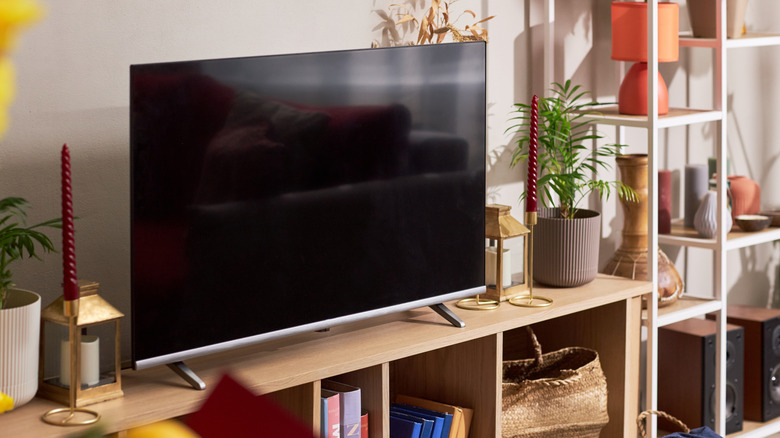
The TV section of a big box store like Costco is impossible to look away from during a routine shopping trip — and that's by design. All those TVs have their settings cranked to force an unnaturally bright and saturated picture that goes perfectly with the extremely detailed video clips playing on repeat.
At home, a TV that looked stunning on the showroom floor can have a much more middling display. The only way to somewhat match the bright big box store experience is to put the TV on its "vivid" or "dynamic" video preset, which juices up the saturation and forces a harsh blue tint over the screen to maximize perceived brightness. It's generally something you want to avoid if you're after the best picture quality.
Brightness costs a pretty penny for TV manufacturers. Even with new technologies like Mini LED displays that can get ridiculously bright, color accuracy is still a concern. More expensive TVs may not get as bright as an appealing budget model, but their picture quality is usually better.
2. HDR is dull and dim
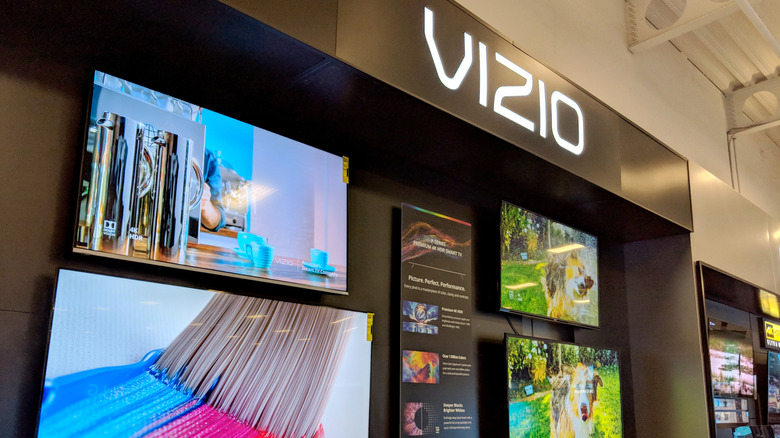
HDR is supported by the majority of TVs these days, but not every display is capable of producing a great high dynamic range picture. Just like the increased costs that come with brightness, the features required for effective HDR can raise the price of a TV significantly. You need great local dimming to create punchy highlights without sacrificing the darker parts of the screen, and the TV is pushed way harder because the display jumps from 8-bit to 10-bit color.
Budget TVs may technically support HDR, but all this means is that they're capable of receiving and displaying HDR signals. There aren't any requirements that the manufacturer has to follow unless your TV is certified to meet a specific standard like VESA's DisplayHDR certification.
If your TV doesn't support full array local dimming, it's usually a better idea to leave HDR off and stick to SDR content. A normal backlight just isn't enough to accurately display HDR content, which can leave the image looking dim and washed out as a result. Even if it says HDR on the box, you should be wary of cheap smart TVs with that branding.
3. The HDMI ports handicap gaming performance

Smart TVs can handle all your streaming needs with built-in apps, but most people will still end up connecting at least one device to their TV with an HDMI cable. Whether it's a gaming console, a computer, or a soundbar, those ports on the back of your TV dictate the signal that the display can receive from a device. A fancy gaming console like the PlayStation 5 supports 4K output at a 120hz refresh rate, but that means nothing if your TV's HDMI ports aren't up to par.
Not all HDMI cables and ports are created equal. There are multiple different HDMI standards with differing bandwidth levels. Most high-end TVs these days come with HDMI 2.1 ports capable of displaying 4K content at a 120hz refresh rate. HDMI 2.1 has a bandwidth of 48Gbps, which is more than double the bandwidth of the usual HDMI 2.0, and quadruple the even-older HDMI 1.4.
More TVs are catching up; even budget models can come with multiple HDMI 2.1 ports now, but there are still some discrepancies at lower price ranges. You may need to plug your game console into a specific HDMI port on your TV to ensure the best performance, otherwise you may be handicapped by an HDMI port without the necessary bandwidth.
4. They don't sound great
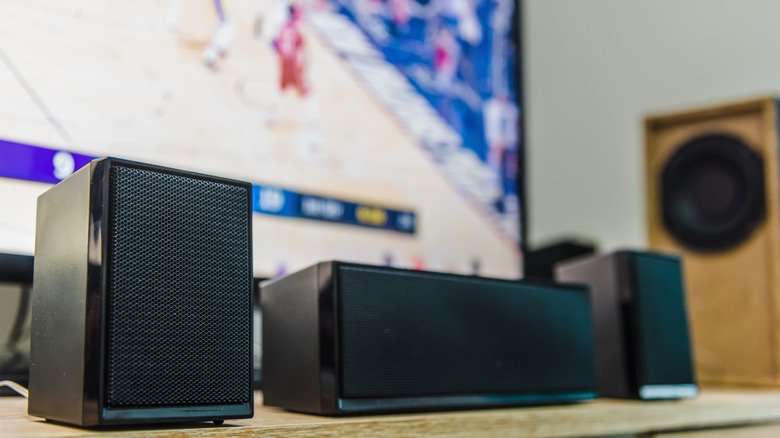
TVs are marketed so heavily with picture quality that it's easy to to forget about sound quality when shopping. Sound has suffered as TVs have gotten smaller and thinner, and even the most expensive high-end TVs have soundscapes that leave audiophiles wanting. Things can get really bad in the budget TV space, especially when watching movies that are designed for robust sound systems.
There's really not much you can do to fix a TV with poor built-in speakers. Even tweaking the sound settings won't change the audio output too much. This is why most people end up buying a soundbar for their TV setups, particularly to make dialogue sound clearer.
The setup of your living room can also change the way your TV's speakers sound. Your room's acoustics can cause echoes and other distortions, and most TV speakers don't have great listening areas, either. Movies and shows can sound weird to spectators sitting off to the side, and dialogue can get muddied if you're sitting too far away from the TV.
5. They can't connect to other devices

A TV is the centerpiece of most living rooms, and a good TV should be able to display anything you throw at it. While budget TVs have most of the common connections like HDMI, they might be missing some of the more niche applications.
One of the biggest examples of this is phone mirroring with services like AirPlay. AirPlay is a common feature on plenty of TVs today, but there are still some exceptions that do not have any form of mobile mirroring. If your TV doesn't have something like AirPlay, you won't be able to display photos and videos from your phone or tablet, which can make family gatherings a bit of a bummer.
In addition, budget TVs may have limited or reduced connectivity in certain areas. Audio is a prominent example, with things like eARC typically being reserved for more expensive TVs. Your budget TV may have ARC support for audio connectivity, but without the enhanced eARC functionality, you won't be able to take advantage of features like Dolby Atmos.