

4 Phone Carriers You Might Not Realize Are Owned By T-Mobile
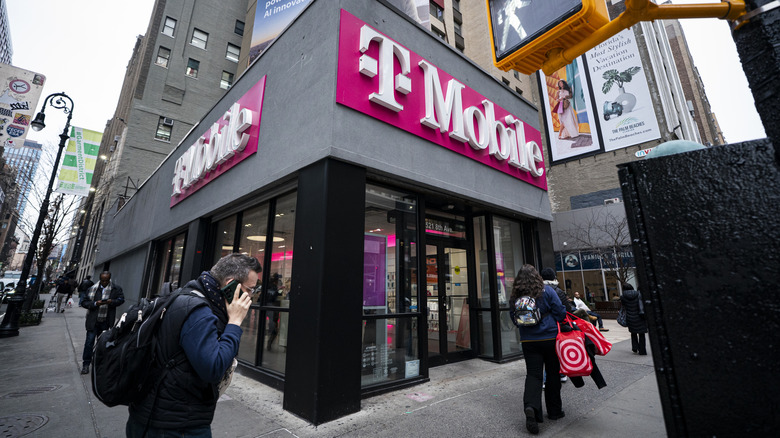
The telecom industry has gone through many phases of change in the United States from growth, monopoly, a mandated break-up, re-consolidation, and then a new Wild West era of expansion, before repeating the cycle again. During that time, cellphone service prices have changed about as much as the phones themselves. We've also gone from a wide field of service providers down to, essentially, three: AT&T, Verizon, and T-Mobile.
Each of the companies has used mergers and acquisitions to grow their business, but T-Mobile's record of late has been the most dramatic. In 2020, the carrier combined with America's then-fourth-largest mobile network, Sprint. In 2024, T-Mobile picked up U.S. Cellular's customer base. Two years later, 2026's second-largest network claims more than 140 million subscribers as its own. But there's more to T-Mobile than just T-Mobile itself. The company also owns several smaller carrier brands, operating on different business models and offering different service packages. Some are more obvious than others, but you might be surprised to learn exactly which brands fall under the company's magenta umbrella.
1. Metro by T-Mobile
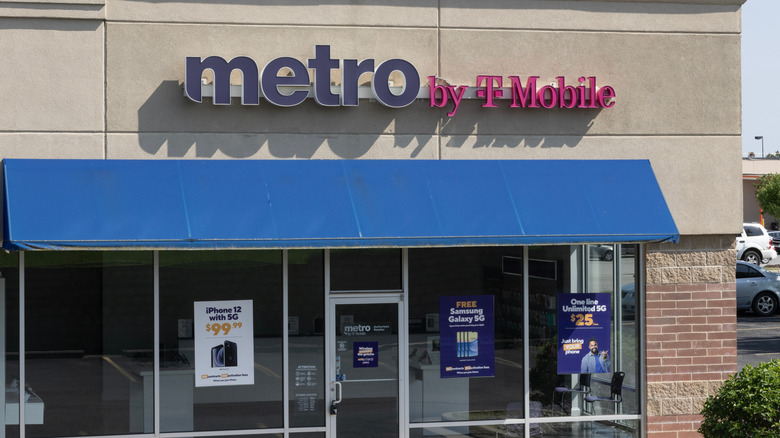
MetroPCS launched in 1994 as one of many upstart wireless carriers and grew into a decent mid-size player over the next decade. MetroPCS was first in the United States to launch 4G LTE in September 2010, beating Verizon to the punch by three months.
The industry's race towards national 4G networks triggered a rush of buyout offers. For MetroPCS, it was T-Mobile's merger proposal that won out against Sprint and reportedly Dish Networks in 2012. The deal closed the following year. MetroPCS retained its prepaid service model and still operates and franchises retail locations separate to its parent company. The name stayed until 2018, when it was re-mixed to Metro by T-Mobile. These days, it faces tough competition in offering one of the best $50 unlimited mobile plans around.
2. Mint Mobile
You might know Mint Mobile as that network with "Deadpool" star Ryan Reynolds in its ads. Heck, you might even remember he was a part-owner at one point. The carrier, which is known as a mobile virtual network operator or MVNO, officially launched in 2016 under a sort-of wholesale model: Customers can get monthly service on T-Mobile's network with unlimited calls and texts plus a monthly bucket of cellular data on three-, six-, or 12-month terms for a one-time cost that would be lower than the equivalent on a monthly postpaid plan. While it introduced an unlimited plan in 2020, Mint has stood out for giving customers upgrades on their data plans, regardless of whether they're new or existing. Mint has done this multiple times over the years without raising prices.
T-Mobile swooped in on Mint Mobile's holding company, Ka'ena Corporation, in 2023, giving the mobile giant ownership of a unique prepaid service model that was already running on its network. Reynolds's estimated-25% share in Mint was bought out, but still remained a spokesman for the carrier. Mint has since added on 5G home internet to its offerings under the same long-term prepaid model.
3. Ultra Mobile
Ultra Mobile is another MVNO that T-Mobile acquired through the Ka'ena Corporation deal which closed in 2024. The company was founded in 2011 by serial telecoms entrepreneur David Glickman, who led Justice Technology, which rented access to satellites and international cables and resold it to national carriers. In a sense, Ultra Mobile was a riff off of Justice, targeting expats living in the United States with low-cost, customizable plans that crucially included international coverage. It just so happened that Ultra was actually the one to launch Mint before spinning it off in 2019 — though the two were ultimately still connected through Ka'ena.
In recent times, Ultra Mobile has integrated Mint's long-term service package model into its own offerings, allowing subscribers to go with a month-to-month plan or pre-pay for up to a year's worth of service at lower overall rate. Unlimited calling to more than 90 destinations as well as global texting remain keystones for the brand. That said, it's focused on people staying stateside. If you're traveling outside the U.S., you'll need to choose the right international roaming plan for your next trip.
4. Assurance Wireless
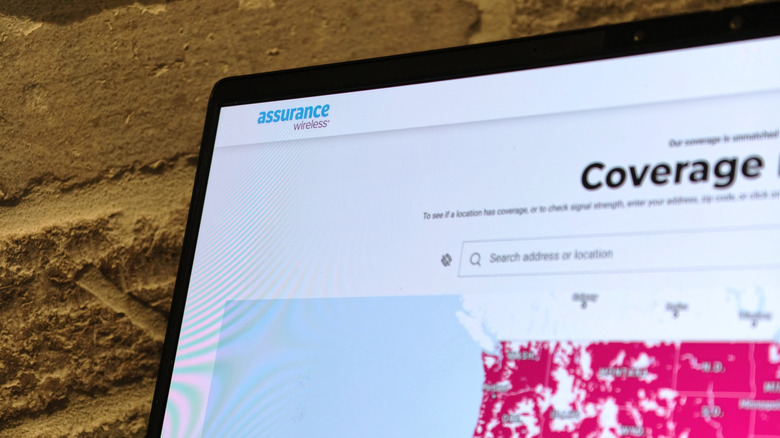
Assurance Wireless began as a Virgin Mobile imprint in 2009. At the time, Virgin Mobile in the United States ran as an MVNO on Sprint's network until it was bought by T-Mobile in 2020. Assurance participates in the federal government's USAC Lifeline program, which grants low-income and other vulnerable populations free phones and service through partner providers. Applicants are accepted onto the program based on meeting federal or state criteria. Those providers are able to generate revenue beyond the Lifeline subsidy they receive by offering add-on packages.
The presence of Assurance is a reminder that most of T-Mobile's customer base isn't willing or can't spend big bucks on expensive plans as less than a quarter of its subscribers have postpaid service, especially in an economy where consumers seemingly just can't keep up.