

5 Small 3D Printers Perfect For Your Home Or Office
We may receive a commission on purchases made from links.
3D printers are useful devices, especially for anyone who enjoys creating home projects, but whether a 3D printer is worth buying also depends on how much space you have available. That is because several models usually take up a lot of desk space due to the movement of the bed and the filament holder. In addition, during long jobs, they also make a lot of noise.
Fortunately, you do not need a large machine to get good results. There are some compact 3D printers designed to fit in smaller spaces without giving up important features. So, you will still have automatic leveling and enough volume for common projects. This makes them interesting options for anyone with limited space.
Even though there are some trade-offs compared to larger models — such as being limited to smaller projects or printing parts in several pieces before joining them later — some models are still worth it. We've picked some small 3D printer options that you can consider for your home or office.
Bambu Lab A1 mini
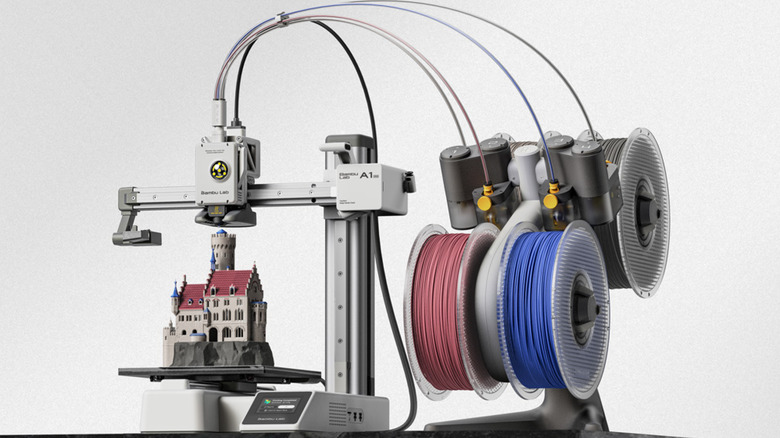
The Bambu Lab A1 mini is probably one of the best small 3D printers you can buy if you do not want to lose many of the features found in larger models. It measures 347 x 315 x 365 mm and offers a print volume of 180 x 180 x 180 mm, along with automatic calibration, an integrated camera, and a maximum speed of up to 500 mm/s. Because of its size, the $219 Bambu Lab A1 mini is one of the cheapest 3D printers you can find for under $500.
The reduced size brings some limitations, especially if you have already used a traditional Bambu Lab A1. The first point is that this mini version has a much smaller print volume, so larger objects need to be split into several parts. In addition, the mini's bed reaches only 80ºC, and the manufacturer recommends using only PLA, PETG, TPU, and PVA with it. So, more complex materials such as ABS, ASA, and other filaments are not recommended. Depending on what you want, these concessions are relatively small.
Flashforge Adventurer 5M Pro
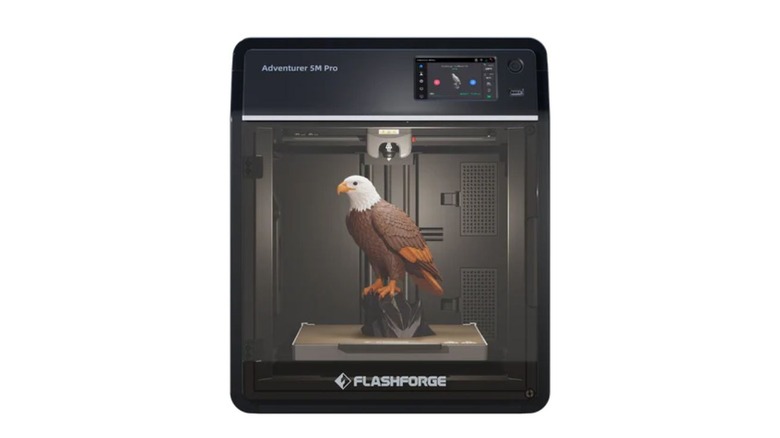
For anyone who wants a compact printer, but with a little more space to work on projects, the $449 Flashforge Adventurer 5M Pro is a good choice. It measures 380 x 400 x 453 mm and offers a volume of 220 x 220 x 220 mm. Even though it is enclosed, it keeps a reasonable footprint for larger desks, while also including automatic leveling and assembly that comes practically ready from the factory.
The model also stands out for offices by producing only 50 dB in low noise mode and using HEPA filtration with activated carbon. Because it has an enclosed structure, it also lets you handle more complex materials, such as ABS and ASA.
The Adventurer 5M Pro also reaches 600 mm/s of travel speed and brings a camera to monitor prints, along with options for Wi-Fi, Ethernet, and USB connectivity. Although it is compact compared to other enclosed printers, it still takes a fair bit of space. So, buying it makes more sense for anyone who does not want to give up the features of an enclosed model.
Original Prusa Mini+
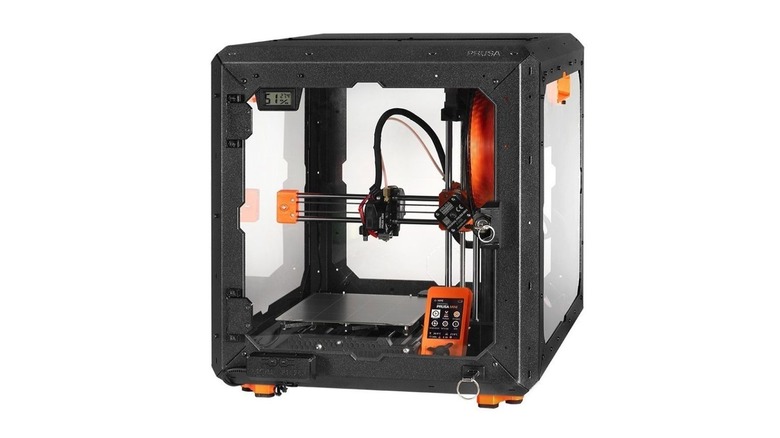
If you want support for a number of materials and are comfortable with a more open platform, then the Original Prusa Mini+ is an option. Coming to the size, it is 380 x 330 x 380 mm, without the filament holder and the external power supply, and it has a print volume of 180 x 180 x 180 mm. It also supports automatic leveling, along with a 2.8-inch color LCD screen. In terms of material support, you can use PLA, PETG, ASA, ABS, polycarbonate, nylon, and other filaments with it, which greatly expands the types of projects it can handle.
The problem is that although it is still a good printer, the Original Prusa Mini+ is an older model and shows its age in some areas. It has a slower Bowden system, and Wi-Fi requires an optional module. In addition, the build volume remains small for larger parts, so some users might want to skip the $549 Prusa Mini+ for other affordable options. However, it remains interesting for anyone who wants simple maintenance and wants to use Prusa's open ecosystem.
Creality Ender-3 V3 SE
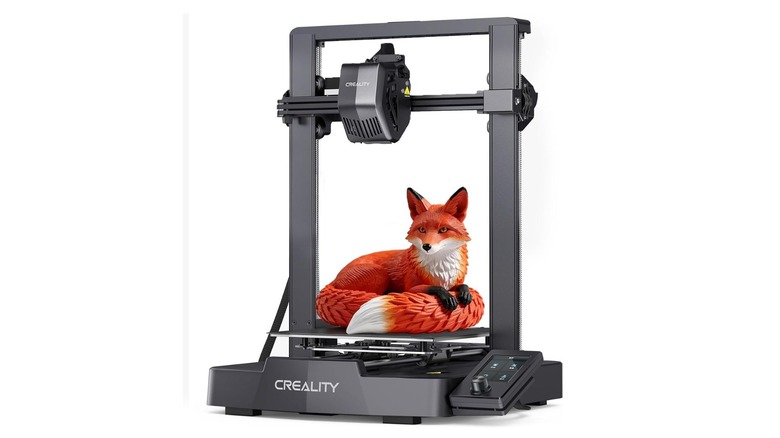
For anyone who wants a small printer without spending much, the $199 Creality Ender-3 V3 SE is an interesting option. It measures 420 x 366 x 490 mm and offers a print volume of 220 x 220 x 250 mm – larger than some compact competitors. It is also a little taller than some models in this category.
The Ender-3 V3 SE makes setup much simpler compared to older models in the line. It brings automatic leveling, a direct drive extruder, and a maximum print speed of up to 250 mm/s. You also do not need to spend much time adjusting the machine before starting the first project, making it much less complicated for beginners in 3D printing.
However, this model does have some limitations owing to its lower price. It lacks a closed cabinet, a built-in camera, and Wi-Fi connectivity — all of which are standard features in many of the newer models. Also, you must watch the space around the machine, as the bed moves backward and forward while operating. But the 3D printer makes up for it with decent build volume.
Creality K1C
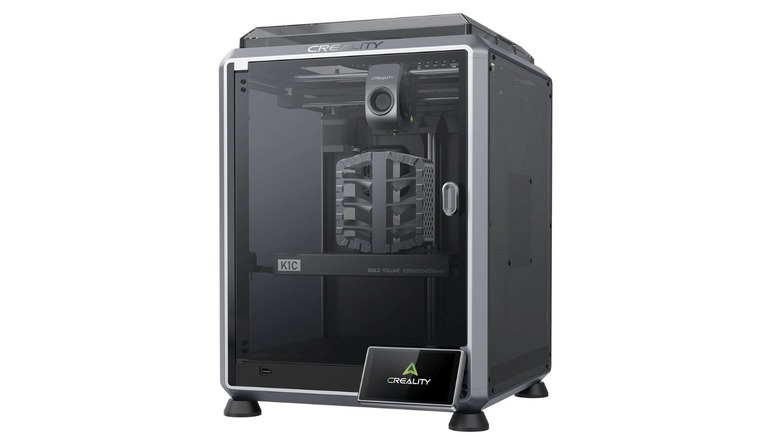
Another printer from Creality, the K1C is an option for anyone who wants a compact and enclosed model. It measures 355 x 355 x 482 mm, so it is also a little tall. On the other hand, the CoreXY format avoids the need to reserve additional space around the printer because of the moving bed that some versions have.
Performance is also one of its main highlights. The K1C can reach up to 600 mm/s, uses a direct drive extruder, and brings automatic leveling, an integrated camera, and Wi-Fi connectivity. The enclosed cabinet still allows work with a wider variety of materials, including PLA, PETG, ABS, ASA, PC, and filaments reinforced with carbon fiber. There are some trade-offs, however. Its 220 x 220 x 250 mm build volume still limits truly large projects, and the K1C takes up more space than models like the A1 mini. It also costs $369, which might not be suitable for budget-conscious buyers.
How we chose the best small 3D printers for home or office
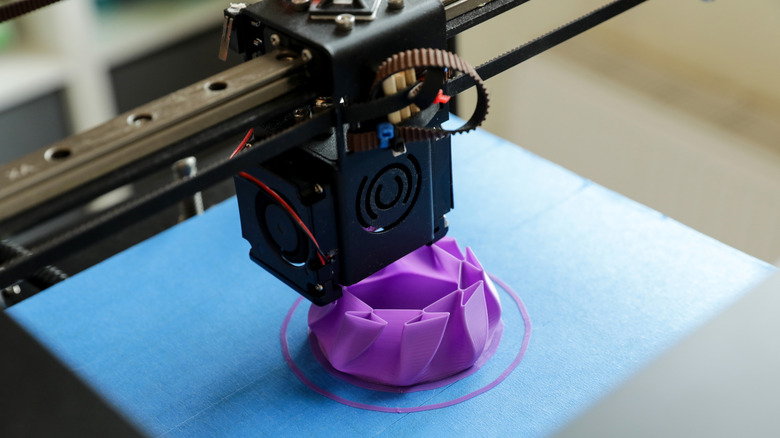
One of the first criteria for building this list was each printer's physical size. We prioritized models that take up to approximately 16 x 16 inches of desk area and are up to 20 inches in height. We also took the extra space needed into account, since some models have beds that move during printing, which can take up a larger area than their original measurements.
Size, however, was not the only criterion. We also analyzed each model's main specs, such as build volume, print speed, leveling, connectivity, and other useful features. Smaller models usually require some compromises, mainly when printing large parts, so we looked for compact models that still offer good performance for common projects without affecting the user experience too much.