

5 Unique 3D Printers You Can Buy For Under $500
We may receive a commission on purchases made from links.
For under $500, you can find several 3D printers with unique functions. Manufacturers have been experimenting more with models in this price range, so you can find options with compact designs, multicolor printing, or even models made for a younger audience. This also means you don't need to invest much to find something different from basic printers.
Price, however, should not be the only factor when you want to buy a new printer. It is important to look at other specifications, such as print volume, filament compatibility, and even ease of use. These factors can completely change your experience with a model, so it is important to know a few things before buying a 3D printer, especially if this is your first model. For that reason, we selected some 3D printer models under $500 that offer different features for different users. So, if you don't want to invest much and are looking for something specific, you can find exactly what you want in one of these models.
Toybox Alpha Three
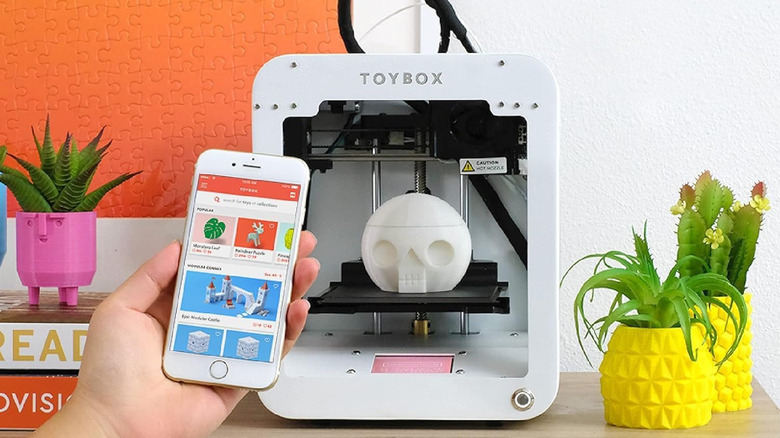
For anyone who wants to introduce children to 3D printing, the Toybox Alpha Three is one of the best options. Instead of coming with complicated software that requires more technical know-how, this model offers a simpler user experience. Toybox's catalog has several options, so you can choose one and watch the print take shape.
Although Toybox was designed with children in mind, it is also a good model for anyone just starting. The printer's catalog has several ready-made models, but you still get access to Creator Space, which lets you draw, customize, or create new models without depending too much on external programs. You can even try some of the best 3D printing projects for beginners.
Another point in favor of the Toybox Alpha Three is the price, since you can find models starting at $149, placing the printer well below the $500 range. However, it targets beginner users and offers a simple form of 3D printing, so don't expect the complexity of more advanced models.
Bambu Lab A1 mini
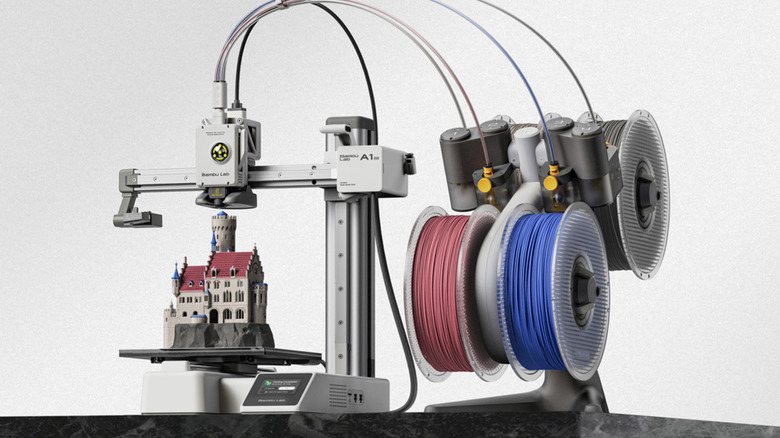
If you want a traditional Bambu Lab A1 but don't have enough space, consider the Mini version of the same printer for $219. Its print volume is 180 x 180 x 180 mm, compared to 256 x 256 x 256 mm on the A1, and its smaller footprint makes it a good option for apartments or anyone with a small workbench.
However, the printer's smaller size can also affect some projects. For example, larger prints may need to be split into several pieces, which is less common on larger printer models. However, if you want to print something smaller, especially from sites with free 3D printing models, this isn't a problem.
Another point is that a Bambu Lab A1 Mini cannot replace larger models. The heated bed reaches 80 °C, below the A1's 100 °C, while enclosed models like the P1S and X1 Carbon support filaments that require greater temperature control, making the smaller size one of its main concessions.
QIDI Q2
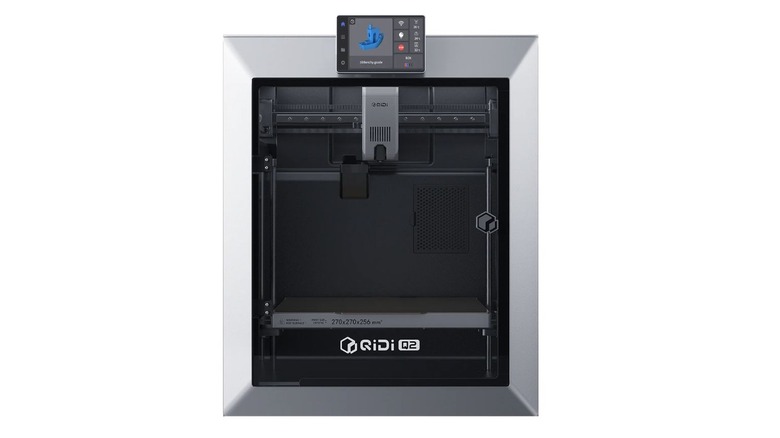
The QIDI Q2 is a printer for anyone willing to invest a little more, since it costs about $499 and offers some uncommon features for this price range. The main one is the enclosed chamber with active heating up to 65ºC, which helps keep the temperature stable throughout the print. This lets you work with more demanding materials, such as ABS and other fiber-reinforced filaments, making the Q2 interesting for anyone who wants to make more advanced projects.
Another difference is that QIDI combines its focus on more complex materials with features that make daily use easier. It includes automatic leveling, cameras that can identify some failures during printing, and an air filtration system. Its CoreXY structure was also designed to offer stability in fast prints. Although it is a relatively expensive model, the extra cost pays off because of the features that come with the QIDI Q2.
Elegoo x emoji Centauri Carbon 2 Combo
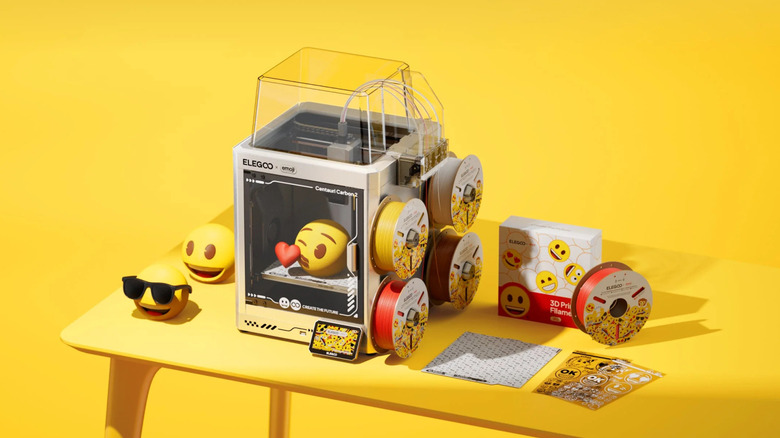
Although it doesn't offer any major hardware differences, this 3D printer from Elegoo, one of the most popular 3D printer brands, in partnership with emoji, has a unique look. Besides the decorated shell, the printer has a customized interface, a themed bed, and official emoji brand models. In practice, you get all the expected features of a Centauri Carbon 2 Combo, but with a different appearance.
Key features include multicolor printing with up to four filaments, an enclosed chamber, automatic calibration, and compatibility with several materials beyond PLA. So, besides getting a printer with a unique look, you also get several useful features for more elaborate projects for around $489. It is also a great option for anyone who wants a printer that becomes part of the decor, since the design is much more eye-catching.
Creality SPARKX i7
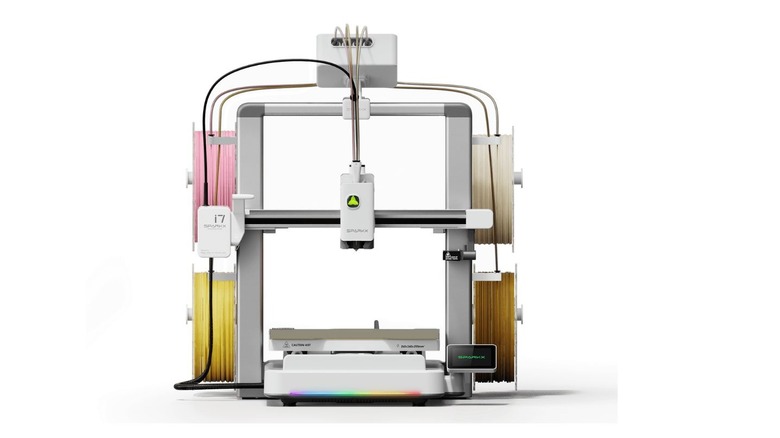
The Creality SPARKX i7 is one of the 3D printers that best combines an accessible price with several smart features. The Nano version costs $299, while the Color Combo is suggested at $399. Both include features like automatic leveling and an AI camera that monitors the print and can identify problems such as spaghetti or bed-related errors.
Its artificial intelligence can also help at moments beyond printing. It includes a feature called CubeMe that can turn a photograph into production-ready models, even if it needs some adjustments. For anyone just starting out, the SPARKX stands out among 3D printer brands that compete with Bambu Lab. Both versions also offer printing in up to four colors, but use different systems to manage the filaments. The Nano adopts CFS Nano, which is smaller and simpler, while the Color Combo uses CFS Lite, which adds enclosed storage for the spools.
How we chose these unique 3D printers
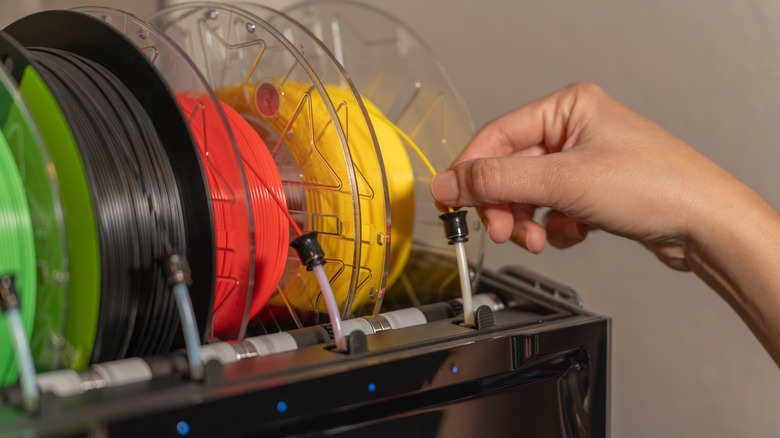
To build this list, we looked beyond the sub-$500 price tag. Price was one criterion, but each 3D printer model also needed to offer something different for the buyer, whether in design or in the features that come with the machine. In this price range, we found everything from compact printers to models aimed at children, which matters for anyone unsure how to invest.
We also considered how much these features actually change the user experience. Features such as multicolor printing, enclosed chambers, automatic failure detection, and tools that simplify model creation helped some products stand out. So, beyond feature differences, we also made sure print quality was consistent across the models.