

Are Old Apple Watches Worth Buying?
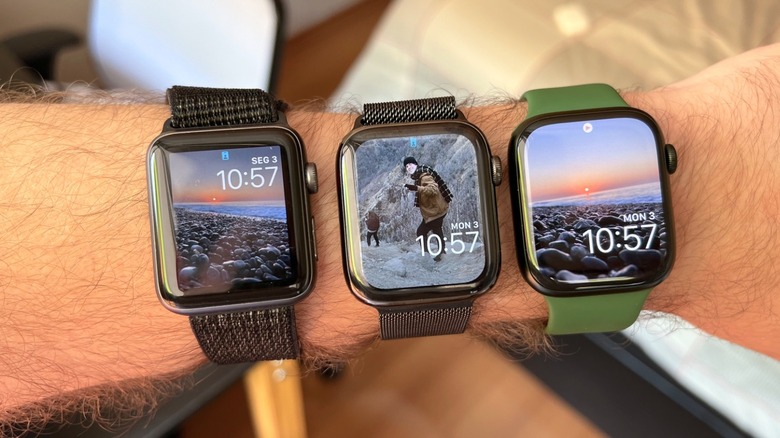
Looking into an older Apple Watch? There are a number of drawbacks to keep in mind, most notably support concerns. Apple announced during WWDC 2026 that the upcoming watchOS 27 update would skip five models, making this one of the biggest cuts in Apple Watch history, as only Apple Watch Series 9, Apple Watch SE 3, Apple Watch Ultra 2, and newer devices will get it. The main reason, according to Apple, is that older supported models (like Series 6 to 8, SE 2, and the original Ultra) can't handle the new Siri AI capabilities, even though the new Siri relies heavily on the iPhone rather than the watch's processor. With that, the company decided to ditch several models at once as it prepares users for new AI experiences with the watch, while also pushing customers to upgrade their "too good" Apple Watch models.
The reality is that buying an older Apple Watch model is often not a good deal. They're significantly more affordable than iPhone counterparts, starting at $249 for the Apple Watch SE 3 and $399 for the Apple Watch Series 11. Apple also recently releasing a leasing program where a Series 11 costs $11.99/month during 24 months, with the possibility of users upgrading to a new model after a year, this means that getting a shiny new model is usually better than just paying a few bucks less, but probably having to deal with some abrasions and scratches on someone's previously own model, in addition to degrading battery life.
Consider an Apple Watch to be an investment
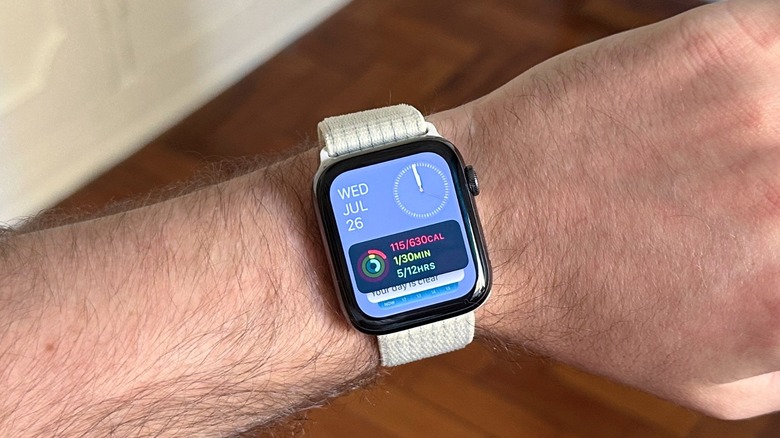
Whatever Apple Watch you get, it can still track your workouts, send you notifications, and, well, tell the time. Newer models might have bigger, brighter displays or new sensors, but Apple is slow to update the Watch format. For example, the last big Apple Watch sensor upgrade was wrist temperature with Series 8. As we approach the Apple Watch Series 12 release, not much has changed in that department. Before that, the last major health feature was the blood oxygen sensor, introduced with the Apple Watch Series 6, which means most of these breakthrough tools take a long time to arrive.
Apple makes the Apple Watch more reliant on the iPhone, such as with the watchOS 26 update and sometimes a bit less, as when it added 5G capabilities. Remember, the Watch doesn't need crazy speeds or compute power to mirror notifications or stream music and podcasts. For example, little has changed on the processor from the Series 9 to the Series 11, which is why they keep sharing so many of the same features (like double-tap and wrist-flick gestures).
What this means is that buying an older Apple Watch model might not sound like a good investment, but expecting to own your new one for a long period of time isn't unreasonable. The core features will still be current for some time after your purchase. Still, customers should be cautious about unsupported hardware, as it could eventually lead to incompatibility between the iPhone, Watch, and other peripherals; however, this product is built to last.
What to know before buying a second-hand Apple Watch
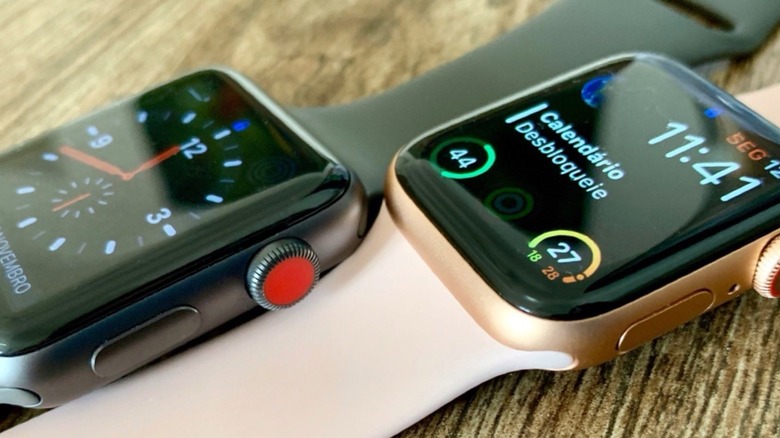
If you're willing to buy a second-hand Apple Watch, there are a few tips to make sure you get the most out of the product and your money. First of all, you need to ensure the Apple Watch still has great battery life (at least above 85 percent). Replacing the battery will set you back $99, which will probably negate whatever savings you got buying second-hand. You'll also want to try to get a Watch Series 9, Apple Watch SE 3, or Apple Watch Ultra 2 model, as these watches will at least get watchOS 27.
Anything from Series 6 to Series 8, SE 2, or Ultra 1 will continue to connect and work with your iPhone, even though you won't get the latest functions. Still, the older the model, the more features you miss and the longer a watch will take to complete a task. The thing about the Apple Watch is that it's made to be used at a glance, so you want to quickly reply to a message, start playing a song, or initiate a workout. If the battery is too slow or features are starting to fail, then the money you saved may not be worth the annoyance.
It's also important to note that older Apple Watch models don't have a lot of storage. While the latest models Apple supports have 64GB of storage, other versions have 32GB, and sometimes 16GB depending on the model, meaning that you'll have limited space to save your songs and podcast episodes.