

This Dying Programming Language Powers Global Infrastructure — And It's A Problem

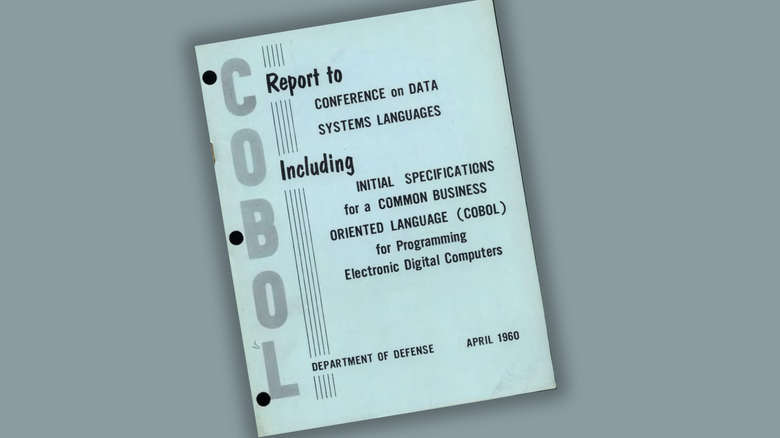
COBOL, short for "common business-oriented language," is an ancient programming language dating back to 1960. Despite its age, it's a critical piece of infrastructure for financial institutions, major businesses, and administration. IBM reports that COBOL is still used in 95% of ATM transactions, as well as 80% of card transactions when in-store. As with PHP, which still powers the web, the question is whether it was ever supposed to become this important. Probably not, but it has been 66 years as of this writing, and it's now deeply woven into daily life.
The problem that arises is that a majority of COBOL engineers are literally aging out, and COBOL isn't exactly the first thing that younger generations are latching onto. It is a lumbering beast of a language, with IBM even launching an entirely new product around it and a standardization update in 2023. COBOL even added an object-oriented design ethos in 2002, modernizing itself.
This has been a problem for decades now, with Computerworld reporting on staff with COBOL knowledge aging out in 2008 in a piece titled "Confessions of a COBOL Programmer," and again in 2012 when the age issue came up once more. In 2013, ZDNet even highlighted the issue that universities were avoiding teaching COBOL to their students, as it had simply become "uncool."
COBOL is running out of people
Moving away from COBOL is an even trickier task. Programs that banks use, for instance, can contain hundreds of millions of lines of code. In a breakdown by YouTube channel OpenHands, Calvin Smith stated that using AI agents to go in and start reworking code into more modern languages hasn't been particularly successful either. In response to Anthropic claiming Claude would be able to do the heavy lifting, IBM shot back, stating that it isn't just about translation, but "data architecture redesign, runtime replacement, transaction processing integrity, and hardware-accelerated performance" that has had decades of fine-tuning.
In 2018, U.K. bank TSB bungled a transition away from one platform to another, taking out access for millions of users in one fell swoop. The bungling came when users found they suddenly had no access to their accounts, resulting in a regulatory fine of £48.65 million ($65.86 million). Now imagine the impact of suddenly transitioning an entire financial system over from COBOL to something like Rust, one of the most popular in the world, without any mistakes. It wouldn't only be tricky, but also costly if even a single thing were to go wrong.
As coders retire, there's now quite a bit of money to be made with COBOL development — if you have the knowledge. A lot of the jobs require multiple years of experience with the language, but many appear to be paying between $100,000 and $150,000, with a few seen over that range. Once everyone is gone, it's genuinely still unknown what will happen with infrastructure that still relies on COBOL. How long until some bad vibe coding takes down an entire bank?