

This Next-Gen Alternative To Wind And Solar Is Coming To More States Soon
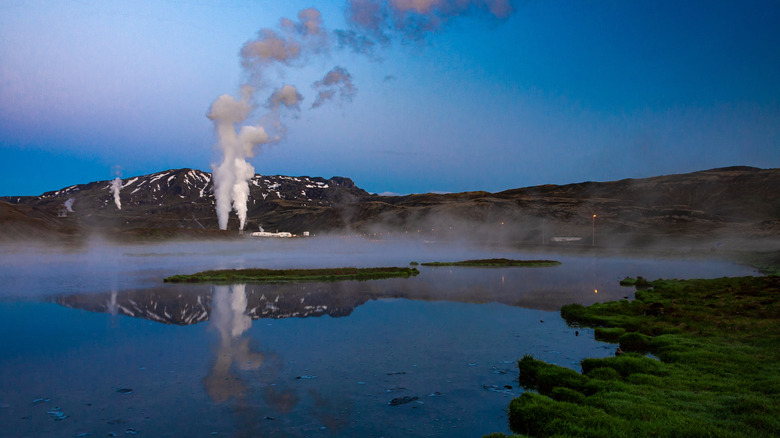
A remarkably reliable source of clean energy has spent decades constrained by the rocks beneath our feet. But next-gen geothermal is getting a second look after new technologies have begun breaking through the barriers. In 2025, geothermal power plants generated 16 billion kilowatt hours, or about 0.4% of total U.S. utility-scale electricity, compared to 6.6% for photovoltaic solar and 10.5% for wind. It's surprising considering geothermal produces a median of about 37 grams of CO2-equivalent emissions per kilowatt hour over its lifecycle. The number's higher than wind at just 13 grams, but it's lower than photovoltaic solar at 43, natural gas at 486, and coal at 1,001. Most importantly, geothermal plants operate at nearly twice the capacity factor of wind and almost three times that of photovoltaic solar. Geothermal appears to be a can't-miss energy source. The problem is finding the right spot.
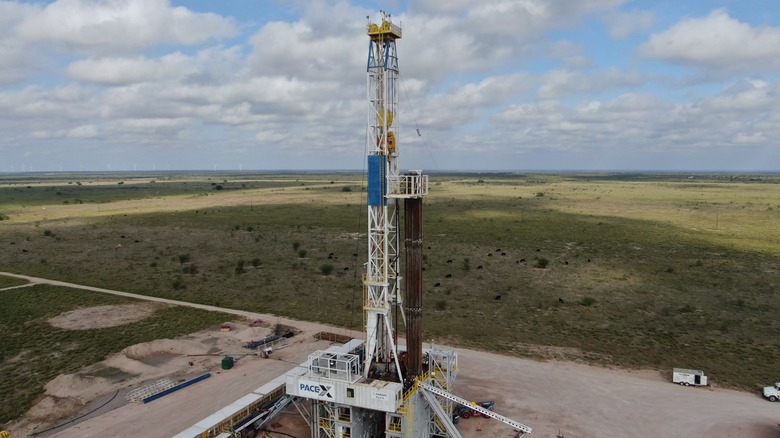
In the past, geothermal has needed a location that has hot rocks, underground fluid, and enough cracks and pathways for the fluid to circulate. It's rare to find those three things together, which is why only seven states have geothermal power plants in 2026. Once a site is discovered, it's hard to reach the deep, hot rock. And it's expensive. Drilling can eat up half of a geothermal project's budget. As you can imagine, investors and municipalities aren't rushing to spend millions on drilling before they know the rocks are hot and permeable enough. New breakthroughs, however, have reduced the risk, potentially helping geothermal measure up against wind and solar as the best, most efficient energy source.
Next-gen technologies are reshaping geothermal energy
Geography has hindered geothermal since the first plant was built in Italy in 1904. Traditional geothermal relies on naturally occurring water or steam trapped underground, like geysers or hot springs. Steam can drive a turbine directly, while hot water can heat a second fluid that drives the turbine. Once the water cools, it's reinjected underground to continue the cycle. The challenge is finding a place with ideal conditions. There's a reason Yellowstone National Park is famous. Its hydrothermal features are rare.
Houston-based Sage Geosystems is taking a new approach. Founded by oil and gas industry veterans, Sage uses fracking techniques for geothermal. Engineers drill into hot rock, then pump in high-pressure water to create a lung fracture, which expands and contracts as water is injected and released. The process doesn't extract hydrocarbons like fracking, which can cause serious damage to the environment. It can also use non-drinkable water, unlike data centers, which use billions of gallons of fresh water in a year. There is one concern. The USGS warns high-pressure injection can trigger seismic activity. Sage plans to open its first commercial geothermal plant in Nevada in 2027.
Another next-gen approach gets creative with the drill. Researchers at Utah FORGE, a Department of Energy–funded laboratory, adapted drill bits tipped with lab-grown diamond cutters for geothermal granite. A smaller cutter size and redesigned bit configuration reduced vibration. Combined with physics-based drilling, work goes much faster. FORGE cut the time needed to drill the equivalent of 6,000 feet from 440 hours to just 60. Other researchers are getting more radical with next-gen geothermal, including one company vaporizing rock with millimeter-wave beams to drill deeper into Earth's crust, potentially uncovering the secret to unlimited energy.