

The Samsung Galaxy Z Fold 8 Is Way Stronger Than You Might Think, And This Extreme Test Proves It
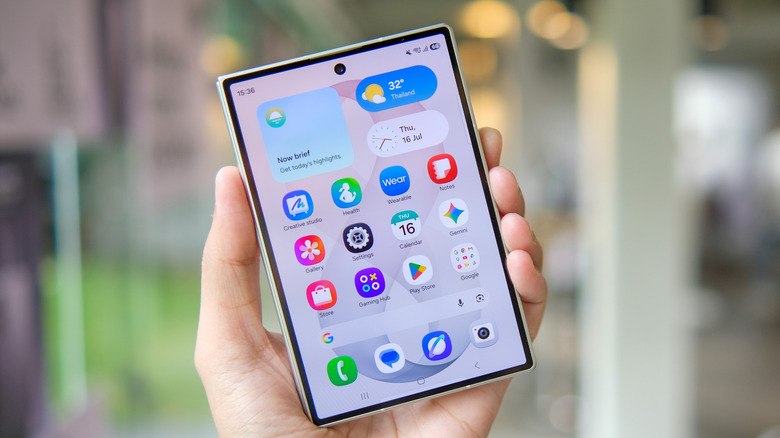
Samsung did something unexpected with its new Galaxy Z line in July 2026, unveiling two book-style foldables instead of one. The $2,099.99 Galaxy Z Fold 8 Ultra is the direct successor to the Galaxy Z Fold 7, while the $1,899.99 Galaxy Z Fold 8 is a brand-new device. The second model, with its passport-style design, has been seen as a preemptive move against Apple's upcoming first foldable iPhone, which should have a similar design. Also, it became significantly more popular with buyers than the Ultra. Consumers interested in the non-Ultra may want to know how durable the smaller Fold 8 model is, and how well it can handle physical stress. The good news is that the handset is stronger than what some people may think, with JerryRigEverything's durability test and teardown videos showing what the foldable can withstand and how it's been built.
The passport-style foldable may lack the "Ultra" label in its name, but the device features similar manufacturing technologies to its sibling. Samsung introduced a new Flex Titanium structure for the screen, which should improve the display's durability while also allowing the Korean vendor to manufacture thinner devices. The titanium plate "helps strengthen display support, absorb pressure and impact, and reduce crease visibility over time," according to Samsung. The structure should also improve the folding and unfolding movement. Zach Nelson, the YouTuber operating the popular JerryRigEverything channel, was able to confirm the titanium layer's presence during his teardown, though he wasn't able to observe the "micro-patterned holes" that Samsung demoed during the Unpacked event with the naked eye.
The Galaxy Z Fold 8 survived Nelson's critical bend test, a key step in his smartphone durability videos. But the foldable does have the same problem as all of its predecessors: The inner display is fragile.
The Galaxy Z Fold 8 can survive almost everything
Nelson puts candybar and foldable phones through his typical durability test. He tries to scratch the display, the rear panel, and sides to determine what will damage them. He applies direct heat to the screen, and he tries to bend the device. Also, his videos featuring foldable devices test the dust resistance claims from the manufacturer. Nelson gave the Galaxy Z Fold 8 these treatments, concluding that the handset is extremely strong overall. But buyers should pay attention to the foldable display, which can be scratched with ease.
The titanium display structure can't prevent scratches. The Ultra Thin Glass (UTG) layer is covered by a plastic protector. The inner screen scratches at level 2 on the Mohs scale, which means fingernails can also damage the screen, as you can see in the video above. The outer screen has a Gorilla Glass Ceramic 3 cover, which scratches only at Mohs level 6, similar to typical smartphone displays. The external screen will also resist heat better than the foldable panel, but both screens will eventually be damaged.
The durability test also shows how the Galaxy Z Fold 8 handles dust. The phone continues to fold and unfold as easily after Nelson drops debris on the foldable screen and closes the handset. On that note, the folding mechanism has been tested to withstand 500,000 folds. Nelson calculated that it would take about 10 years to reach that limit in a scenario where a user would check the handset about 200 times per day, and unfold it about 100 times. Samsung provides seven years of Android and security updates, so the Fold 8 could still be relevant for several years, but that's assuming the foldable display survives long enough.
Repairs may be challenging
Nelson wasn't able to bend the handset's aluminum frame when the Fold 8 was folded or unfolded. By comparison, Nelson has routinely broken Google's Pixel Pro Fold models in recent years when bending the unfolded devices. The Galaxy Z Fold 8 survived bending even when Nelson tried to force the handset to fold backward, in the opposite direction of the folding mechanism. The YouTuber also found that the fingerprint reader continued to work reliably even after being scratched, calling it one of the fastest fingerprint sensors he has seen in phones.
Nelson's tests may be unusual, but they indicate the Galaxy Z Fold 8 will not be damaged easily, especially if handled with care. Users can consider buying a protective case for the frame and a screen protector for the external display. The foldable screen comes with a pre-applied film protector that costs $20 to replace, though Samsung will offer a free replacement in the first year. The foldable screen costs about $579 to replace, according to the YouTuber's second video (above) that shows a teardown of the handset. The cover screen replacement costs $139.
The clip proves that Samsung uses a new titanium layer to support the flexible display. Nelson disassembles the screen and exposes the Flex Titanium structure to a flame. The layer develops an oxide pattern similar to heated titanium. The teardown process reveals how difficult it is to repair the handset. Nelson damages the foldable OLED panel while removing it and ultimately breaks it. In other words, screen replacements should be handled by trained professionals. That said, the teardown also shows the internal structure, with Nelson being impressed by the phone's component arrangement. Replacing the internal parts may be easy once the displays are safely removed.