

A 7th-Grader From Texas Built An Underwater Robot To Study Local Water Health
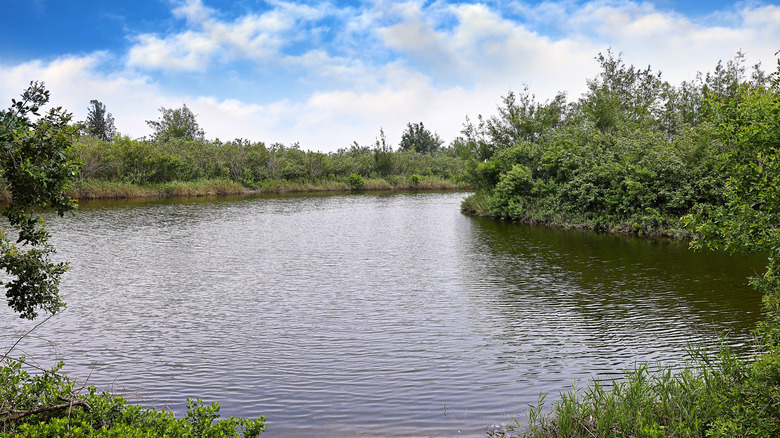
In coastal Texas communities, retention ponds are some of the state's most important (and required) means for managing floods. But these man-made reservoirs do more than just collect storm runoff; they can also become habitats for local wildlife. Finding the ideal balance between urban water management and a thriving ecosystem is challenging. Fortunately, one middle schooler decided to take matters into his own hands by combining marine biology with robotics (and no, it's not a robot you can buy on Amazon).
Caden Terence Pohlkamp, a 7th-grader from Friendswood, Texas, realized the retention ponds in his community are important water control systems that also attract aquatic creatures. According to the Society For Science, the young innovator wanted to find out if there was an "optimal way to design them to provide suitable habitats for the local marine life." Instead of relying on guesswork, he engineered an aquatic remote-operated vehicle.
This submersible data-gatherer allowed Caden to collect samples from the bottom of 12 ponds across his town without disrupting the unique environments. Though robots are starting to take over the human labor industry, that isn't the case here. Caden's project is a smart, hands-on approach to important environmental science, and he proved that sophisticated ecological monitoring doesn't always require big budgets; just a clever design and a passion for aquatic life.
Fountains, flora, and the future of these retention ponds
Once Caden's aquatic robot successfully retrieved water samples from the bottom of these ponds, the analytical work began. The data he collected revealed important insights into what makes these man-made ponds such a thriving sanctuary for aquatic life. Measurements focused on essential survival metrics like pH levels, turbidity (how cloudy the water looks), and dissolved oxygen. Caden's results showed which retention ponds were most compatible with aquatic life.
His robotic findings showed the healthiest ponds had between 15% and 30% non-grass vegetation growing along the edges and contained fountains. Ponds with these features had higher levels of dissolved oxygen, making them superior habitats for marine life. Caden notes that the vegetation is important for offering shelter to fish and helping prevent dangerous algae blooms, which consume the oxygen a pond needs to stay healthy. Armed with this data, the 7th-grader presented his findings to local officials so they could intervene and improve the unhealthiest ponds.
The success of Caden's underwater rover highlights how accessible technology can drive meaningful environmental change. And as floods force coastal communities to expand storm management infrastructure, insights even from small-scale projects like this are vital for keeping local ecosystems alive and thriving. For this ambitious student, building an aquatic robot was just the beginning of a journey toward becoming a marine biologist, and perhaps one day participating in larger-scale projects, like putting more turbines underwater.