

3 Perks Of Switching To An Nvidia GPU, According To Owners
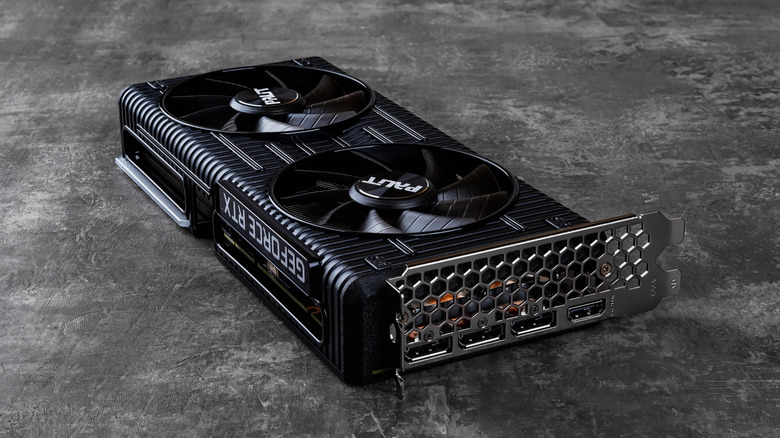
You may have noticed that Nvidia has been incredibly busy in recent years as it essentially pivots away from its gaming business. Not only has the company gone all in on artificial intelligence, it's also been selling graphics cards (GPUs) to a variety of data centers, causing prices to skyrocket as demand outweighs availability. As such, it can be hard to find many true Nvidia likers anymore.
Despite the negativity surrounding the company, there's still a trio of things to praise. The work that it put into various things, like upscaling and frame generation, or ray tracing, still can't be denied. It would have been great to include the Nvidia Broadcast, but almost every thread from Reddit appears to be about how it's a resource hog in the Version 2.x updates. There are also still a few things we haven't covered here that you didn't know your GPU could do.
The multi-trillion-dollar company is a dominant force in computing, so it's no wonder that some things that its graphics cards can do have a few supporters. Just make sure to avoid these Nvidia GPUs if you're deciding to switch over.
DLSS
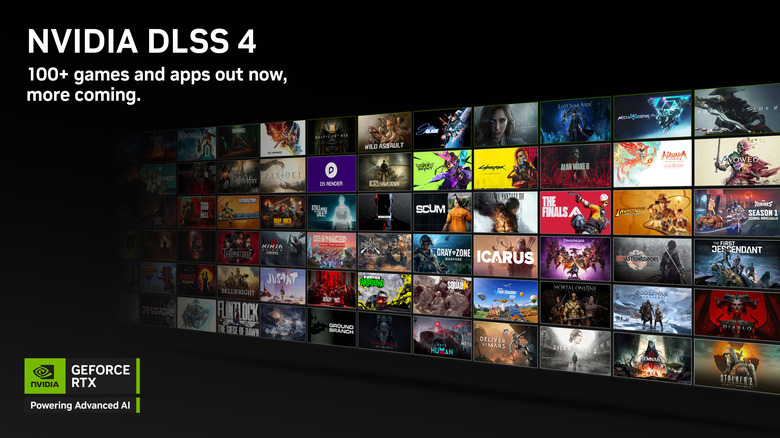
Deep Learning Super Sampling (DLSS) is Nvidia's upscaling and frame generation technology. The benefits of both for boosting performance in games have been widely lauded by users. It's split into different aspects, with each version of DLSS either bringing upgrades to the methods implemented by the algorithms powering it or specific features like "Ray Reconstruction" to assist with heavy-duty ray tracing methods. Most recently, DLSS 5 has been released, which integrates generative artificial intelligence models to introduce attempts at hyper-realistic graphics for video games. This particular version has not been received well.
Primarily though, DLSS is the upscaling tech, introduced on the RTX 20-series, using the Tensor cores to power it. Essentially, DLSS shrinks the resolution of the game down, and then blows it back up with algorithms to reach the desired resolution, while taking a load off the graphics card. This is especially handy for more demanding games on lower-end hardware, but it has been seen as a bit of a crutch in recent years by some. That said, it is regularly touted as the best upscaling tech available, offering better visual fidelity and performance than the Intel and AMD counterparts.
Nvidia's frame generation tech has also become well-liked amongst those online. Despite similar criticisms to upscaling, frame generation can uplift good performance into great, and Nvidia's special sauce behind the scenes with DLSS can still produce a better image.
Ray tracing
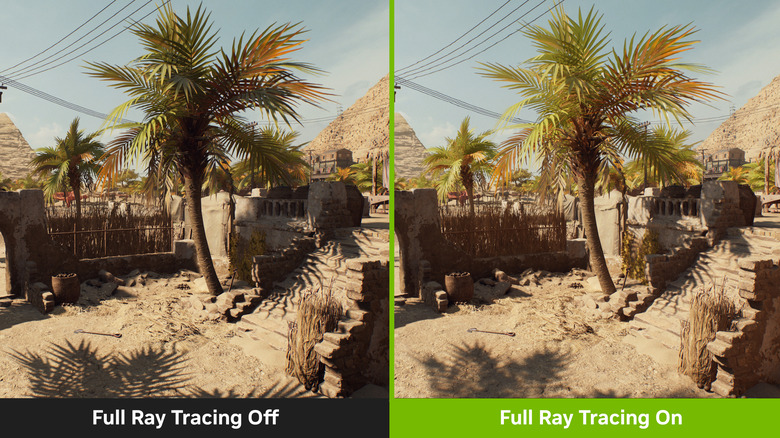
Nvidia still holds the crown when it comes to ray tracing, thanks to several years of improving its tech on the graphics cards themselves. Accelerated by RT Cores, Nvidia even rebranded its GTX line to RTX with the 20-series, as it brought real-time ray tracing to a select few games. Things have greatly improved over the years, mainly thanks to work in other areas, but online, Nvidia is still the go-to when it comes down to ray tracing.
Ray tracing isn't new, having been around for decades. Even the Commodore Amiga in 1986 was able to show off a very early ray tracing demo in "The Juggler." However, Nvidia has been working on the hardware side of things for so long that it has a natural advantage over AMD or Intel. In benchmarks, the RX 9070 XT from AMD is regularly beaten by the Nvidia equivalents when it comes to ray tracing.
Ray tracing has begun to evolve into path tracing, which aims to light games or 3D environments for realism. Games like "Resident Evil: Requiem," the capabilities of the Nvidia cards, and what the game can produce were highlights of coverage of the game at launch.
CUDA
Nvidia's secret weapon within its arsenal, CUDA (Compute Unified Device Architecture), is the software layer used by developers to interact with the GPU. This is done via code, with CUDA being able to be used in a variety of software, but is mostly done with C++. With it, programs like DaVinci Resolve can leverage the hardware further for pushing playback and faster rendering of on-screen effects. Most recently, it has become the primary way for artificial intelligence developers to advance work on model training.
CUDA has become the backbone of many of the non-gaming initiatives that Nvidia has been working on. It's part of the foundations of training robots, with an example being teaching the robot to pour from a kettle. From hundreds of attempts, the software, with CUDA backing, can siphon off successful attempts from the failures. With AI development at an all-time high, as Nvidia continues to see massive dividends from the boom, it's no wonder that CUDA constantly has people asking if they should be learning it online or moving their careers into it.