

Why Is There A Crossed Out Trash Can Symbol On Some Electronics?
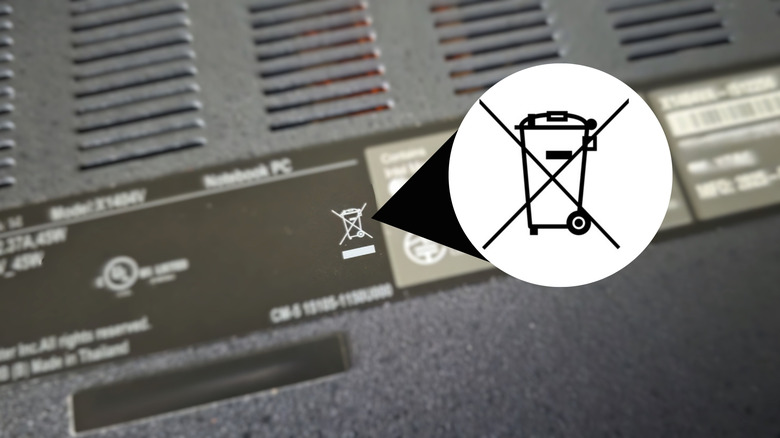
On the underside of most electronics, you'll find a series of icons and symbols that reveal things like safety ratings, specifications, power requirements, legal certifications and a host of other messages. One such symbol is a trash can that has been crossed out. If you've ever wondered, here's where that symbol came from and, more importantly, what it is telling you.
That garbage can symbol is actually really important. It's an e-waste marking that's included due to a prominent European regulation, the 2012 Waste Electrical and Electronic Equipment (WEEE) Directive. Devices with that label must be properly recycled and handled to help cut down on hazardous e-waste, so, obviously, you cannot simply be thrown out in the regular trash. It probably isn't difficult to guess what the symbol means, but the bigger question might be how does it end up on products in the United States if it's a European requirement?
There is no stateside legal requirement to include a symbol like it, although several states have passed similar e-waste recycling laws. But when you see that trash can symbol on a device in the U.S. it's because it was sold globally, and the manufacturer didn't produce separate labels for each market. The U.S. received the same product version as international countries.
What do you do with electronics that have the trash can symbol?
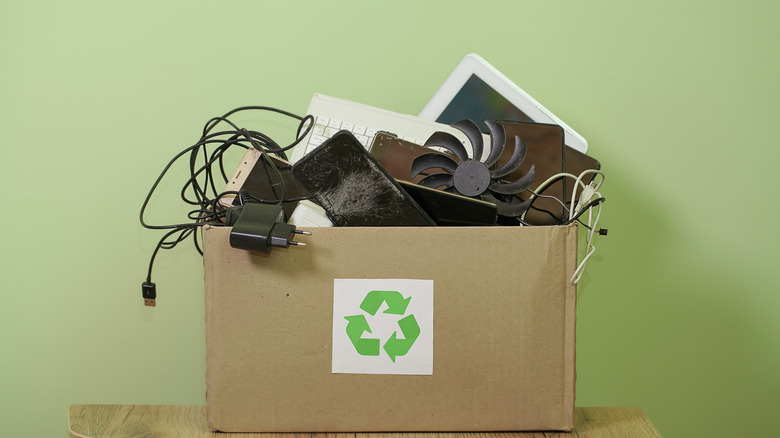
Even if you live in an area that doesn't require you to recycle, it's still a good idea to follow these guidelines. Many modern electronics are considered hazardous e-waste because they contain rare or harmful materials that could contribute to environmental or health-related problems if thrown out improperly. But when it comes to disposing of old electronic devices, you can't just throw it in the recycling bin.
The good news is that there are actually a few options, starting with the most obvious: dropping off the device at an authorized recycling center. Most retailers offer this, including Walmart and Best Buy. Some places will even trade you credits or cash back for items; Costco will trade you for old electronics as will Amazon, but keep in mind that Amazon's tech trade-in program applies to eligible products only.
If you have devices that are no longer safe to use and you need to deal with them promptly, like electronics with bloated batteries or exposed internals, you should look for specialized locations that will safely dispose of the fire hazards. Some municipal dumps or trash centers may take old electronics and properly dispose of them, but you'll want to verify this beforehand. Having a lot of options means you're never really that far away from a viable drop-off center or location, so there's really no excuse for throwing electronic devices in the garbage.
What do those other symbols mean?
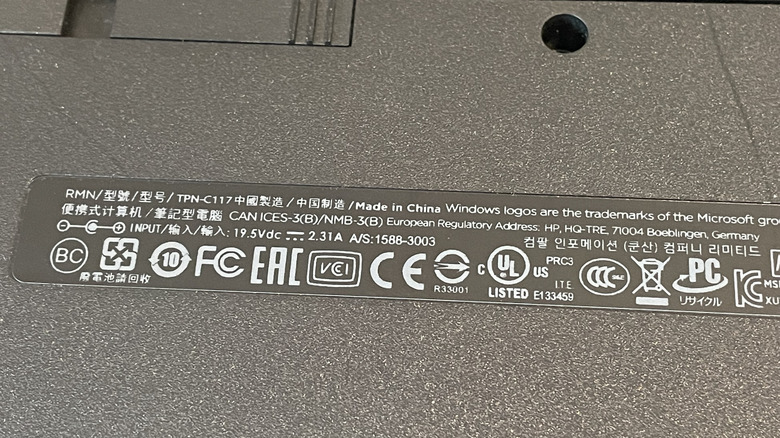
Depending on the type of electronic device and where it was produced and sold, there can be a variety of symbols displayed on the label. Some, like the WEEE Directive trash can symbol, can be universal, while others are specific to certain countries or regions. Since the labels are generally small (even on larger electronic devices), the whole point of the symbols is to relay some sort of information quickly and easily for various safety or certification regulations.
The above image is the label found on the bottom of a Samsung laptop, and it reveals a dozen different symbols. Devices may show fewer symbols or have different ones altogether, but the symbols shown here are a selection of the more common examples. From left to right, here's what the symbols mean:
- BC in a circle: California Energy Commission logo for Battery Charger energy efficiency
- Four arrows in a square: Taiwan recycling logo
- Number inside two semi-circular arrows: related to hazardous substances, depicting the length of time in years that a product should be safe (in this case, 10 years)
- FCC: Certified by the U.S. Federal Communications Commission
- EAC: Certified by the Eurasian Customs Union
- VCI in a square: Certified by Japan's Voluntary Control Council for Interference for noise levels
- CE: European Union compliance
- Arrow through a circle: New Zealand regulatory compliance mark
- UL: Underwriters Laboratories safety mark
- CCC: China Compulsory Certificate
- WEEE Directive
- KC: South Korea regulatory compliance mark