

These Stone Domes In The UK Used To Serve An Unexpected Purpose In The '20s
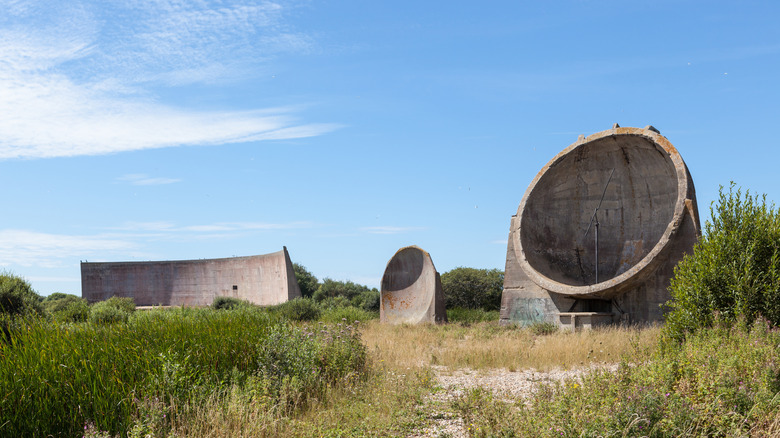
The UK is home to numerous stone-based tourist attractions. The Long Man of Wilmington, Giant's Causeway, and Stonehenge are just a few of these spectacles. But while some of these locations are mysterious (scientists only recently unearthed where Stonehenge's rocks originated), others, such as the three stone domes in Denge, are wondrous because we know exactly how and why they were created.
These stone domes, better known as the Denge Sound Mirrors, are situated near the Greatstone Lakes in the RSPB Nature Reserve. Despite looking like stone, each sound mirror is actually constructed out of concrete and was essentially an early form of radar, or at least an early warning system designed to detect enemy aircraft. Add this to the list of modern technologies that are older than we think.
The Denge Sound Mirrors were built between 1928 and 1930 with Dr. William Sansome Tucker at the helm. At the time, Great Britain was still recovering from World War 1 and was particularly scared of future bombing runs — deservedly so since the country's coastal towns were hit hard during the war. So, the British government invested heavily in acoustic technology that could warn people of incoming attacks and bomber planes. The Denge Sound Mirrors were one result of this research.
How the sound mirrors worked
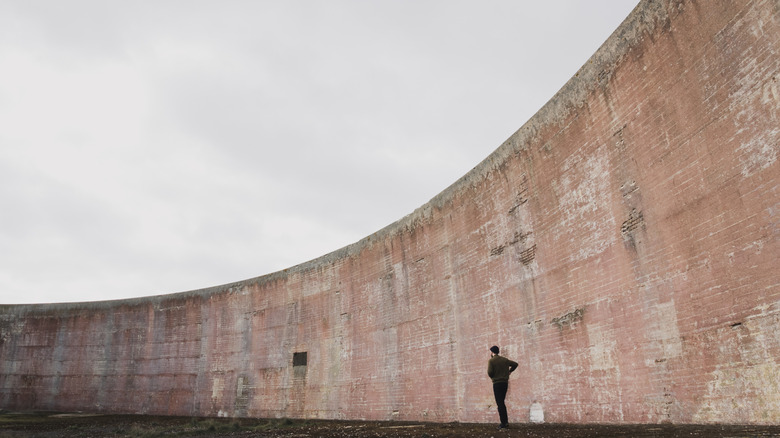
The invention of the radar proper made the sound mirrors obsolete, so the Denge Sound Mirrors were abandoned in 1939. Today, the installation is nothing more than a curiosity, a landmark that gives visitors insight into how early warning systems developed. Understanding the acoustical physics behind the installations also helps.
Each sound mirror is shaped differently and points at a slightly different angle, but they were all arranged so any aircraft sounds they captured bounced back to focal points, amplifying them enough for staff to identify them. Depending on which sound mirror picked up the noise, technicians knew when and where to scramble fighters. The sound mirrors had a max detection range of 20 miles, but back then planes were so slow it was more than enough time to mount a defense.
While the first sound mirror was installed in 1928, it didn't really function as intended, so engineers iterated on the design. The final concrete mirror was built in 1930 and was a huge curved wall with a 30-foot diameter that provided wider detection coverage. This speed of iteration mirrored the rapid development of radar, which was definitely intended. Today, Navy Radars need to (and can) track countless threats at once, and we have decoy systems that trick radars into showing phantom fighter jets. If radar had never been invented or had been held back a few years, imagine what kind of innovations the Denge Sound Mirrors might have experienced.