

The iPhone 18 Pro Is Here With The Biggest Camera Upgrade In Years
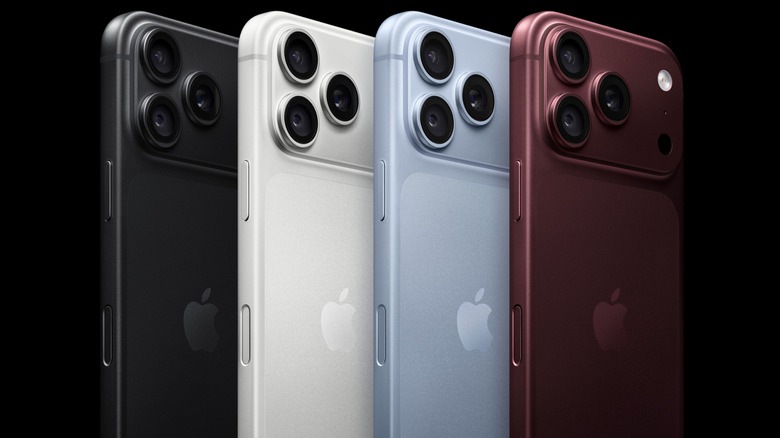
Apple announced the iPhone 18 Pro and iPhone 18 Pro Max on September 9 at Apple Park in the first keynote led by new CEO John Ternus since he took over from Tim Cook on September 1. This year's Pro lineup keeps the aluminum unibody and camera plateau that arrived with the iPhone 17 Pro last year and moves to the 2nm A20 Pro chip and Apple's own C2 modem.
Both the Pro and Pro Max come with a variable aperture main camera, the first time Apple has put aperture control in an iPhone. Reports ahead of the event suggested the feature would be exclusive to the Pro Max, so I'm glad to see it arrive on both new Pro phones.
The iPhone 18 Pro starts at $1,199 and the iPhone 18 Pro Max at $1,299, a $100 increase on each over last year's pricing. Pre-orders open Saturday, September 12, with both phones on sale Friday, September 18. For those looking for a more affordable option, there is no standard iPhone 18 this year. Rumors expect that this device will land in spring 2027 instead, which is when the iPhone 16e and 17e previously launched.
Design: The Dynamic Island is finally smaller
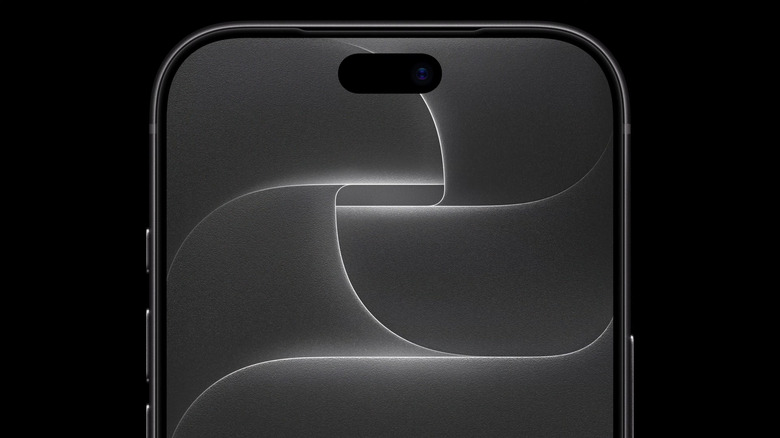
One of the most visible changes to the iPhone 18 Pro is a smaller Dynamic Island, which has shrunk for the first time since it was introduced on the iPhone 14 Pro. To achieve this, Apple has reportedly moved the Face ID flood illuminator beneath the OLED panel, which lets the Dynamic Island occupy less space at the top of the screen. Apple didn't specify the how, and just credited new display technology for the change. It retains all the same functionality it has had for years, and actually gains the ability to show a third persistent notification, just inside a smaller pill. Face ID works exactly as it did before.
Display sizes are unchanged on this year's phones, at 6.3-inches on the Pro and 6.9-inches on the Pro Max. If you're trying to decide which size is better for you before pre-orders open, just take a look at the iPhone 17 Pro and 17 Pro Max — which have been some of the best big phones you can buy in 2026. The panels themselves move to what suppliers have called LTPO+ technology, which is aimed at cutting display power draw rather than adding a new refresh rate or resolution.
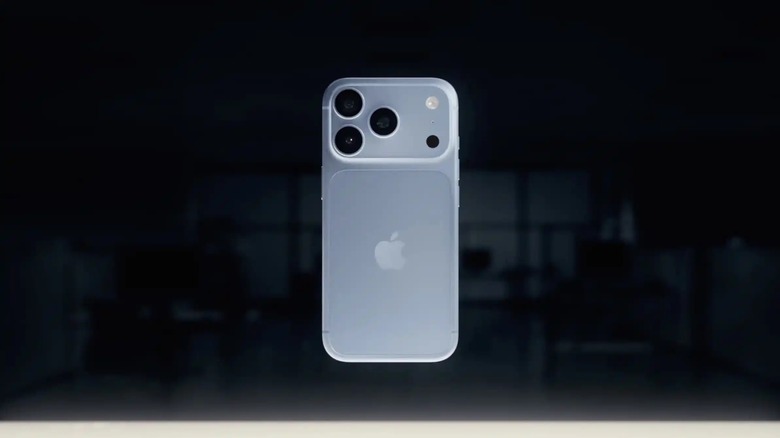
Four finishes are available this year: Black, Light Blue, Glacier, and Burgundy. Burgundy is my favorite this year — it's a deep burgundy that shifts toward purple and brown depending on the light. I expect that it will replace Cosmic Orange as the finish Apple wants on every billboard. Black may be a more meaningful addition for many users, as it's been a few years since Apple released a black iPhone. On the rear panel, the Ceramic Shield MagSafe area gets a more uniform, frosted finish that reduces the two-tone look that the iPhone 17 Pro introduced. The Camera Control button has made it to another iPhone, but in a more simplified version. It drops touch sensitivity and haptics, so the button is now only pressure-sensitive. You probably never use it anyway, so this isn't a significant change by any means.
Cameras: Aperture control arrives on iPhone
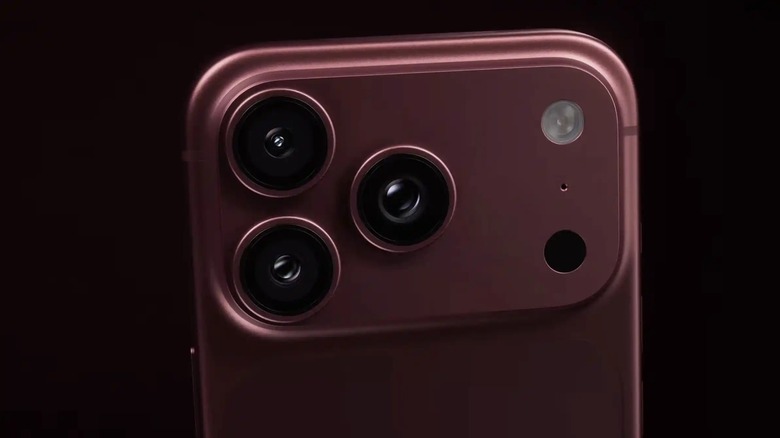
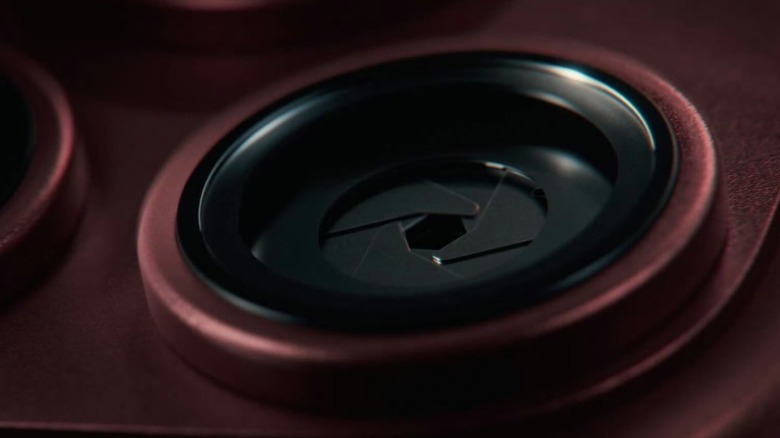
Every iPhone Pro from the iPhone 14 Pro onward has come with a fixed f/1.78 main camera. What this means is that the lens opening never changes and exposure is handled by shutter speed, ISO, and software. The iPhone 18 Pro changes that with a physical iris that opens and closes like a pupil, with six laser-cut blades on a new rotor mechanism, which move smoothly between four aperture settings and open as wide as ƒ/1.48. It gives the 48MP main Fusion camera better control over depth of field and exactly how much light reaches the sensor in bright conditions.
 Apple
Apple
By default the camera picks the aperture for you based on what you're taking a photo of. But what exactly does that mean in practice? Narrowing the aperture keeps more of the frame in focus. You can expect portraits with better blur, since its real rather than from image processing; better nighttime shots, since the camera can let in more light; and more natural motion blur in videos. That being said, a phone-sized sensor is still limited compared to proper cameras. Both phones, otherwise, share the same setup as last year. That means you're getting three 48MP rear cameras covering main, ultrawide, and 4x telephoto, plus the 18MP Center Stage front camera.
Apple has finally added pro controls to the Camera app, which let you customize the app interface and take manual control of your shots, including aperture and shutter speed. Manual exposure control is something photographers have wanted in Apple's own camera app for years, and third-party camera apps like Halide have been the only option for now. Other Camera app changes include Photographic Styles gaining texture and grain controls, Cinematic effects which can now be applied after the fact to footage shot at up to 60 fps, time-lapses recording in 4K and Dolby Vision HDR, and Audio Mix which can isolate music as well as voices.
Performance: A20 Pro, the C2 modem, and 5G from space
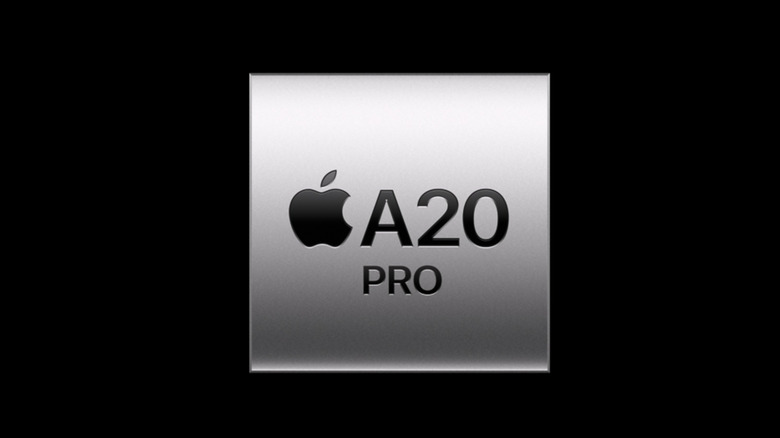
Powering the iPhone 18 Pro devices is the new A20 Pro chipset, built on TSMC's 2nm process. The six-core CPU pairs two Super Cores that Apple says are 20% faster with four efficiency cores, and every core now carries an integrated neural accelerator. The seven-core GPU is one core up compared to the A19 Pro and up to 40% faster for graphics. Memory bandwidth climbs by 50%. The A20 Pro also carries a dual 16-core Neural Engine for 32 cores in total, double what the A19 Pro had, which Apple says doubles on-device AI processing power. That matters more this year than last, because iOS 27 ships with Siri AI in beta and leans on local processing more than any previous iPhone.
Thermals got another major redesign. Apple borrowed some of its M-series chip design to sit the silicon die alongside the memory instead of stacked with it, which pulls the memory out of the chip's thermal path and lets the A20 Pro attach directly to the vapor chamber. That vapor chamber now uses new materials and has three times the surface area of the one in the iPhone 17 Pro. Apple claims up to a 40% gain in sustained performance, which is the number to watch for anyone exporting video or gaming for long stretches.
The C2 modem in the iPhone 18 Pro is Apple's third generation in-house cellular modem, following the C1 in the iPhone 16e and the C1X in the iPhone Air. This is the first time the Pro line has shipped without a Qualcomm modem inside. Apple says C2 uses AI to improve call quality and connection reliability, delivers meaningfully faster uploads than the C1X, and does it while drawing 15% less energy. It also supports mmWave in the U.S., which is the box Apple's own silicon needed to tick before it could replace Qualcomm in the flagship. Apple's N1 wireless chip handles Wi-Fi 7, Bluetooth 6, and Thread.
Battery life: bigger battery = heavier iPhone
Apple is calling this the biggest battery life increase in iPhone history, which seems to be accurate. The eSIM-only iPhone 18 Pro is rated for up to 36 hours of video playback, and the iPhone 18 Pro Max for up to 45 hours. Both figures apply specifically to eSIM-only models, which use the space a physical SIM tray would have occupied for a slightly larger cell worth roughly two extra hours. So iPhone 18 Pro models outside the U.S. likely won't see as larger gains. Charging speeds have been improved too. The iPhone 18 Pro reaches 50% in around 15 minutes wired, or 30 minutes on MagSafe. On the Pro Max, five minutes plugged in buys about seven hours of video playback.
Apple also quoted a second, separate figure for the Pro Max: up to 30 hours of usage on a full charge. That comes from a new battery model built on real-world data across a mix of messaging, streaming, browsing, and navigation, so it's a more honest reflection of a normal day than the video playback number. I expect these new phones will land near the top of our list of smartphones with the best battery life in 2026.
Price, storage, and when you can buy one

Thanks to the ongoing RAM situation, both phones cost more than the iPhone 17 Pro lineup. The iPhone 18 Pro starts at $1,299 for 256GB, up from $1,099 for the iPhone 17 Pro. The iPhone 18 Pro Max starts at $1,399, up from $1,199. Both are available in Dark Cherry, Sky Blue, and Silver. Storage now runs 256GB, 512GB, 1TB, and 2TB, with the 2TB tier a first for iPhone. Both are available in black, silver, glacier, and burgundy.
Pre-orders open on Saturday, September 12, rather than the customary Friday, since Friday falls on the 25th anniversary of the September 11 attacks — a date Apple has historically avoided for commercial announcements before. Both phones become available on Friday, September 18.
Anyone hoping for a more affordable handset option this fall is out of luck. The standard iPhone 18, the iPhone 18e, and the iPhone Air 2 are all expected to release in spring 2027. If the $100 price increase seems a little steep, it may be worth holding out until third-party retailers begin to discount the iPhone 17 Pro devices.