

5 Of The Best Big Phones You Can Buy In 2026
We may receive a commission on purchases made from links.
Over the years, the smartphone market has increasingly pushed towards making bigger phones with more screen real estate, and for good reason. Not only does a bigger screen enhance your streaming experience, but it's also better for work and productivity purposes. You can run multiple tabs simultaneously, work on spreadsheets, game, type, and even video call more comfortably. And because big phones also let manufacturers cram in bigger batteries, more cameras, and more features, when people talk about the best smartphones today, big phones often take the top spots.
In fact, the market demand for these devices is now so strong that there are only a few good small phones left on the market. But how big does a screen have to be for a phone to qualify as a "big phone"? For this guide, we've considered 6.75-6.8 inches as the bare minimum, as that's roughly where industry leaders such as the iPhone 17 Pro Max and Galaxy S26 Ultra sit. However, because we're looking for the biggest phones available, we've also included foldables such as the Galaxy Z Fold 7, which, when opened, offer 8 inches of screen real estate.
That said, picking the best big phones is about far more than just screen size. After all, a large screen without good refresh rates, display quality, battery life, or cameras makes for a far less appealing package. To help you out, we went through the latest launches, looked at what both expert reviewers and general users are saying about the biggest phones available today, and picked five that are not only massive, but also among the best smartphones you can buy right now. And to make sure there's something for everyone, we've also included a couple of mid-range and budget options.
iPhone 17 Pro Max
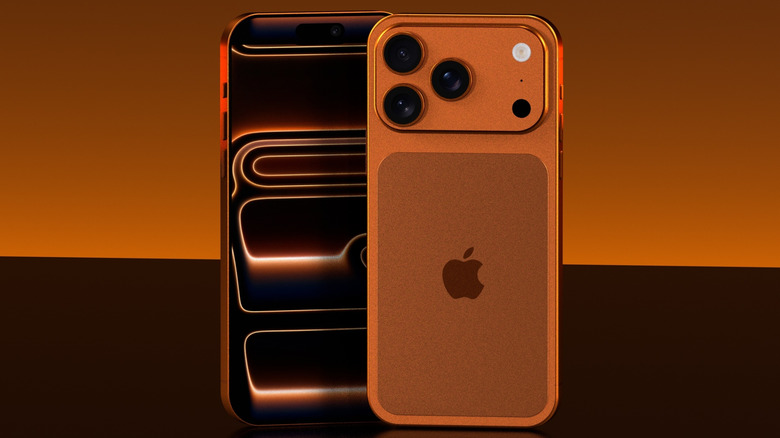
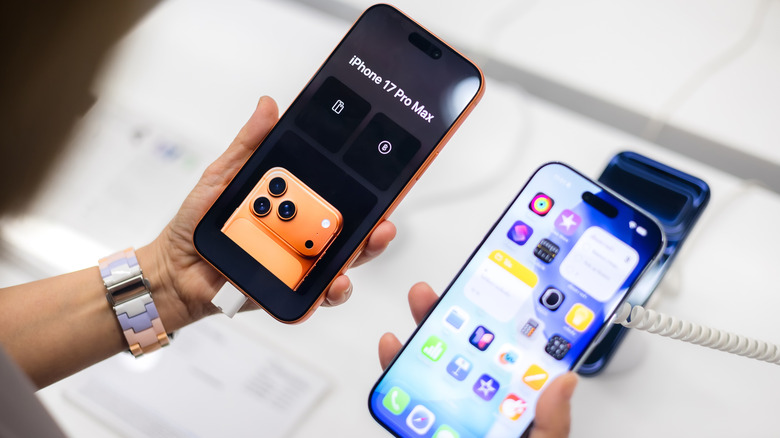
The iPhone 17 Pro Max, priced at $1,199 for the 256GB version, rocks a massive 6.9-inch OLED display, which, along with the Galaxy S26 Ultra, is the largest traditional smartphone display available right now. The OLED display comes with a 2868x1320 resolution and a 120Hz variable refresh rate, allowing for a great streaming experience. Although the design changes — more specifically the new camera bar — on the 17 Pro Max are the most noticeable, Apple has also made several improvements under the hood. According to Apple, the 17 Pro Max delivers the "highest iPhone performance ever" thanks to the A19 Pro chip, which, like the A18 Pro chip, has a 6-core CPU and 6-core GPU.
However, the difference this time is that each GPU core has been integrated with neural accelerators, which, according to Apple, makes the smartphone more efficient while handling AI tasks. Apple claims that the aluminum unibody design and a new vapor cooling system help the 17 Pro Max deliver up to 40% better sustained performance than its predecessor. Yes, it's thicker and heavier compared to the 17 Pro and the Galaxy S25 Ultra, but it also packed the longest-lasting smartphone battery in CNET's hands-on testing in February, 2026. Apple claims it can deliver up to 39 hours of video playback.
Moreover, you get a good set of photography and videography features. Along with a set of three 48MP cameras at the back, the 17 Pro Max is also the first smartphone ever to support ProRes RAW, giving creators more control over their editing. There's also a new Center Stage feature, 8x optical-quality zoom, and Dual Capture.
Samsung Galaxy S26 Ultra
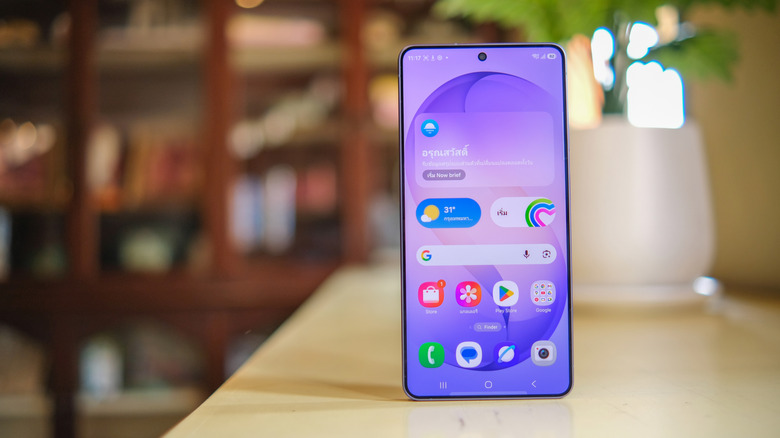
The Samsung Galaxy S26 Ultra is one of the best big Android phone and closely rivals the iPhone 17 Pro Max, not only in terms of its huge 6.9-inch 3120x1440p AMOLED display, but elsewhere too. Its 256GB version is currently available on Amazon for $1049.99. Powered by a Snapdragon 8 Elite Gen 5 chip and featuring Samsung's new, roomier vapor chamber, the S26 Ultra can not only perform well under productivity tasks and long gaming sessions, but also manages to stay cooler than its predecessor.
Despite matching the 17 Pro Max in screen size, it's slimmer (0.31 vs. 0.35 inches) and lighter (0.47 vs. 0.51 pounds). Samsung has also impressed expert reviewers with its unique Privacy Display feature. It's a feature that reduces side viewing angles with just a tap — doing away with the need to stick external privacy screen protectors on top of your display. The display now also features anti-reflective coating, which, combined with 2,600 peak nits, makes for great outdoor viewing. The Galaxy S26 Ultra is also the better choice for people who want newer AI capabilities. With this phone, you get Now Brief, Now Nudge, Photo Assist, and Finder to Search features.
The S26 Ultra features a 5,000 mAh battery that delivers over 16 hours of nonstop usage, according to Tom's Guide's battery test. It also comes with a 200MP main camera and a 50MP telephoto lens, and according to hands-on testing from GSMArena, it's unequivocally the better camera for zoomed photos than the 17 Pro Max. Its regular photo shooting capabilities are also on par with the 17 Pro Max, though the latter is slightly more consistent in its output.
Samsung Galaxy Z Fold 7
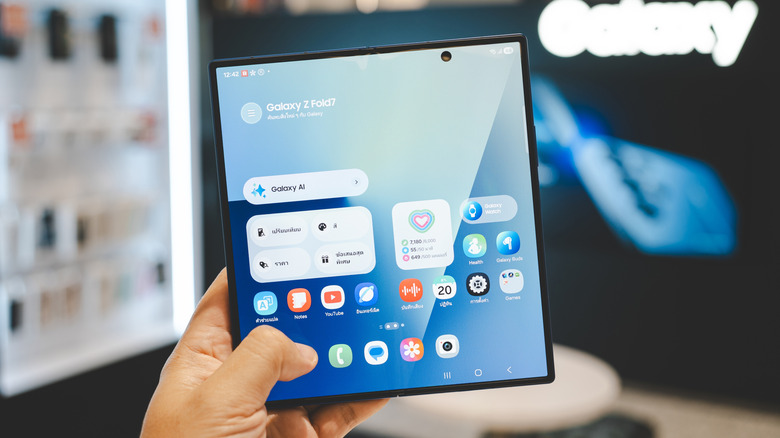
When it comes to raw screen real estate, foldables are the clear winner, and the Samsung Galaxy Z Fold 7 is one of the best folding smartphones in 2026. Priced at $1,599.99 for a 12GB/256GB model, it packs a gorgeous 8-inch display when fully open, and even its unfolded 6.5-inch cover display is quite big — bigger than the 6.3-inch iPhone 17, in fact. The Galaxy Z Fold 7 has made significant improvements over Fold 6. For starters, not only is its main screen 0.4-inch bigger, but the phone is also thinner and lighter.
It weighs just 0.47 pounds, which is almost the same as the single-screen Galaxy S26 Ultra. And it measures 0.35 inches when folded, which is the same as the iPhone 17 Pro Max. The main display features a 2184 x 1968 AMOLED panel with an adaptive refresh rate of up to 120Hz. All this translates into a smooth, crisp viewing experience. Also, Samsung has used Armor Aluminum to make both the frame and hinge stronger. The phone has a Snapdragon 8 Elite chip, and Geekbench performance scores of the Z Fold 7 are around the same as the Galaxy S25 Ultra.
Another massive upgrade is the camera setup. The Z Fold 7 features a 200MP main camera compared to the 50MP sensor on the Z Fold 6. It also gets a 10MP front camera, replacing the previous 4MP one. According to reviewers at TechRadar, these are the best smartphone cameras on a foldable. The only real gripe reviewers have with the Z Fold 7 is its slightly below-par battery life. According to Tom's Guide's battery testing, it clocked just around 11 hours of nonstop usage while browsing on 5G.
OnePlus 15
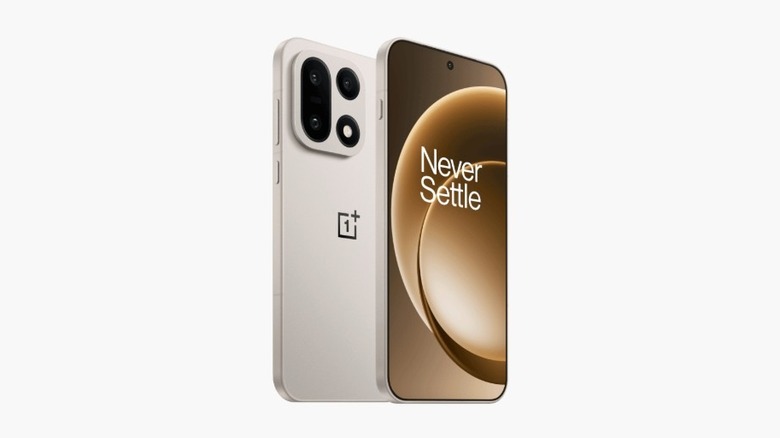
If you want a big-screen smartphone without having to splurge upwards of $1,000 on an Apple or Samsung flagship, or a foldable, the OnePlus 15 is a good choice. Its 12GB RAM/256GB storage version is currently available on Amazon for $848.99, and there's a lot more to like here than just its large 6.78-inch 1.5K OLED display. It's one of the few phones to use a silicon-carbon battery, and so it's able to pack a big 7,300mAh capacity without making the phone any thicker.
The phone performed well in Tom's Guide's battery testing, where it clocked an impressive 25 hours and 13 minutes of nonstop usage. Even better, the phone weighs just 0.47 pounds and is only 0.32 inches thick, which is right on par with the Galaxy S26 Ultra. As for charging, it comes with an 80W SuperVOOC charger in the box, which can charge the phone up from 0 to 81% in just 30 minutes. You also have the option to use a 100W GaN charger for even faster charging.
The phone also feels powerful when running multiple apps at once or playing heavy games. Speaking of gaming, Tom's Guide's 3DMark WildLife Unlimited test found that it delivers better multi-core scores than all of its closest rivals, including the iPhone 17 Pro Max. Moreover, there are three 50MP cameras at the back, including a telephoto lens with 3.5x optical zoom, along with a 32MP selfie camera. TechRadar found that it delivers excellent value for the price and is, in fact, "the best camera phone for shooting a fast-moving subject."
Nothing Phone (4a) Pro
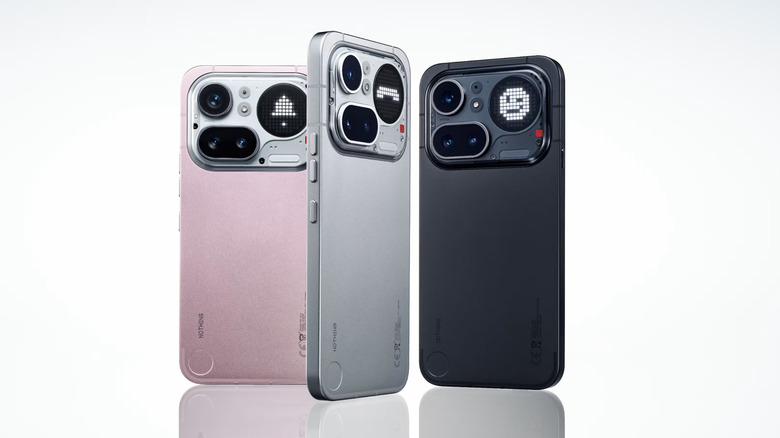
The Nothing Phone (4a) Pro is an affordable but good all-round big phone under $500. Its 8GB/128GB version is currently available for $426 on Amazon, and its 12GB/256GB version costs $599. It comes with a 6.83-inch AMOLED display, which is almost as big as the iPhone 17 Pro Max and the Galaxy S26 Ultra. Sure, its 2800x1260-pixel resolution may not be the best on this list, but according to TechRadar, it still delivers "deep blacks that offer a real HDR pop to everything you see."
Plus, it's also very bright, with a listed peak brightness of 5,000 nits. Furthermore, despite packing a large screen, the (4a) Pro is just 0.313 inches thick and weighs only 0.46 pounds. This makes it slimmer and lighter than the 17 Pro Max. You also get a big 5,080mAh battery, which, according to Nothing, delivers up to 17 hours of nonstop usage. The cameras are decent as well, with Tom's Guide concluding that the (4a) Pro is comparable to the Google Pixel 10. Of course, Nothing's most unique feature is its customizable Glyph Matrix at the back.
From seeing a caller's ID, the time, battery level, or progress on apps such as Uber and Google Calendar, to being able to create custom glyphs for specific tasks — the Glyph interface is a fun yet productive addition. It allows you to limit distractions without having to ignore important notifications. The (4a) Pro does away with Nothing's fully transparent backplate. But if that's something you want, you can instead get the base Nothing Phone (4a), which still features quite a large 6.8-inch screen.
How we selected these big phones
Our first step was to define what qualifies as a big phone. We took the iPhone 17 Pro Max as the benchmark and sought to pick phones with around the same screen size. We've also included a foldable, as they offer the biggest screen real estate of any smartphone. We also didn't just go by specs alone and pick the smartphones with the biggest displays. Our foremost priority was selecting excellent overall smartphone packages (with strong performance, cameras, and features) that also happened to have massive screens.
We also wanted to give our readers options across various price segments, and so we picked the likes of the Nothing Phone (4a) Pro and the OnePlus 15, both of which are great big-screen smartphone options for users under the $1,000 and $500 budget range. As for picking the phones themselves, we looked at reviews and ratings from both expert reviewers across popular and trusted tech platforms, as well as what general users are saying on platforms such as Amazon and Reddit.