

6 Unique Gaming Consoles Released Only In China
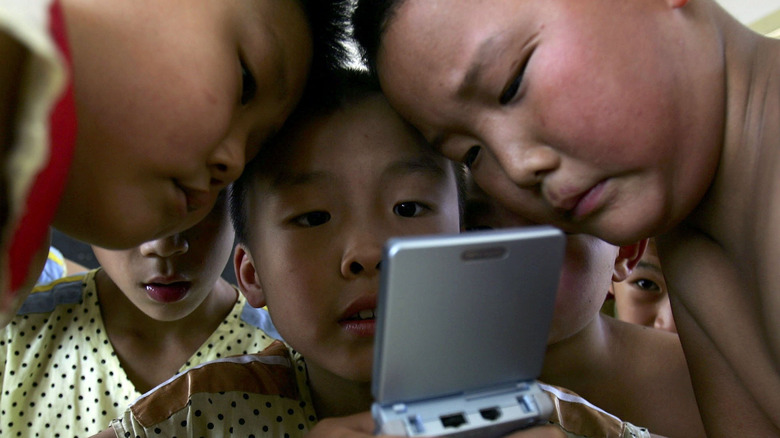
Chinese consoles are such a fascinating topic to dive into. From Nintendo allowing other companies to rebrand and distribute its hardware to a rich history of bootlegs, it's cool to see how the country's manufacturers responded to the booming video game industry. Famiclones were the hot thing for a while, with company Subor even snagging Jackie Chan for a spokesperson role. These were, well, clones of the Nintendo Famicom, which was released in the West as the Nintendo Entertainment System (NES).
As the official device was too expensive, clones that released a few years later dominated the Chinese market thanks to the significantly lower pricing — that, or the system would come combined with a computer. Chinese handheld systems have become prevalent in recent years, especially with the interest in retro emulation taking off. Ayn, Retroid, Anbernic, MagicX, and so on are providing solid handhelds aimed at emulating, with the Ayn Thor becoming the new hardware darling. However, the systems we're going to talk about today aren't something you'd find anywhere too far from China when they were released.
iQue Player
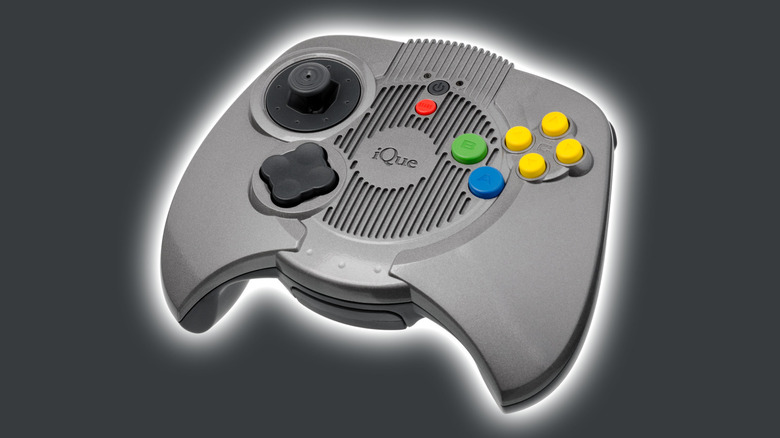
In 2002, Wei Yen, a Taiwanese-American engineer, entered into business with Nintendo to set up iQue. This would be the second time the two would work together, as Yen had previously been senior vice president at Silicon Graphics while that company assisted with Project Reality, which went on to become the Nintendo 64. It's a localization company now, but during the 2000s, it was Nintendo's way to distribute hardware in mainland China. This was just two years into the console ban, but there was a small loophole: handheld consoles weren't subject to the ban.
In 2003, iQue released the iQue Player, a plug-and-play controller that essentially contained a Nintendo 64 within it. The brand would go on to release several Game Boy equivalents (more on those next), but suffice it to say that things were a little weird with these releases, with the iQue Player often getting the most attention thanks to its exclusivity.
There was only "Dr. Mario 64" included on the system, with timed trials for "Ocarina of Time," "Star Fox 64," "Super Mario 64," and "Wave Race 64." In total, 14 titles were released on the iQue Player up until 2006, which were distributed by taking it to a kiosk and transferring the game to the memory card. The last two games released were "Animal Crossing" and "Custom Robo." The "Zelda" spin-off, "Majora's Mask," was advertised for the system, but never released.
iQue Game Boy Advance and Nintendo DS variants
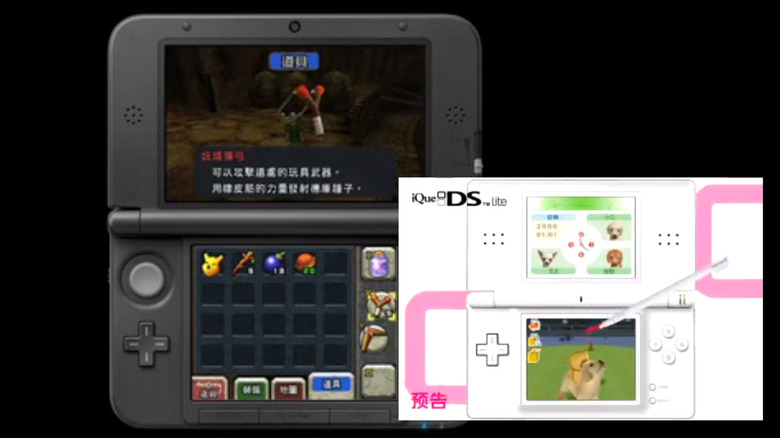
In 2004 and 2005, iQue released all three versions of the Game Boy Advance, including the Micro. The iQue DS and iQue DS Lite came in 2005 and 2006, followed by the iQue DSi in 2009 and the iQue 3DS XL in 2012. The systems themselves weren't exclusive to China — some were also sold through Taiwan's ETMall channels for a short time — but we're still including them on this list since the vast majority of sales were in mainland China and the two countries have deeply intertwined commercial histories. And ultimately, the way they were distributed in China is what makes them unique.
Only eight games were released for the GBA, with unreleased translations making their way onto the Chinese market site, TaoBao, carrying an asking price of $4,500 for the lot. According to a report, iQue backed away from releasing any more titles, as piracy was running rampant on the systems thanks to flash carts.
The DS saw even less software, with only five games released. Meanwhile, Nintendogs came baked in with the DSi. What made the DS a handy system to have is that importing games was fairly easy thanks to no region locking. While the iQue DS systems were region-free, the games weren't, so they aren't playable outside of the iQue ecosystem.
Then, things got worse with the 3DS. Not only is there a region lock on the console, but it can also only play titles that were released in the region. No eShop access, but "Mario Kart 7" and "Super Mario 3D Land" came preinstalled on every device. The other titles included "Mario Tennis Open," "Nintendogs + Cats," and "Luigi's Mansion: Dark Moon," as well as "Pokémon Sun," "Moon," "Ultra Sun," and "Ultra Moon."
Xiaobawang Education Computer SB-926
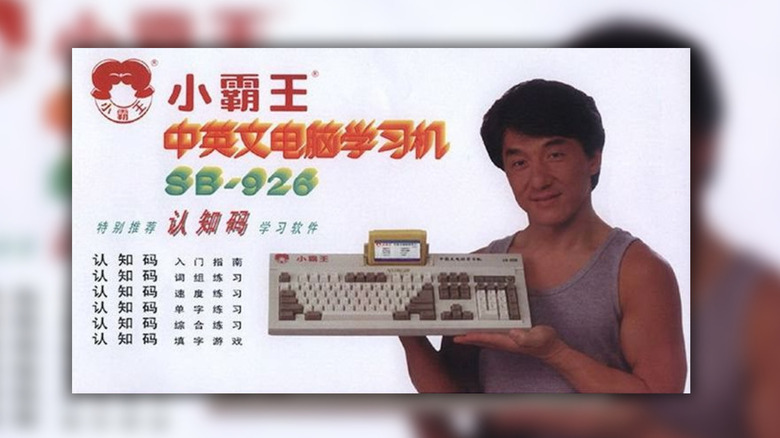
A bizarre Famicom clone, the Xiaobawang SB-926 essentially housed two entire machines inside a keyboard, including a fully functional Famicom clone. The PC side of things supported BASIC and several programs, like calculators and rudimentary games. These were provided on a cartridge, with several versions available. One shown by YouTuber Inkbox was version four of the software package. When it came time to play Famicom games, the same cartridge port would be used, and an included controller would plug into the side.
The Xiaobawang Education Computer SB-926 was put together by Subor (the English name for Xiaobawang) and was a lot of Chinese youngsters' first way to play Nintendo console games. It was such a success that Jackie Chan became a spokesperson for the company — but Subor would hit hard times when the console ban came in. It has pushed through and still continues to be in business, despite reports that confused another virtual reality entity with a similar name going under.
The SB-926 would be the last system under Subor director Duan Yongping. Under his watch, Subor's line of Famiclones and home computers became massively popular, with the SB-926 released in 1995, and its first, the D25, released in 1989. Duan Yongping would go on to found a small company called BBK Electronics, which was behind Oppo, OnePlus, Realme, Vivo, and plenty of other brands across a huge roster of electronics.
ZTE FunBox
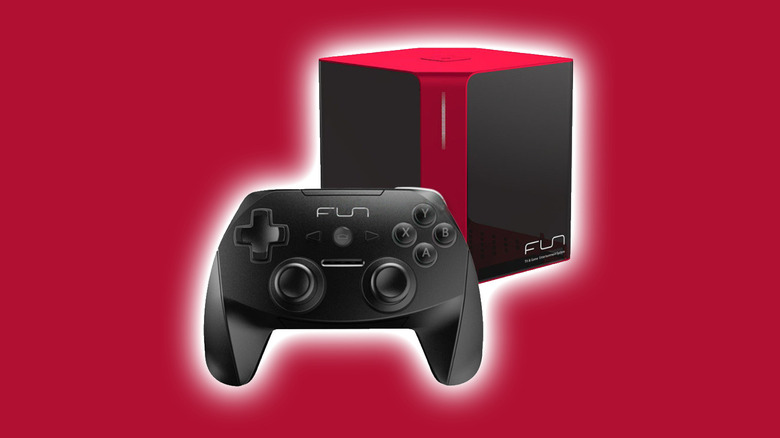
Around the time of China lifting the console ban, a handful of Android or PC set-top boxes were announced. Some of them, like Subor's Z+ system, never officially made it out to shelves, but the ZTE FunBox enjoyed a short lifespan before also vanishing into the ether. A joint venture between ZTE and The9, it was an Android-based box with 2 GB of RAM, micro USB, Wi-Fi, and Bluetooth.
Information on the console's success is thin, if not nonexistent. Once it was released in China, there's just generally very little information on how it was received. That said, maybe that's a bigger indicator than a news article stating that it flopped horribly. As the console ban lifted, there was a rush to take hold of the market, and it's very likely ZTE just didn't survive the stampede as intended.
Reportedly, EA and Take-Two were said to have projects coming to the ZTE FunBox, but again, not much information is available about these from after the box hit shelves. If it was running Android and launched around 2014, it would probably coincide with EA and Take-Two's general uptick in supporting Android phones.
Sports Vii
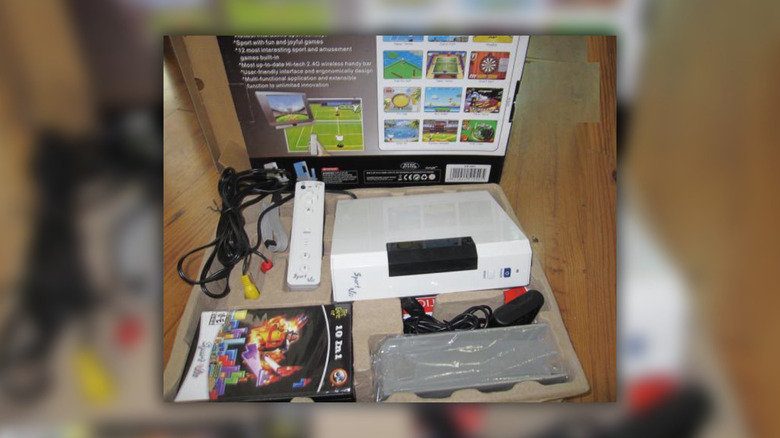
At the height of the Nintendo Wii craze in 2007, China was very much under its console ban. To get around the console ban, hardware was positioned with alternative features so that it wasn't just a game machine. Part of that was the Sports Vii, released in 2007 to the bemusement of various websites at the time. Engadget's old Chinese division covered it, taking a look at the various games and hardware.
It was very clearly a super low-powered device. All the games that came included with the Vii were mostly "Wii Sports" or "Wii Play" rip-offs, with tennis, golfing, and table tennis highlighted as part of its selection. However, the Vii was only capable of 16-bit games, equivalent to the Sega Mega Drive or Super Nintendo over a decade prior. Supposedly, there were also blue and pink color schemes available.
It was apparently successful enough for a second revision of the hardware, ditching the Wii look. Instead, the second iteration opted for a horizontal approach, with a less Wii-like remote. Inevitably, the second console was rebranded and shoved back out the door in other regions, notably releasing in Japan.