

5 Popular Android Phone Brands Once Owned By China's BBK Electronics
Many smartphone users may not be aware that BBK Electronics was one of the world's top smartphone vendors until it was dissolved in April 2023, competing directly with Apple, Samsung, and others. BBK controlled various smartphone brands, including Oppo, Vivo, OnePlus, Realme, and iQOO. Longtime Android users who have been keeping tabs on the industry may be familiar with several of these companies, as they have launched competitive devices over the years and come up with various innovations that challenged the more established handset makers in the industry. OnePlus is the most popular of the pack in Western markets, including the U.S. and Europe. During its early years, OnePlus challenged Apple and Samsung by making "flagship killer" handsets at much lower price points. OnePlus matured into a more traditional handset maker after that, coming under Oppo's control.
Realme is also an Oppo subbrand, though it sells phones under its own name. The company made an impression in recent years for its increasingly faster battery charging speeds that allowed some of its handsets to reach a full charge in just a few minutes. iQOO is a subbrand of Vivo, known for high-end gaming smartphones that feature powerful specs, extra cooling, and dedicated buttons. iQOO devices compete against similar gaming phones from Asus and ZTE's Nubia.
Combined, the now-independent former BBK smartphone brands make up about 20% of the smartphone market on average, or about as high as Samsung's or Apple's. However, these phones may not be as broadly available as iPhone 17 and Galaxy S26 models. Instead, some of the handsets these five brands sell are only available in specific markets outside China.
Oppo
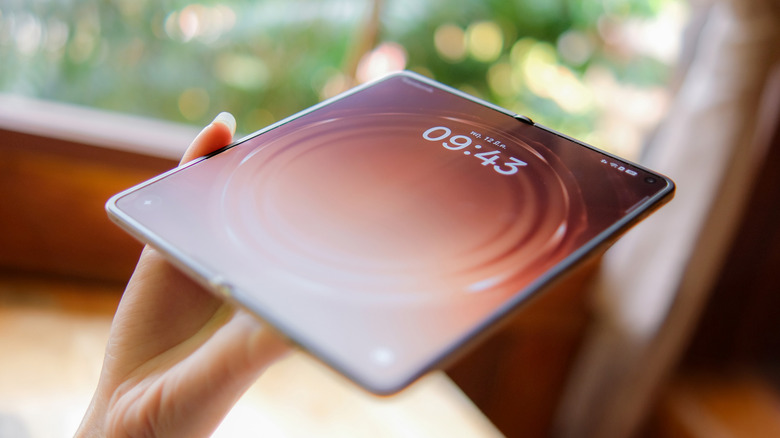
Oppo is the oldest of the former BBK subsidiaries on the list, having been established in 2004. The company made digital audio products before switching to phones in 2008. That year was also when the first Android phone was released, Google's G1 handset, made by HTC and launched in partnership with T-Mobile in the U.S. A year earlier, Apple released the original iPhone, the device that revolutionized the smartphone industry, convincing most smartphone vendors to create devices featuring large touch screens. It took Oppo a few more years to launch its first smartphone, the Find X903, released in 2011. Oppo kept using the Find brand, making several flagship handsets under that brand. The list includes the Find X9, Find X9 Ultra, and Find N6 foldable.
Oppo's share of the worldwide smartphone market was 8.1% in 2025 (102.0 million units), according to IDC. By comparison, Apple sold nearly 248 million units (19.7% market share), followed by Samsung with 241.2 million units (19.1% market share). Oppo has been selling over 100 million phones since 2020, with 2021 representing a peak for the company: 133.5 million units, or about 9.9% market share, according to IDC. China, India, and Southeast Asia are Oppo's main markets, though the company is also present in Europe.
Oppo has come up with several innovations over the years. For example, Oppo introduced 125 W (wired) and 65 W (wireless) battery charging technology back in 2020. In 2019, the Oppo Reno 5G became the first commercial 5G handset in Europe. In 2017, Oppo launched a periscope zoom camera system at MWC. In 2026, Oppo launched the Oppo Find N6, calling it the world's first foldable with a creaseless display.
Vivo
Vivo was the second-largest smartphone brand in BBK's lineup after Oppo, having been founded in 2011. Like Oppo, Vivo is a top 5 worldwide smartphone vendor. Vivo registered slightly better sales than Oppo in 2025 (103.9 million), giving the company an 8.2% market share. Thus, Vivo and Oppo ranked fourth and fifth in IDC's worldwide smartphone sales rankings for 2025. Vivo saw peak sales during the pandemic, selling 128.3 million units worldwide in 2021. The brand was also China's largest smartphone vendor in 2024 as per Canalys (via Reuters), capturing 17% of the market, followed by Huawei's 16% and Apple's 15%. Vivo was also the top smartphone vendor in India during 2025, according to Omdia.
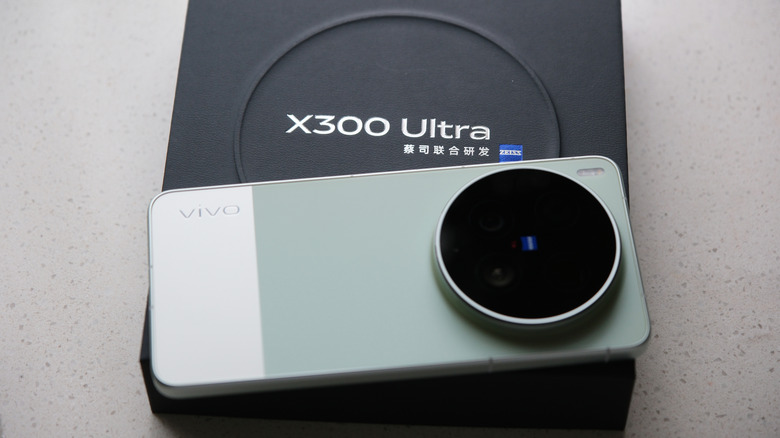
Vivo doesn't sell any of its smartphone models directly to U.S. consumers, so buyers would have to import devices from Europe. Buying a Vivo phone from China is another option and may offer buyers much lower prices, but Chinese versions don't come with Google services preinstalled. Vivo's most notable recent flagships include the Vivo X300 and X300 Pro launched in October 2025, while the company announced the Vivo X300 Ultra in Europe in March 2026. Moreover, the Vivo X Fold 5 foldable was launched in July 2025.
The former BBK subsidiary is responsible for several notable smartphone innovations, such as the Hi-Fi audio chip in Vivo X1 (2012). The Vivo X5 Max released in 2014 still holds the record for being the world's thinnest smartphone, measuring just 4.75 mm.
OnePlus
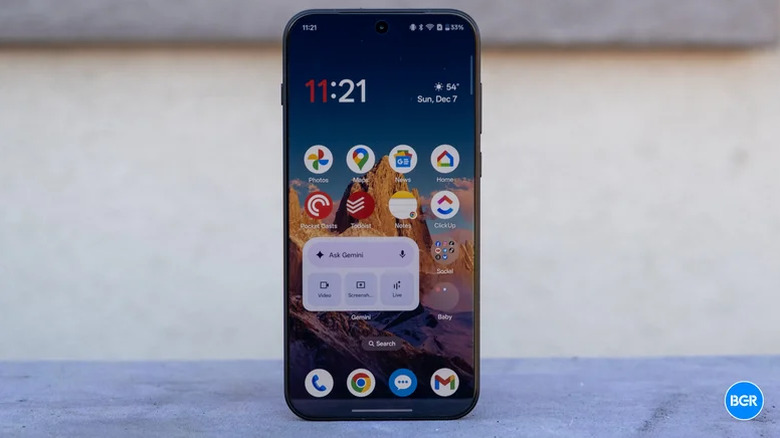
OnePlus was the third-oldest smartphone brand in the former BBK group, but it might be the most widely recognized brand of the lot in Western markets. It's the only company of the five vendors on the list that sold phones in the U.S. directly until recently. Unfortunately, in 2026, OnePlus decided to stop selling handsets in the U.S. and Europe.
OnePlus was founded in 2013 by former Oppo executives Pete Lau and Carl Pei, who set out to make more affordable flagship products that competed directly against iPhone and Samsung devices. The OnePlus One, launched for $299 in 2014, made waves in the industry, and OnePlus's community-driven marketing approach gave the company a cult following. OnePlus kept iterating on its flagship killer concept, creating improved handsets in the years that followed, but also raising the starting price for its flagship killers. In 2021, OnePlus was integrated into Oppo, with Lau staying as an executive. Carl Pei left OnePlus a year earlier, founding the British smartphone vendor Nothing. OnePlus phone shipments peaked in 2023 (17.1 million units), giving the company a 1.5% share of the global market, according to IDC (via The Economic Times). Global sales dropped to 11.6 million units in 2025.
The OnePlus 15 is the latest flagship model from the company, a device that features high-end specs such as the Snapdragon 8 Elite Gen 5 chip, a 7,300 mAh silicon-carbon battery, and the world's first 1.5K 165 Hz LTPO display.
Realme
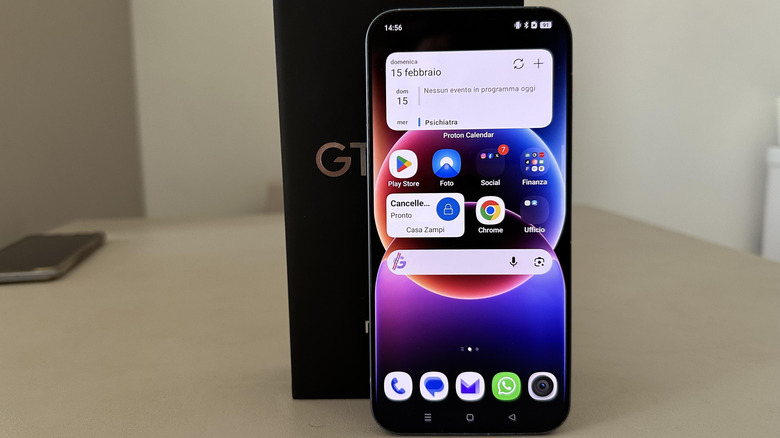
Realme is a younger smartphone vendor that was previously controlled by the BBK Electronics group. It was founded in 2018 to focus on more affordable devices and target younger, budget-conscious buyers. India was the main focus for Realme, a country where OnePlus had also been successful. But Realme registered much higher sales, peaking at about 58 million units globally in 2021, per Omdia findings. Realme sold 48.2 million units in 2024, with sales dropping 13% a year later. In January 2026, Realme announced it would become an Oppo subbrand to increase operational efficiencies, but the brand continues to sell handsets under its own name, just like OnePlus does.
When it comes to notable innovations from the brand, the Realme X50 Pro is one such device, which became India's first 5G handset in February 2020. In addition to more colorful designs that may appeal to a younger audience, Realme came up with a color-changing smartphone in 2025, the Realme 14 Pro series. But Realme may be best known for its battery charging innovations. In late February 2023, the Realme GT3 introduced 240 W charging globally at MWC. A year later, the brand even demoed a phone concept capable of reaching 320 W charging speeds. Realme's latest lineup includes the Realme GT 8 Pro flagship (image above) and the Realme 16 Pro+ mid-range phone.
iQOO
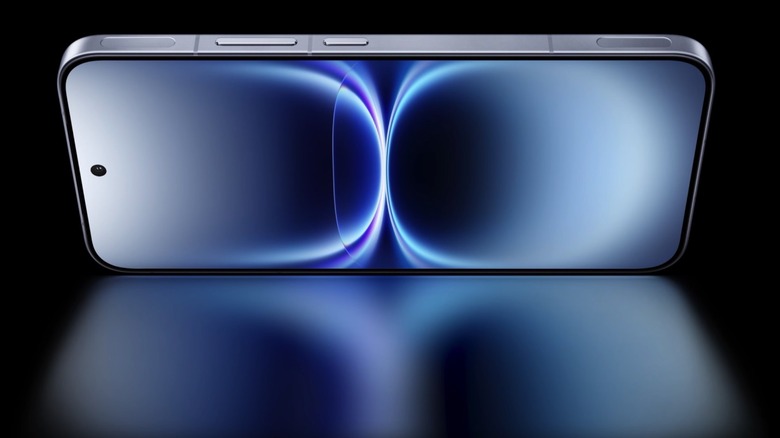
The most recent addition to the BBK Electronics group was iQOO, which may be the least well-known smartphone brand of these five companies. Launched in 2019, iQOO operates under Vivo and has grown significantly in recent years in China and India. iQOO phones focus on performance, featuring high-end components, including chips and displays, while also supporting fast-charging batteries (up to 200 W) and cooling technologies. Thus, iQOO allows Vivo to target consumers who want high-end devices that prioritize Android gaming experiences.
The company's current lineup includes the iQOO 15 Ultra, a flagship Android phone whose most expensive version has more RAM than the base M5 MacBook Air (24 GB vs. 16 GB). The iQOO 15 Ultra may target gamers, but it's also ready to offer a flagship Android experience for day-to-day tasks. The phone also features an active cooling fan that should support extended peak performance from the Snapdragon 8 Elite Gen 5 chip.
Over the years, Vivo released various notable smartphone innovations via the iQOO brand. The iQOO 10 Pro (2022) was the first commercial phone in the world to support 200 W charging. In 2024, the iQOO 13 featured the world's first 2K 144 Hz OLED panel from BOE, a display that also offered "Ultra Eyecare" features meant to improve eye health.