

Google Pixel 11 Vs. Pixel 11 Pro: Should You Spend The Extra $200?
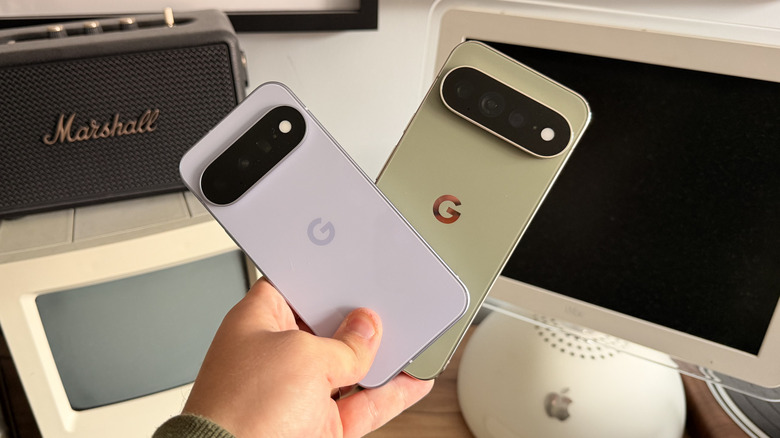
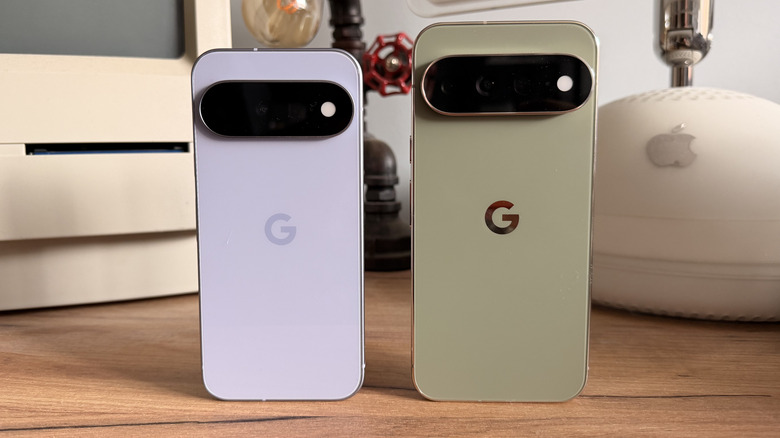
The Pixel 11 starts at $899 and the Pixel 11 Pro starts at $1,099. Both phones have a 6.3-inch screen, both run Google's Tensor G6 chipset, both start with 12GB of RAM and 256GB of storage, and both get seven years of software, security, and Pixel Drop updates. They're the same size, take the same accessories, and if you put them face down on a table you'd struggle to tell them apart — were it not for them coming in different colors. The Pixel 11 comes in Frost, Pistachio, Hibiscus and Obsidian, and the Pro range in Canyon, Olive, Fog and a matte Obsidian.
But the $200 price difference between the devices is more important than ever in Google's lineup this year. The Pro brings a better display, a much stronger camera system and a handful of features Google has decided are Pro-only, including HiLight and 120x Pro Zoom.
I've spent two weeks with the Pixel 11 and two weeks with the Pixel 11 Pro XL, which shares its camera, display technology, and feature set with the smaller Pro. Here's what separates the two, and who should actually pay the difference.
Pixel 11 vs Pixel 11 Pro: What's the same?
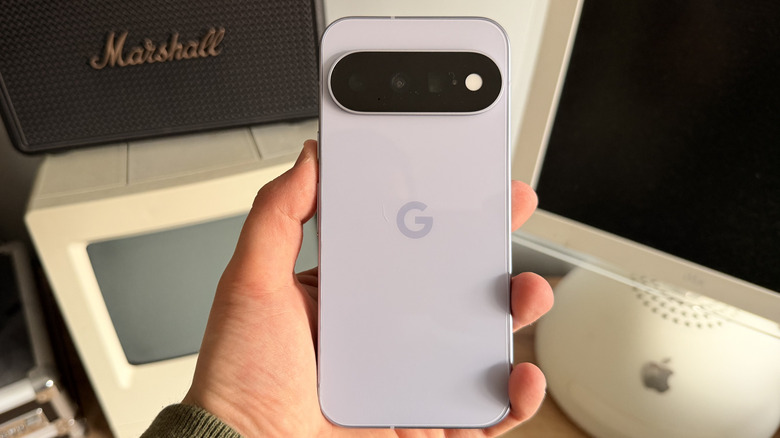
Between the two phones, there's more that's the same than you'd expect for the price difference. Both phones run on Google's own Tensor G6 chipset with Titan M3 security coprocessor — though there are many Android phones more powerful than the Pixel 11. Both also ship with Android 17 and come with 12GB of RAM and 256GB of storage as standard. Both are 6-inches tall, 2.8-inches wide and 0.3-inches deep, although the Pro is 0.3 ounces heavier. Both devices are also IP68 water-resistant, offer a Gorilla Glass Victus 2 front and rear panel, and an aluminum frame.
When it comes to software, both Pixels offer an identical experience. Gemini Nano, Gemini Live, Magic Cue, Circle to Search, Live Translate, and Call Assist. You even get Google's highly regarded camera features across both phones, including Add Me, Best Take, Magic Eraser, Night Sight, Astrophotography, Camera Coach, and Magic Capture — which is one of the Pixel 11's cool new features. Both phones also come with Pixelsnap, Google's answer to MagSafe that offers built-in magnets and Qi2.2 wireless charging at up to 25W. You'll also get seven years of software support regardless of which phone you buy.
In fact, the base Pixel 11 actually has the larger battery of the two phones, with a 4,985mAh cell against the Pro's 4,850mAh. Google rates both to charge at up to 55% in 30 minutes using a 30W charger. It's unusual that the cheaper phone in the lineup wins outright on one of the most important specs in a smartphone, and it undercuts the usual assumption that the Pro is simply the better phone with a higher price attached.
Pixel 11 vs Pixel 11 Pro: What's different?
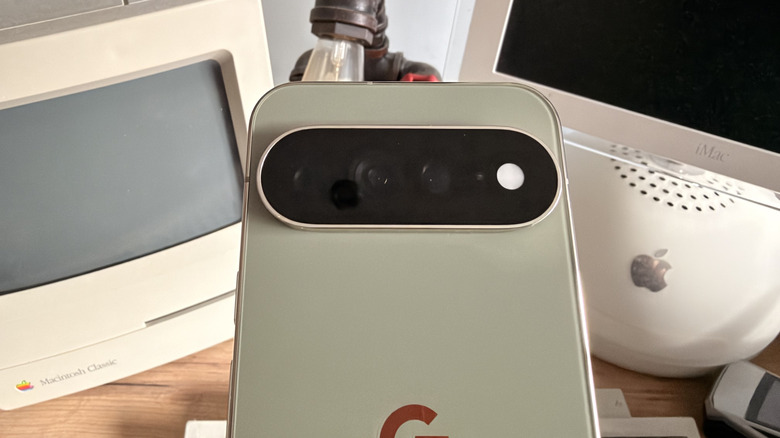
The Pixel 11 Pro pairs a 50MP main camera on a large 1/1.3-inch sensor with a 48MP ultrawide lens and a 48MP 5x telephoto lens. The Pixel 11 gets a 48MP main camera on a smaller 1/1.56-inch sensor, a 13MP fixed-focus ultrawide lens, and a 10.8MP 5x telephoto lens. Pro Zoom — which lets you zoom into images up to 120x — is limited to the Pro models. Anything past 30x is handed to a local AI model that upscales the frame. The Pixel 11 tops out at 30x Super Zoom, which means you aren't getting the AI-assisted zoom. In practice, this might not matter that much. After using Pro Zoom, I found that it stops being reliable past roughly 80x, after which the model starts getting things wrong.
The Pro shoots 8K and adds Video Boost, ProStable Video, and Night Sight Video, none of which are included on the base model. Pro camera controls are also limited to the Pixel 11 Pro, including 50MP High-Res capture, High-Res Portrait, and Instant Night Sight. If you're a regular selfie snapper, keep in mind that the Pro offers a 42MP front camera against the Pixel 11's 10.5MP camera.
The Pixel 11 Pro offers Google's Super Actua display panel at 495 pixels per inch, with LTPO scaling from 1Hz to 120Hz, up to 3,600 nits at peak and an anti-scratch coating. The Pixel 11's Actua panel runs at 422 PPI, 60Hz to 120Hz, and up to 3,000 nits. Elsewhere, the Pro adds HiLight, Wi-Fi 7 rather than Wi-Fi 6E, ultra-wideband, 16GB RAM and 1TB storage options, and comes with a six month subscription to Google AI Pro. The Pixel 11 Pro XL is the same phone with a 6.8-inch display, a 5,115mAh battery, and 45W charging for $1,299.
Should you buy the Pixel 11 or Pixel 11 Pro?
You should buy the Pixel 11 Pro if you shoot a lot of video. 8K resolution, Video Boost, ProStable, and Night Sight Video are all locked to the Pro phones and will help you shoot meaningfully better footage. The 42MP selfie camera might be a similarly big deal if you're a regular social media sharer. If you shoot a lot of stills in low light, or you want the ultrawide to focus close for macro work, the Pro's larger sensors will be a noitceable upgrade.
Everyone else should look hard at the more affordable Pixel 11. Google's image processing does an enormous amount of lifting when it comes to the camera, and shots from the Pixel 11 don't look much worse than shots from the Pro in ordinary conditions. Both displays run at 120Hz, and unless you use the always-on display, the missing LTPO panel isn't something you'll notice day-to-day. HiLight, the LED Google brought back, meanwhile, is a near-useless feature as shipped, signaling incoming calls and telling you when Gemini is thinking, which certainly isn't worth the difference.
Should you spend the extra $200? Yes, if you want the best camera on Android and you shoot video. Otherwise, buy the Pixel 11 and keep the cash, because it's a near-identical experience.