

What Makes Motorola's Moto Groove Different From The Regular Moto Pad?
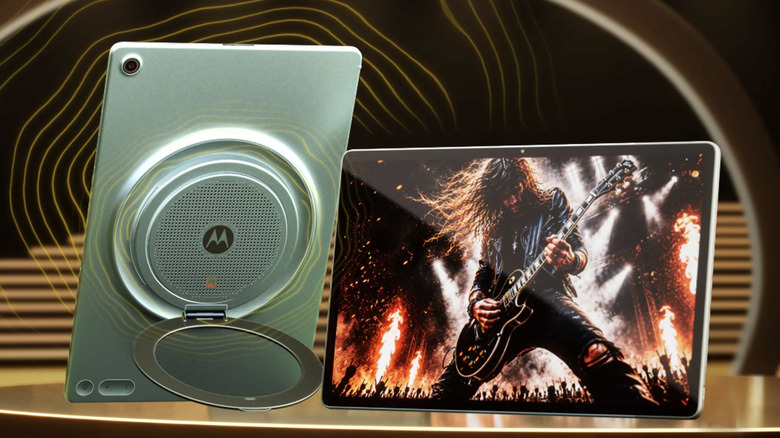
The Moto Pad 70 Groove and Moto Pad 70 both landed in the summer of 2026. The two Android tablets are very similar, sharing a 12.1-inch 2.5K display, 8 gigabytes (GB) of RAM, 256 GB of storage, a 13-megapixel rear camera, an 8-megapixel front camera, and a 10,200 milliampere-hour (mAh) battery. The Pad 70 has a 90-hertz refresh rate and a Dimensity 6400 chip, while the Groove gets 120 hertz and the faster Dimensity 7400. The Groove also comes with something you rarely see on a tablet — a huge (for a tablet!) speaker array that puts audio first. The Moto Pad 70, meanwhile, offers four conventional tablet speakers.
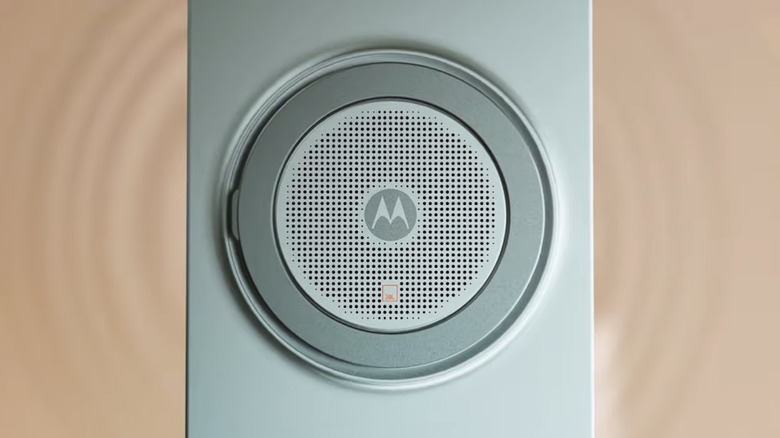
The difference immediately becomes apparent when looking at the Groove's rear side, which features a speaker system powered by JBL, ranked among the best Bluetooth speaker brands for sound quality. A large grille covers the speaker setup, which includes four tweeters, three woofers, and two passive radiators for up to 48 watts of output. The grille also doubles as a kickstand for even greater convenience when watching content.
That's a serious amount of audio hardware for a device like this, and you can also put the Groove in Speaker Mode to let you connect to it as a standalone Bluetooth speaker. The JBL system delivers a wider, more powerful sound than you'd normally get from a tablet, making it ideal for movies, music, and gaming. Moto certainly looks like something with a refreshingly different approach to tablet audio, putting the speaker at its heart ... almost as if adding a display as an afterthought.
So, which one is best for you?
Both the Moto Pad 70 and Moto Pad 70 Groove are solid midrange tablets thanks to their decent high-resolution displays and the Groove's impressive audio hardware. It's that sound system that will largely determine which of the two devices will be a better fit for buyers, though there are a couple of tradeoffs with the Groove (more on those shortly). Simply put, if audio quality is important to you, then the Groove looks like the obvious choice.
But the Pad 70 does offer some clear advantages over the Groove. For starters, it tips the scales at 1.19 pounds, making it about half a pound lighter than the Groove, a gap that could matter if you're planning to carry the tablet around with you. Additionally, only the Pad 70 has 5G, with the Groove a Wi-Fi-only device. Pricing is unlikely to be a major deciding factor, however, as the Moto Pad 70 retails for around $388 while the Groove costs about $410. Even so, if you usually use headphones to watch movies, listen to music, and play games, then the Groove's more powerful audio hardware and that extra weight may not be worth it, making the Pad 70 the more sensible option.
Regarding availability, it's not the best situation for customers based in the United States. Neither the Moto Pad 70 nor the Moto Pad 70 Groove is currently available stateside. Both devices launched in India, where they can be bought via Motorola's website and Flipkart, one of the country's biggest online marketplaces. Motorola has yet to announce a U.S. launch date for either model, so anyone outside of India who wants one of these will have to find a way to import it.
Lenovo's Tab Plus Gen 2 is virtually the same tablet
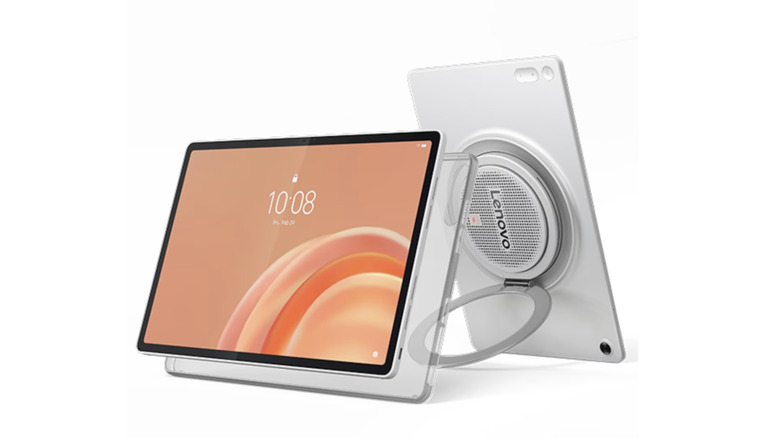
If an audio-first tablet like Moto's Pad 70 Groove appeals to you, but you're living outside India, then we have some good news for you. Lenovo's Android-powered Tab Plus Gen 2 incorporates what appears to be the very same JBL nine-speaker system, and it's available in select global markets, including the U.S. When you remember that Lenovo owns Motorola Mobility, it all starts to make sense. With the Tab Plus Gen 2, you get the same four-tweeter, three-woofer, two-passive radiator setup, and the kickstand is also part of the package.
Lenovo announced the Tab Plus Gen 2 tablet in June 2026, and it started selling in the U.S. a month later — just before Motorola launched the Groove in India. Priced at $399.99 and with the same 12.1-inch 2.5K 120-hertz display, it's also clearly positioned as an entertainment-focused tablet. The device has been warmly received, too, with reviewers praising the audio setup for its deep bass, crisp highs, and lack of distortion at the highest volume level. Indeed, many describe it as the best audio they've heard from such a device. Sure, its weight and bulk are drawbacks for some — and if you want 5G then you'll have to look elsewhere — but for those who put audio and entertainment first, it may be the tablet that grabs the most attention.