

Studies Show Video Doorbells Might Not Be As Effective As You Think - Here's Why
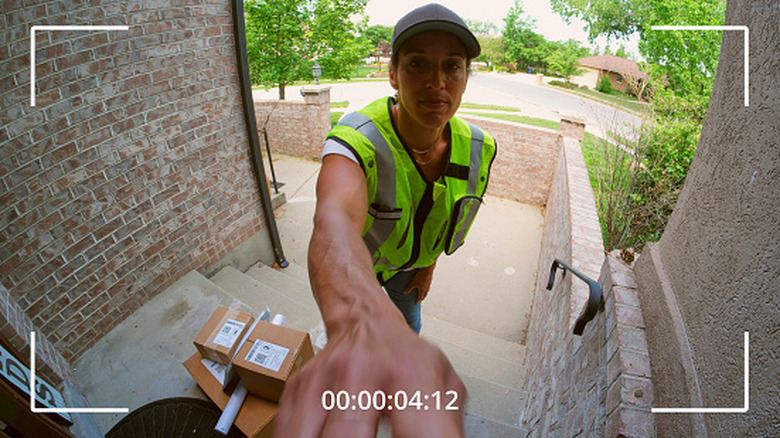
Video doorbells may provide peace of mind, ensuring any visitors or would-be criminals who show up at your home are caught on camera. Despite what manufacturers claim, it seems there may be little evidence showing they actually reduce neighborhood crime. In fact, a multi-month study in West Valley, Utah, observed that houses with Ring cameras were actually more likely to be burgled.
This may seem counterintuitive, but it makes sense. Ring cameras cost at least $80, are more likely to be installed by homeowners since renters often struggle to get their landlord's permission for exterior modifications, and require users to pay a monthly fee to store recordings — though there are video doorbells without a monthly subscription. Essentially, a video doorbell signifies that you have at least some expendable income, potentially making you a more-appealing target.
In 2019, a City University of New York (CUNY) study analyzed 40 years of data to determine CCTV's impact on crime-prevention. It found that actively-monitored systems, like those used in airports or hospitals, significantly decreased crime rates, whereas passive systems, which only record, did not. Intercepting someone in the process of committing a crime is often an easy win for law enforcement. But trying to identify a masked porch pirate using only footage from a poorly-positioned camera, meanwhile, is not. Perhaps that's why Ring is claiming that doorbells lower crime rates.
Video doorbells and the illusion of security

So what if video doorbells don't really stop crime; if they make people feel safer, where's the harm? Firstly, the number of posts on Ring's Neighbors app skyrocketed between 2017 and 2020. If Ring cameras really offered a sense of security, we would expect those numbers to have declined over time as their usage became more common. 60% of the five most-common topics are about "strange" or "suspicious" people, and don't actually mention crimes at all.
People often consume true crime content to reduce the chance of becoming a victim themselves. But compulsive posting becomes more common when the reader personally identifies with the victim of a crime. The Neighbors app provides an up-to-date collection of things that have worried people, not just in your city but on your very street. As such, it's easy to see how some users could find themselves sucked in and checking the app more often than is healthy.
In the worst cases, these cameras fuel paranoia that can be actively dangerous. Research shows that majority-white neighborhoods post far more frequently than others, with "Black" being one of the most-used identifiers. The risk to bystanders has been proven time and again, with Ring-related shootings in Florida, Missouri, and Texas. There's no denying that video doorbells can be helpful in some cases, but without evidence backing up Ring's crime-reduction claims, it may be best to take them with a grain of salt.