

Europe's Massive Offshore Wind Farms Could Create An Unexpected Weather Problem
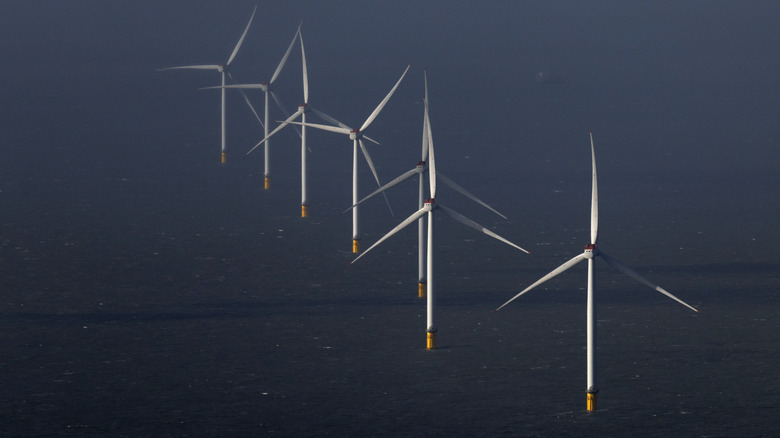
The European Union (EU) has set a goal of producing at least 60 gigawatts (GW) of offshore wind energy in the North Sea by 2030, and 300 GW by 2050. The wind turbine footprint in the North Sea will continue to increase as a result, but a newly documented problem may present unintended consequences of the expansion. A study by researchers from Germany has highlighted that these North Sea wind farms may harm coastal rainfall patterns.
The study calculated that precipitation in some coastal areas of the North Sea could decrease by 10% to 15% as a result of how turbines alter wind speeds on a regional scale. Because of how turbines extract energy from wind, they end up slowing that airflow down. The large numbers of planned wind turbines could affect regional air movement. According to the study, wind speed at roughly 33 feet above sea level in this region could slow down by 4-7 mph. A potential solution could be this company's new bladeless wind turbines.
Wind turbines also cause vertical mixing of air, and marine air could rise more actively, which promotes cloud formation over wind farms. Precipitation could increase by as much as 12% to 18% in these areas. But air masses that move from wind farm locations towards land would end up containing less moisture, resulting in up to a 15% reduction in rainfall over parts of Denmark, Germany, and the Netherlands. Western Britain was projected to see up to an 8% reduction in rainfall.
Will the study alter the EU's wind turbine expansion plans?
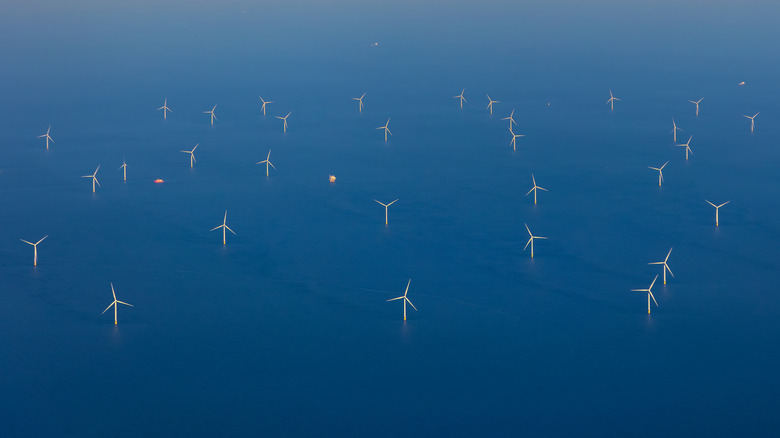
While the EU has been pushing the adoption of renewable energy, it remains to be seen whether or not an issue such as this would alter these plans. One author of the study made it plain that the intent behind the research was not to force the EU to reconsider its expansion plans, but to take the precipitation research into account while the next phases are underway, and consider how these large-scale systems interact with the environment.
Research like this should be seen in context and weighed against the long-term impact of fossil-fueled energy. Ideally, it gives the EU an opportunity to adjust its plans and consider alternative wind-farm layouts and locations by collaborating with researchers. This will help find a middle-ground that not only supports long-term renewable energy generation, but minimizes unintended impacts on the environment.
Offshore wind farms in Europe are also having an unusual effect on marine life, potentially altering the migration patterns of porpoises. Birds are known to fly into swinging blades as well, which is another one of the disadvantages of wind energy. These factors suggest that renewable energy generation needs to be studied more carefully as humankind starts expanding wind farms, to ensure that the solution to the fossil fuel problem doesn't create secondary impacts to the environment.