

Using The Wrong Light Bulb In Your Bedroom Can Have An Unexpected Effect On Your Sleep

We may receive a commission on purchases made from links.
Everyone wants to get better sleep, and experts know how to get it, but some folks think that the best way to make it happen is by kitting out their bedroom with a bunch of sleep-optimization gear like sleep-tracking wearables and fancy-schmancy white noise machines. However, the devil's in the details, and the thing that matters most is a simple light bulb. Screwing the wrong kind into your bedside lamp can sabotage an otherwise perfect sleep setup. Bulbs with the wrong light temperature can negatively impact your sleep, keeping you wired instead of helping you wind down.
The issue comes down to basic human biology. The brain operates on an ancient internal clock (circadian rhythm), and it essentially takes its cues from the sun. Think about how natural light works. Midday sunshine is bright, harsh, and cool in temperature; that tells your body to stay sharp and energized. But as evening rolls around, that light fades into warmer colors. This amber glow is the biological trigger that kicks off melatonin production, the chemical that makes you yawn, slows down your thoughts, and makes you crave your pillow.
Dropping a hyper-bright LED into your bedside lamp totally scrambles your circadian rhythm. So when it's 9 p.m. and you hop in bed to read a book, the brain doesn't see that as a relaxing wind-down activity, it sees high noon. Your melatonin production slams to a halt, leaving you physically exhausted but mentally wired. You end up staring at the ceiling for an hour, all because a light bulb confused your nervous system.
How the wrong color temperature can be a bedtime trap
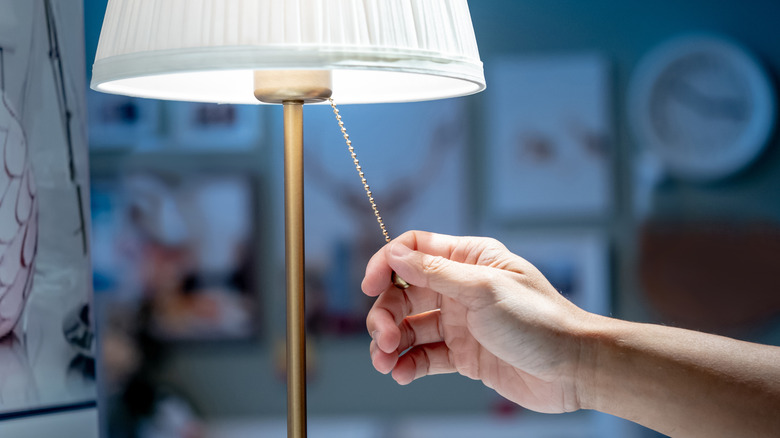
To fix this lighting mistake, you first have to look at a bulb's packaging. Light color is measured on the Kelvin (K) scale, and hardware store aisles are packed with boxes labeled "daylight." These bulbs pack a color temperature of 5000K or higher, which look incredibly crisp and clear, like when you look at things in the midday sun. These temperatures are great picks for a garage workbench, a kitchen island, or a home office where visibility is the whole point. They make it easy for you to see everything clearly.
But bringing a "daylight" bulb into a bedroom is a biological disaster. People often buy these in bulk and throw them into every empty socket around the house, assuming brighter is always better. However, bathing a bedroom in 5000K light right before bed is the equivalent of taping a glowing tablet directly over your eyes. It blasts the room with blue-heavy light, which tells your brain it's not time to sleep, and ruins the deep REM cycles you need to actually feel rested the next morning.
The immediate, low-tech fix is pivoting to "soft white" or "warm white" bulbs for your bedroom fixtures. Sitting around 2700K, these emit a mellow, yellowish-orange glow that feels more like a sunset or a dying campfire. Swapping out that harsh daylight LED for a warm white one, like GE's Soft White Relax LED bulbs, instantly kills that sterile hospital-room vibe and helps your brain relax and enjoy your paperback while keeping your circadian rhythm intact. There are other Amazon gadgets for embracing warm home lighting, too.
Why leveraging the power of smart bulbs solves this problem
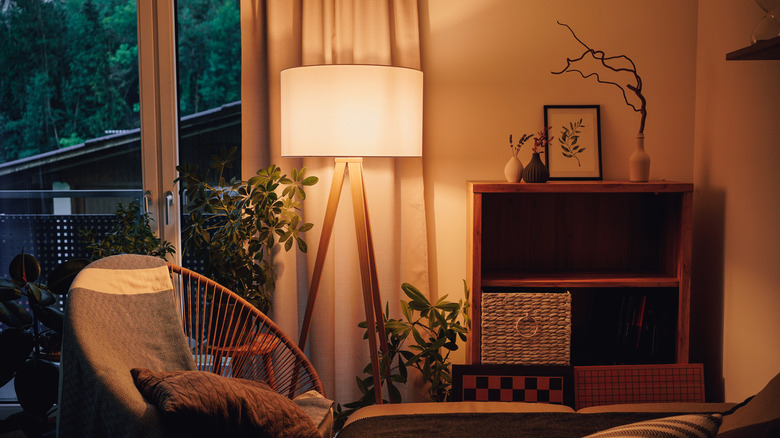
While buying some standard warm bulbs is a fine course of action, upgrading to smart lighting is where the real magic happens. These bulbs most commonly connect to your home via Wi-Fi or Bluetooth, eliminating the need for you to have to choose between bright daytime focus and warm evening relaxation, since they give you both. A quick swipe on your smartphone can shift the room from an exciting 6000K down to a far more relaxing 2200K amber when it's time to wind down.
The best part of smart bulbs, though, is their set-it-and-forget-it automation. Every major smart home platform lets users put their smart lights on autopilot. This means your bedside lamp can be programmed to gradually shift its color temperature as the sun goes down outside. By the time it hits 8 p.m., your bedroom is automatically swimming in warm, sleep-friendly light. There's no need to open an app, hit a switch, or even think about it. Your room just magically prepares itself for bedtime in the background.
There are plenty of great smart light bulbs for every budget, and grabbing a couple for your bedroom might just be the cheapest health upgrade on the market. Popular options like this 2-pack from Philips or these from Govee are reliable choices. It takes just a few moments to screw a new smart bulb in, connect it to your Wi-Fi, and set up a basic wind-down automation for it. By taking control of your lighting, you make it easier to fall asleep faster and get better sleep. How's that for smart?