

Where Can You Shred A Hard Drive And How Much Does It Cost?
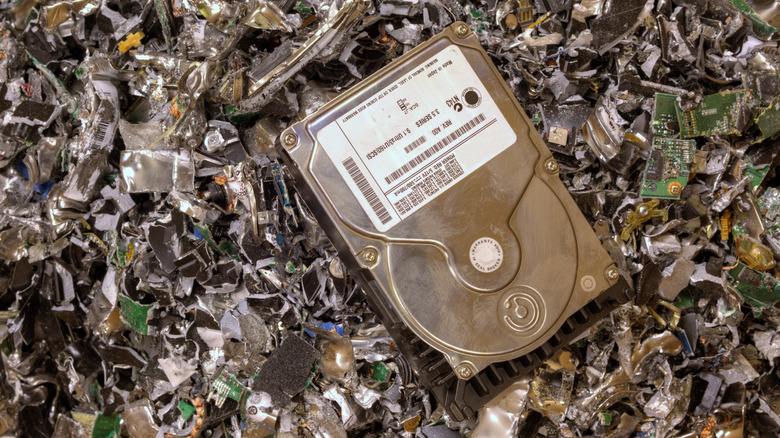
After years of use, computer hard drives will contain an abundance of sensitive personal data. That's infinitely more true for business-related hard drives that may contain company assets or customer information. This is why it's so important to know how to dispose of old hard drives safely. In many cases, however, simply wiping the drive isn't enough; savvy individuals can sometimes still recover data from a wiped drive. That's where hard drive shredding comes in.
You can usually shred a hard drive at electronics recycling centers or industrial data destruction firms (the same places that offer commercial paper shredding services). Prices can range anywhere from $7 to $20 per drive. However, hard drive shredding is a service that's typically offered exclusively to commercial clients on a wholesale basis. The shredding cost per hard drive will often be lower for higher unit volumes. These service providers fully expect to handle hundreds of hard drives in a single order.
This is a valuable service because completely destroying your hard drives is the only way to be 100% certain that nobody will recover your sensitive data. But it's worth keeping in mind that hard drives have increased in value after recent shortages. Unless it's an absolute necessity, don't toss old hard drives you can still use; there may be some financially prudent ways to reuse them.
Other ways to destroy old hard drives
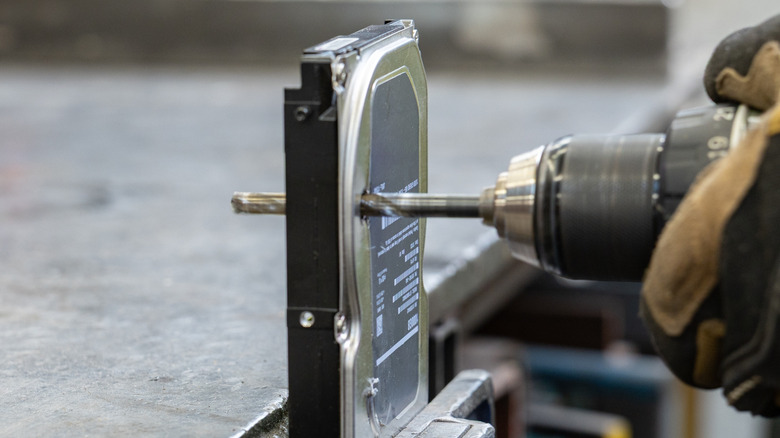
If you're dead set on destroying your old hard drives, but shredding services aren't readily available to you, there are other ways to safely dispose of them. After all, shredding can be prohibitively expensive unless you're making a bulk order on behalf of a business. There are some DIY methods you can follow at home, but keep in mind that they may not be as thorough or efficient as a professional disposal service.
Firstly, to dispel a common myth, soaking your hard drive in water is not an effective way to destroy it. Hard disk drives (HDDs) store data magnetically rather than electronically, so water does not affect the data whatsoever. Solid-state drives (SSDs) are electronic, but they store data in NAND flash chips that are sealed and moisture-resistant, making the data capable of surviving water damage.
Smashing, crushing, or drilling through a hard drive is an effective way to destroy it – just be sure to wear proper eye protection when doing so. And be aware that a truly dedicated individual might still be able to recover data from pieces of a hard drive destroyed this way. That's why you should always play it safe and be mindful of which files to never store on a hard drive in the first place.