

Can A USB-A To USB-C Cable Fast-Charge Your Device?
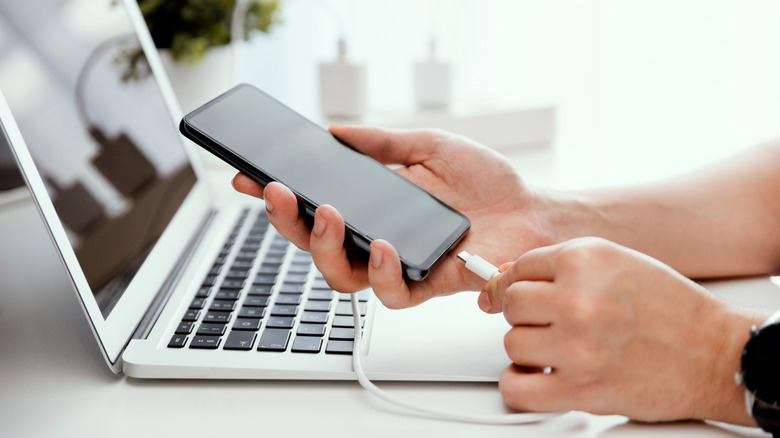
Charging speed is one major selling point for new devices and accessories, and one way to speed things up is by using a USB-C charger. Nowadays, USB-C to USB-C cables are common, and they're known for generally charging devices faster than older USB-A cables. However, that does not carry over to USB-A to USB-C cables, which (outside of some special cases) are unable to fast-charge connected devices. The USB-A half of the cord is what limits its speed.
These ports max out at around 2.5 watts for USB 2.0 and 15W for USB 3.0, a result of the standards being introduced in 2000 and 2008, respectively. That's slow in comparison to USB-C, which can reach up to 240W, though it's important to note that not all USB-C cables charge at the same speed, and most have a max output far below 240W. A good USB-A to USB-C cable will still efficiently charge your phone, but for true fast charging, you'll need a USB-C to USB-C cable. That's not the only factor that impacts charging speed, though.
How fast charging works
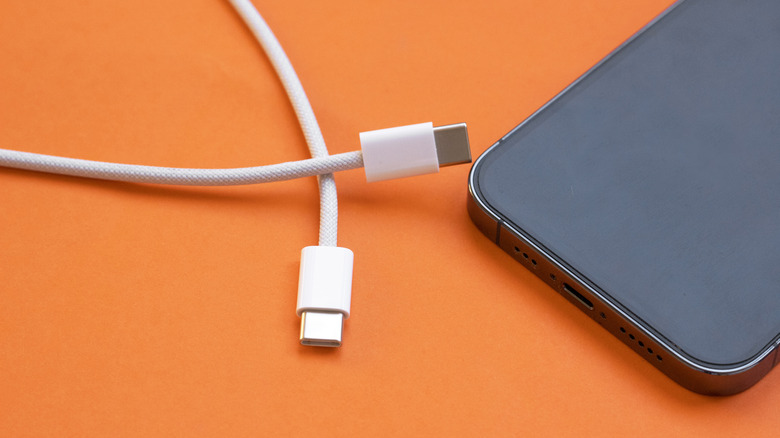
There are three things that impact fast charging: the cable, adapter, and device itself. The slowest of the three determines charging speed, so in addition to a USB cable that can fast charge, you'll need a strong brick. Of course, that doesn't matter much if your hardware can't take advantage of it. Most smartphones only need around 20–30W, though new and premium models like the iPhone 17 Pro, Samsung Galaxy S26, and OnePlus 15 are capable of 40–100W with the right equipment.
While you may not need an exceptionally strong charger for your devices, using one won't cause damage, as it will only take what it needs. That said, while fast charging is generally safe, you'll want to keep an eye on your device to make sure it isn't getting too hot. Some heat is normal, but too much will damage the battery. This is a particular risk with cheap USB cables, which aren't designed with safety features that can slow or stop charging to prevent overheating.