

How Does Bitrate Affect Audio Quality?
In 1937, British inventor Alec Reeves filed a patent application for an "electric signaling system" that could transcode sound into pulses to be transmitted down a line for later decoding. As such, digital audio was born — and boy, have we come a long way since then. Moog synthesizers, compact discs, and chats over early VoIP (voice over internet protocol) clients have given way to crisper, cleaner sound, everywhere you go. Music streaming platforms are selling subscribers on hi-res and lossless audio, with several of them delivering the best audio quality you can get on the internet.
Everything we can measure needs a good unit, and in the digital world, we have bitrate: how many 0s and 1s we can transport over time. In theory, the more bits you can move per second, the more sound you can reproduce. Depending on how you package that information, higher bitrates leave room for quieter sounds, higher frequencies, or both. Both factors dictate how clear and broad your music is.
For music, artists and producers typically record, export, and transport mastered songs at super-high bandwidths. Distributors then economize on that bandwidth down the pipeline to fit their medium of choice: some will recall compact discs bringing great sound for their time, but they also had finite capacity. With fast internet and streaming media these days, we've come to a point where you can decide how much data you want to use to listen to "Mary Had A Little Lamb." What? We don't judge.
Is a higher bitrate absolutely better?
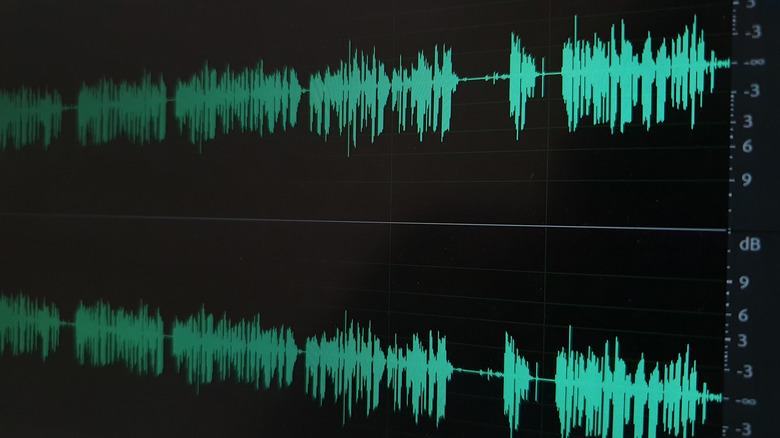
Three factors go into calculating the bitrate of a digital audio file: sample rate, bit depth, and the number of channels in the file. Sample rate, measured in Hertz, describes how many samples of an original sound have been transcoded in a given second. Bit depth refers to how many bits each sample is composed of. To find the bitrate, multiply the sample rate, the bit depth, and the number of channels together. For example, typical CD-quality sound is quantized at 16 bits over 44.1kHz. With two-channel stereo sound, the total bitrate comes to approximately 1,411kbps.
Lots of audio files will also feature some level of compression. High-resolution files will use lossless formats like FLAC that allow decompression while conserving all the data in the file. Lossy formats like MP3 or AAC erase data in the file to shrink it in size.
So, do you need the absolute highest bitrate possible to enjoy all of your music? Not really. The maximum frequency human ears respond to sits in the 20kHz range, and that number comes down with age and wear, so you shouldn't be too concerned about super-high sample rates. On bit depth, each bit gives about 6 decibels of loudness resolution; any louder and the captured sound becomes distorted. The average human can perceive up to 130dB, so you theoretically do have a chance to experience a fuller range of sound at one-to-one loudness on a 24-bit track versus a 16-bit one. Doing so would risk damaging your hearing, and you're likely not listening at that proportional loudness level anyway, so some loss in detail is expected.