

The American Airlines Laptop Fire Could Spark Changes In Airplane Safety And Insurance
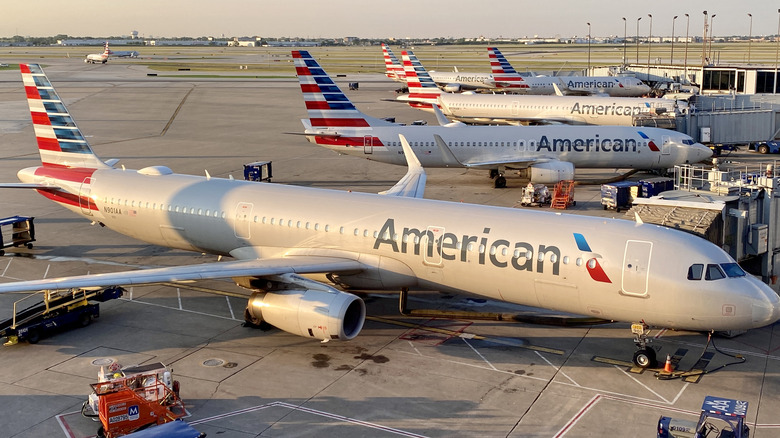
On August 21, 2026, an American Airlines Airbus A321-200 carrying 133 people was on approach to Dallas Fort Worth International Airport when the pilots advised air traffic control that a fire had broken out in the airplane's cabin and requested a priority landing. As soon as Flight 2398 landed, the runway was closed and medical response was dispatched to the aircraft. It soon became apparent that a laptop fire had broken out and that multiple passengers had received burns while handling the device. This was the second such incident for American Airlines in 2026. Earlier in the year, American Airlines Flight 2045 was in the process of boarding when a laptop fire erupted, prompting a complete evacuation of the aircraft via emergency slides. Lithium-ion batteries inside laptops are to blame for the fires, and if current trends continue, could drive up insurance costs, result in device bans, or force safety standard changes.
Lithium-ion battery fires have become a regular occurrence on airlines throughout the world and in the U.S., eventually prompting the TSA to introduce battery restrictions for carry-on luggage. Power banks, battery packs, e-cigarettes, and mobile phones have all been the cause of fires on airplanes, and have already prompted industry-wide changes to crew training and fire mitigation procedures. Lithium-ion battery fire is an ever-present risk that airlines have to deal with, and it could soon start driving airline insurance costs up. Airlines are now not only required to declare such incidents to insurers, but also have to demonstrate that their crews are sufficiently trained and equipped to deal with battery fires. Insurance costs already place a significant amount of pressure on airlines' bottom line, and further increases because of this issue can erode profits for airlines already struggling to stay aloft in a highly competitive market.
How lithium-ion battery fires start
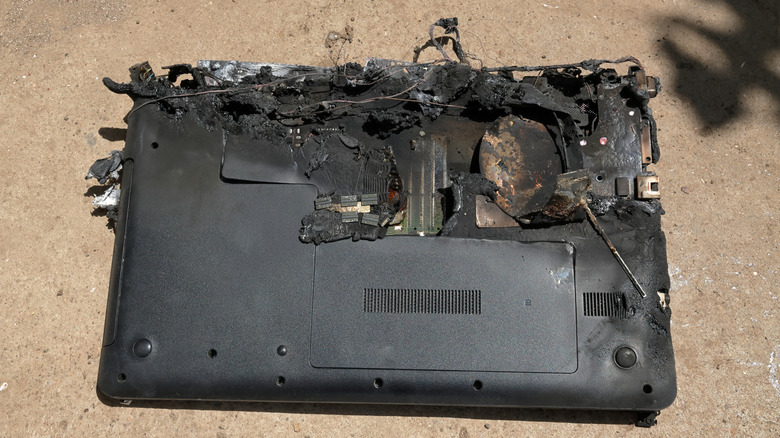
Lithium-ion battery fires inside devices occur when a process called thermal runaway begins, which can be caused by overuse, aging, or physical damage. This is why power banks keep catching fire on airplanes. Aging batteries could start to swell because of an ongoing chemical reaction that fails to complete as the battery ages, with an imperfect reaction sometimes generating gases that could expand and cause the battery to swell and heat up. Because most lithium-ion batteries inside consumer electronics are designed in a roll style, layers of metal and chemicals are separated by plastic, which, if damaged or degraded, can cause chemical reactions that lead to heating. This can eventually lead to thermal runaway, which is a chain reaction of heat and fire that is caused by the ongoing damage sustained to the battery by the fire itself, leading to more heating.
Gases that emanate from these reactions are usually made up of carbon dioxide and carbon monoxide, which, in an enclosed environment like on an airplane, can cause serious health-related issues. Passengers are not allowed to pack certain electronics in their carry-on luggage as a result, and even though the restrictions are sometimes an inconvenience, they allow passengers and cabin crew to spot and deal with thermal runaway fires inside hand luggage quickly, before they get out of hand.
Because these incidents have been happening so often, airlines have started equipping cabin crew with fire containment bags, where a burning device can be sealed and contained to mitigate damage to aircraft or injuries to passengers. Interestingly, the Federal Aviation Administration doesn't have containment bag testing standards or certification, partially due to concerns with the idea of moving a burning device into a containment bag, which can also cause injury.
What lithium-ion battery fires cost airlines
Aside from the fact that thermal runaways inside lithium-ion batteries can cause insurance rates to spike, there are other direct costs that airlines have to absorb when these events occur. While the Dallas American Airlines example happened while the airplane was already on approach to its destination airport, other battery fire incidents have forced outright diversions in the past. Depending on the size of the airplane and how passengers need to be supported if they end up stranded at an alternate destination, a diversion can cost an airline anywhere between $10,000 and $200,000.
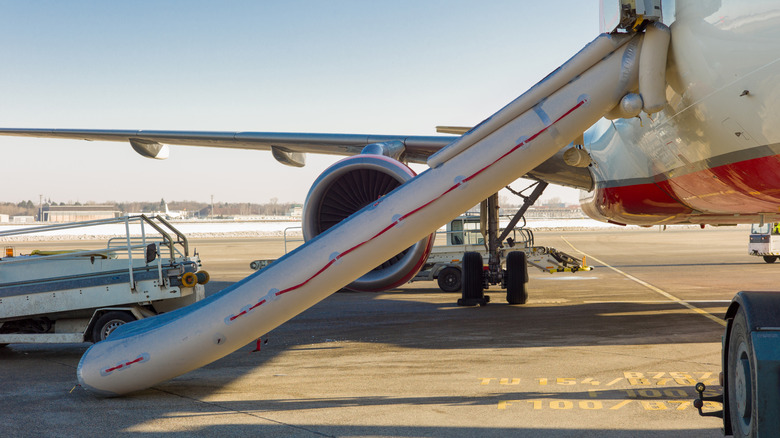
If a thermal runaway incident occurs on the ground, crews are likely to initiate an emergency aircraft evacuation procedure, which involves deploying emergency escape slides. Repacking emergency slides after such a deployment can also cost up to $200,000. Given that 93 reported battery smoke or fire incidents occurred in the U.S. in 2025, airlines could have paid up to $18 million in 2025 alone.