

Why Do Speakers Have Multiple Drivers, But Most Headphones Don't?
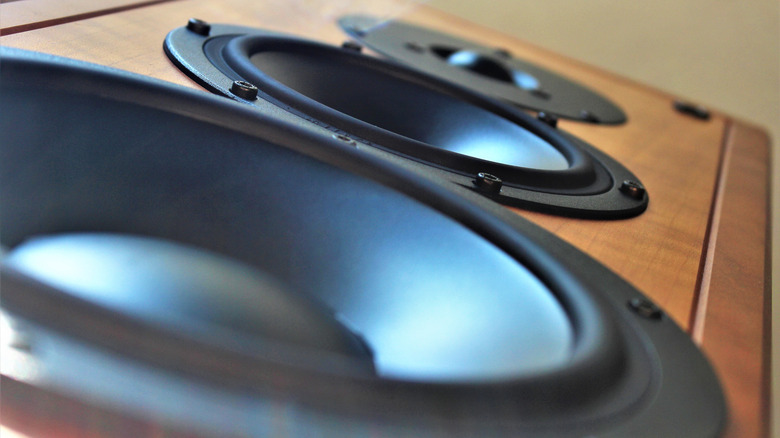
If you were to pull apart a pair of headphones and a traditional speaker, you'd generally find that speakers contain more components. Speakers often have multiple drivers — the core components that vibrate to produce the sounds you hear. Headphones have drivers, but they're typically smaller. Most headphones don't have multiple drivers merely because they're engineered to be smaller and portable, and both larger drivers and multiple units would not fit or would increase design complexity.
Plus, larger and multiple drivers can come with higher power requirements, which, in a portable format like headphones, would require better battery life, a bigger battery, and a bulkier headset. Then there are associated costs, which vary per driver format. That doesn't mean there aren't any headphones with multiple drivers — many premium and audio-purist options indeed contain them. For a large majority of people, single-driver headphones will suffice, but dig a little deeper, and peruse some of the biggest headphones preferred by audiophiles, you'll find a host of driver options.
There are several types used in modern headphones, including balanced armature, dynamic, hybrid, planar magnetic, and electrostatic. Separately, they produce different frequencies of sound, achieved by the driver's shape, configuration, and size. Most importantly, a single headphone driver can often handle multiple tones to deliver clearer and balanced audio in a small spatial area, especially dynamic drivers – some of the most commonly found in modern headphones. The other types, such as planar magnetic or electrostatic, offer specialized experiences.
Speaker drivers differ in size, power requirements, and physical capabilities
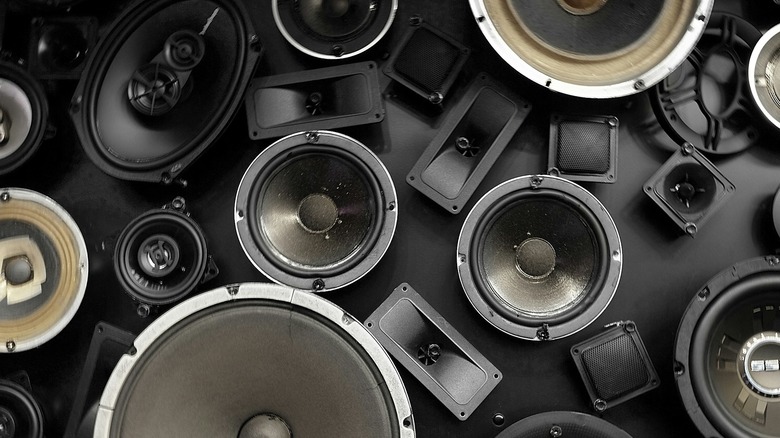
Speaker drivers and headphone drivers are designed the same way. They're composed of individual parts, including a voice coil to receive electrical signals, a magnet to move the system, a diaphragm (a cone or dome) that produces sound waves as it moves, and a suspension system that holds everything together, like a frame. Assembled, the driver takes electrical signals and converts them into sound waves you can hear. Different drivers use different components to achieve this with varying results, but they differ in size, power requirements, and physical capabilities.
A speaker driver is larger, has a bigger area to fill, and is meant to serve a larger space, sometimes entire rooms or halls. A headphone driver, by comparison, only has to produce enough sound, or air, for your ears, unless the headphones are using bone conduction technology, but that's a different conversation. Most headphone drivers range from 20mm to 50mm in size, versus speakers, ranging anywhere from half an inch (Tweeters) up to 18 inches or larger (Woofers).
Larger drivers need more power, but that's not a big deal with speakers because you just plug them into an outlet or use an external source of power. Headphones are portable, so they rely on batteries, which must be limited to keep the unit lightweight and compact. Multiple drivers introduce greater technical complexity. That's why most headphone manufacturers opt for a more efficient system using fewer drivers and with more balanced audio profiles. Small, efficient drivers are also the key to compact speakers delivering more powerful sound than something like your phone.
Multi-driver headphones versus single-driver headphones

Most of the traits that can ruin your headphones' sound quality are related directly to the drivers inside and the sound reproduction and accuracy they can achieve. Which type of headphone driver is best and whether you should opt for a multi-driver headset is a matter of preference. Multi-driver headphones may sound better to someone who deeply cares about their audio quality. The same is true of shopping for different headphone driver types, like electrostatic versus MEMS.
They have differing sound profiles, so audio is going to sound a little different in each one at a baseline level. Some people will find they like one type better than the other. Dynamic drivers, the most common, are robust, try to hit as many frequencies as possible, and need less power, but they don't handle higher frequencies well. Planar magnetic drivers are more accurate at balanced reproduction, but they're also heavier, and headphones using them are often more expensive. Electrostatic headphone drivers are also expensive and require a specialized amplifier to power their unique designs, but that added power and distinct engineering gives them a unique sound response, albeit with less bass.
Finally, balanced armatures are small, efficient, and deliver clear treble with accurate sound response, which is why they're used so much in IEMs. However, they don't reproduce deep bass tones as well, and you'll almost always want to do some fine EQ tuning to find your ideal settings. This is not a comprehensive list, but it can kickstart your research and should help you better understand the differences between popular driver types.