

China's Mars Mission Is Set To Become A Space Milestone - Here's Why
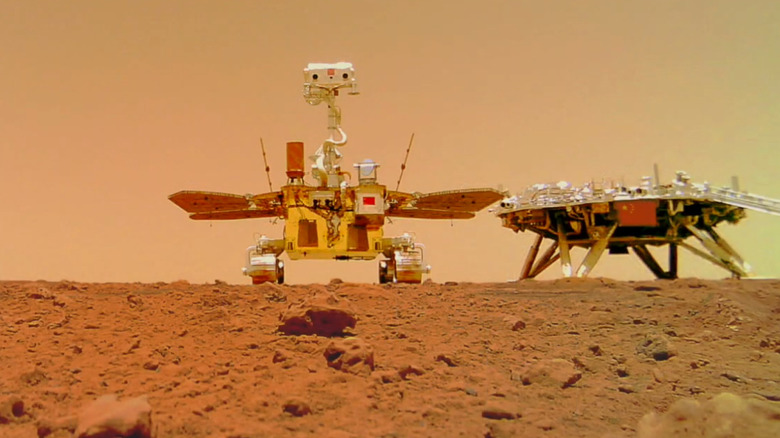
China is closing the spaceflight technology gap with the U.S. For the past decade it has been dedicating significant resources and pooling expertise to establish itself as a dominant player in space and is aiming for a moon landing in 2030. China has also made significant rocket reusability breakthroughs this year and has made advancements in establishing a permanently crewed presence in low Earth orbit with the Tiangong space station. China now plans to conduct a bleeding-edge sample-collection-and-return mission to Mars.
The Tianwen 3 mission, which features a focused launch and return timeline, is set for a launch in 2028, with a sample scheduled to return to Earth in 2031. This could be the first Mars sample to be returned to Earth for detailed analysis. NASA's Perseverance rover has been collecting samples on the Martian surface since early 2021, which have already been deposited on the surface inside titanium tubes. The samples would have been picked up by a future Mars sample return mission, but it has effectively been canceled. Even though the Senate approved a spending bill on January 15, 2026 that reversed previous NASA spending cuts, the Mars sample return mission was a notable omission. This means China may be in a position where it could beat NASA in returning Martian samples to Earth.
How China's audacious Mars mission will work
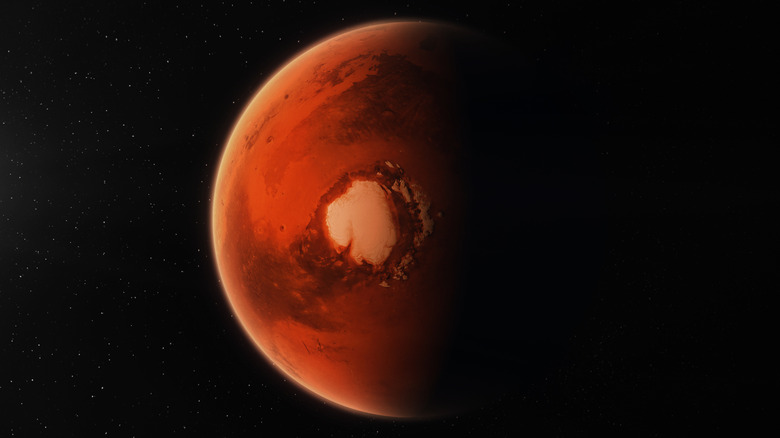
The Tianwen 3 mission will be entirely dedicated to returning Martian samples to Earth. Two Long March 5 rockets will launch as early as 2028, one carrying the lander and ascent vehicle, the other carrying a Mars orbiter. The lander will collect samples using a scoop, a drill, and a helicopter (for collecting samples from further afield), while the lander itself will remain stationary. Altogether, the plan is to collect about 500 grams (17.6 ounces) of Martian rock and soil for the return journey. Once the samples have been collected, they will be deposited inside the ascent vehicle and blasted into Mars orbit where the orbiter will be waiting to bring it back to Earth.
The Tianwen 3 sample collection mission was preceded by Tianwen 2, which is in the midst of a sample return mission from a near-Earth asteroid called Kamoʻoalewa (2016 HO3). Tianwen 2 rendezvoused with the asteroid in July this year, and is set to return the samples later in 2027. The team from China will also undoubtedly be taking into account all the lessons learned by NASA's Ingenuity-class helicopter for its own mission. NASA's next-generation Mars helicopter features rotor blades that break the sound barrier, and is set to launch on NASA's SkyFall mission.
Is NASA sacrificing the sample return mission for a greater goal?

Why was NASA's sample return mission canceled? It's reasonable to assume that the U.S. places a lot of importance on being the first to find evidence of life on Mars. The logic behind its decision seems to be geared toward prioritizing the country's human space exploration ambitions. The Commerce, Justice, Science, and Related Agencies Appropriations Act makes it clear that the U.S. intends to prioritize its crewed missions to Mars over sample returns. The bill states: "As proposed in the budget, the agreement does not support the existing Mars Sample Return (MSR) program. However, the technological capabilities being developed in the MSR program are not only critical to the success of future science missions but also to human exploration of the Moon and Mars."
In the space race between the U.S. and China, the U.S. is in a position where it needs to pick its battles. NASA is currently aiming to land humans on the moon by 2028 and could land humans on Mars by the late 2030s. China, on the other hand, wants to land a crewed mission on the moon by 2030, with a crewed Mars mission timeline that may look similar to NASA's. China now seems to have a strategy in play that could at least achieve one very significant exploration goal if it can't beat NASA back to the moon. It could be argued that a Mars sample that finds evidence that life may once have existed on Mars could have greater implications for humanity than a crewed landing on the moon.