

iPhone 18 Pro Vs. iPhone 17 Pro: Is It Worth The Upgrade?
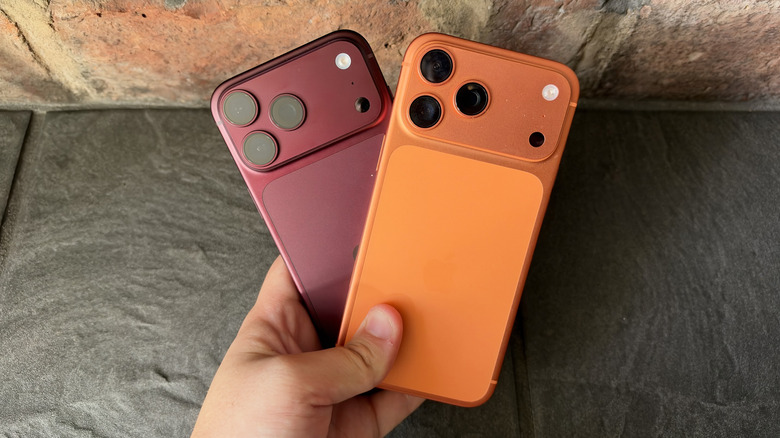
Apple's iPhone 18 Pro and iPhone 18 Pro Max are now officially in customers' hands, taking over from the iPhone 17 Pro and 17 Pro Max at the top of the iPhone lineup. If you put the two generations next to each other, you'd probably struggle to tell them apart, save for the new color options. But that makes deciding between the two more difficult. The iPhone 18 Pro starts at $1,199 and the 18 Pro Max at $1,299, both $100 up from their iPhone 17 Pro counterparts.
I've used both generations, and the short version is that the differences sit almost entirely inside the phone. The camera hardware changed in one significant way, the chip and cooling system got a proper overhaul, and battery life went up by a few hours. Everything you touch, look at, and hold stayed where it was. Here's what carried over, what actually changed, and which one makes sense for you.
iPhone 18 Pro vs 17 Pro: What's the same?
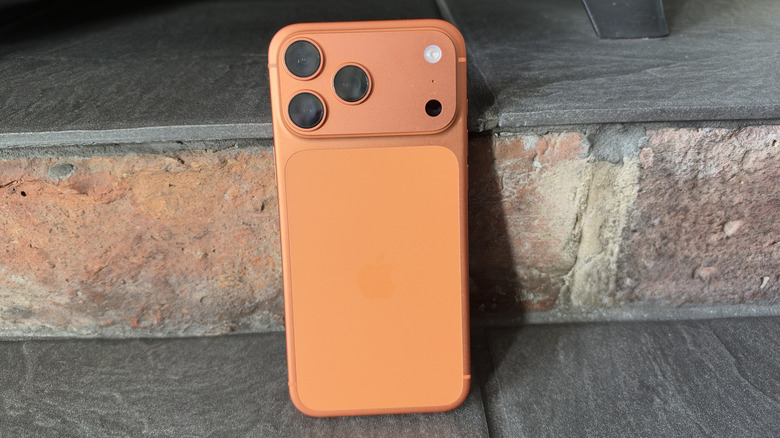
Both generations look almost exactly the same, and that's because they are. The iPhone 18 Pro uses the same aluminum unibody and a camera plateau that was first introduced with the iPhone 17 Pro last year, though the plateau is ever so slightly thicker this time. Display sizes are identical too, at 6.3 inches on the Pro and 6.9 inches on the Pro Max, and both sizes sit among the best big phones you can buy in 2026. The iPhone 18 Pro does have a slightly smaller Dynamic Island, however. Both devices use the same panel technology, with ProMotion running up to 120Hz, an always-on display, 3,000 nits of peak outdoor brightness, and Ceramic Shield 2 on the front.
Two of the three rear cameras are unchanged, and we'll get to what's different a little later. Both phones use a 48MP ultrawide at 13mm and a 48MP telephoto at 100mm, which gives you 4x optical zoom and an 8x optical-quality crop at 200mm. The front camera on the iPhone 18 Pro is the same Center Stage snapper introduced with the 17 Pro. The Action button, Camera Control, USB-C port, and IP68 water resistance all carry over, and storage still starts at 256GB on both.
Both phones use Apple's N1 chip for Wi-Fi 7, Bluetooth 6, and Thread. Software is a wash too, since iOS 27 runs on the iPhone 17 Pro, so Siri AI and the new Apple Intelligence features aren't exclusive to the newer handset.
iPhone 18 Pro vs 17 Pro: What's different?
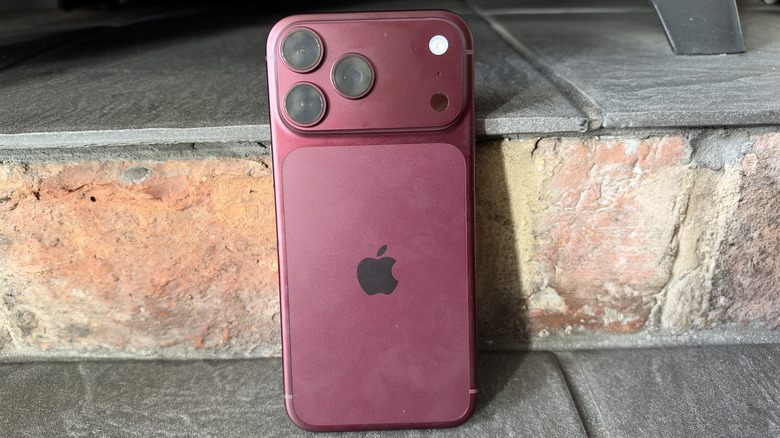
The camera is the biggest difference between the two handsets. The iPhone 17 Pro's main camera sits at a fixed ƒ/1.78. The lens opening never changes, with the phone handling exposure with image processing. The iPhone 18 Pro's 48MP main camera uses six blades that open as wide as ƒ/1.48. That means more light for night shots and real background blur instead of the software emulated version. Apple also added Pro controls (which are exclusive to the iPhone 18 Pro) that let you set aperture, shutter speed, and white balance manually. The newer iPhone also offers Apple Reference Image, which creates a digital negative of photos when they're taken so you can prove they weren't AI-generated.
Performance is another huge difference between the devices. The iPhone 18 Pro's new A20 Pro chipset uses a 2nm process with a seven-core GPU. Apple rates it as up to 40% faster than the A19 Pro, with 50% more memory bandwidth than its predecessor. The vapor chamber now has three times the surface area, which matters for sustained performance, or how long the phone can hold peak speed before heat forces it to slow down.
Claimed battery life improved by three hours on the Pro, offering up to 36 hours of video playback, and improved by six hours on the Pro Max, which offers up to 45 hours of video playback. Apple's in-house C2 modem replaces Qualcomm's on the 18 Pro for more efficient cellular connectivity, while the colors switch to black, silver, glacier, and burgundy. The rear glass now more accurately represents the new aluminum colors, and it feels less slippery to hold than the iPhone 17 Pro.
Which flagship iPhone should you buy?
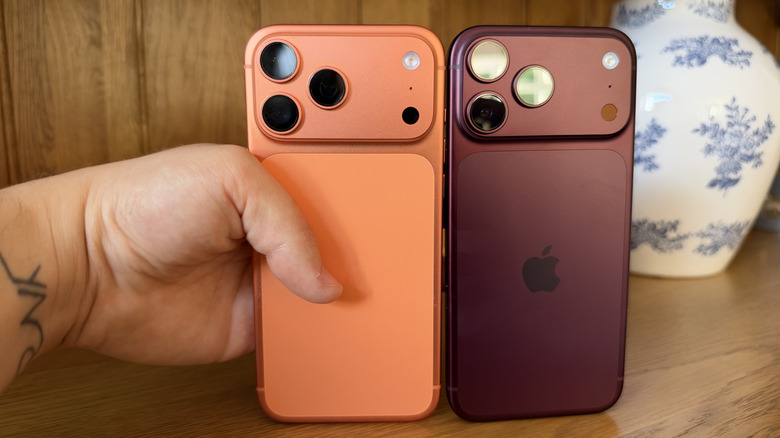
If you're using an iPhone 16 Pro or anything older, the iPhone 18 Pro is the phone to get. Three generations of camera work, a much faster chip, and several extra hours of battery add up to a phone that will feel very different in daily use, since the improvements land in the areas people actually complain about. Photographers and anyone shooting a lot of video will get the most out of it, since variable aperture and manual controls are the kind of tools you'd otherwise need to look for in a third-party app. Take the Pro Max if battery life is your priority, because 45 hours of video playback puts it near the top of our list of smartphones with the best battery life in 2026.
If you already own an iPhone 17 Pro, you can probably sit this one out. The 18 Pro's design is the same, the ultrawide and telephoto are unchanged, and iOS 27 gives you Siri AI regardless. You'd be paying at least $1,199 to upgrade to a handset with a better main camera and better thermals — which probably isn't worth the cost.
All that being said, the iPhone 17 Pro may still be worth buying if the price is right. Apple has pulled it from its own store, but third-party retailers are discounting the remaining stock. If you find one at a few hundred dollars below the iPhone 18 Pro and don't need the camera's variable aperture, take the savings.