

Is It Safe To Keep Your 3D Printer In Your Bedroom?
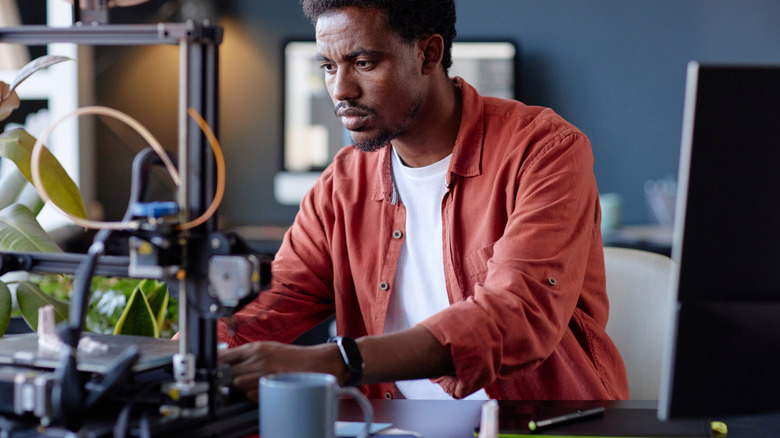
It makes a lot of sense to install a 3D printer in a workspace like a garage or spare room. Not just because the printer itself takes up a bunch of space, but also so you have room to prep the work area, adjust, sand, or cut prints when they're done, and even to paint some models. If you live in a smaller dwelling or a shared space like an apartment with roommates, that simply won't be possible. It's perfectly fine to keep your 3D printer in your bedroom and store it there if you have space, but you'll want to do that between prints and not while you're using it.
When a 3D printer is active, it can release harmful fumes and particulates that can pose serious health risks. It's better to use them in a space that's well-ventilated, and most of the time, a bedroom or even a small office doesn't fit the criteria. Proponents often recommend wearing personal protective equipment (gloves, eye and face wear, and possibly respiratory protection) while using a 3D printer.
The level of respiratory safety is going to depend on the space in question. If your bedroom is large with lots of open space, then it may not be a problem. You'll just want to make sure it's ventilated and cleaned out before resting, or anytime you're not wearing PPE. You might be able to get away with small 3D printers built for an office or those with enclosed print areas.
How dangerous are 3D printers in a bedroom?
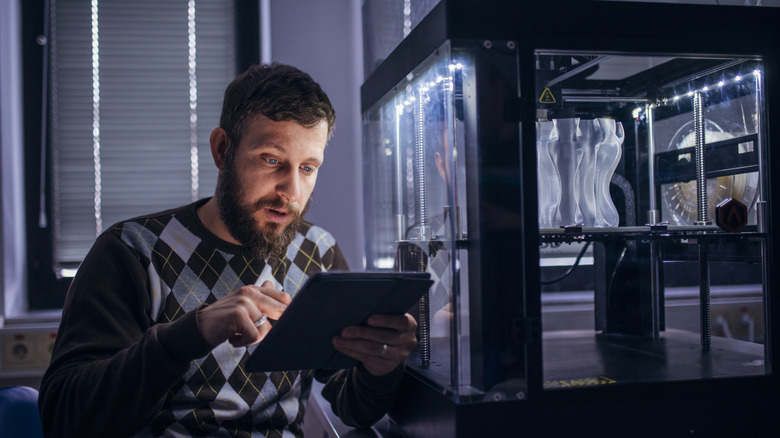
It's all about the size of the space. Bedrooms, offices, and side rooms all tend to be smaller than a living area or open dining room. Even garages and basements often have generous layouts. A big health risk with 3D printers that barely anyone talks about is the release of those harmful gases and particulates. 3D printers can emit something called volatile organic compounds (VOCs), along with very small or fine particles that can make their way into your lungs. Concentrated in a smaller space, you're more likely to be exposed, which is why ventilation is so important.
Another safety factor is that 3D printing jobs tend to go for long stretches of time. You might have a printer working on a project all night or into the next day. With a printer in your bedroom all that time, in such a small space, all the while releasing contaminants, it's not difficult to see why that would be a poor idea. And all of that is before you take into account the potential fire risks of running a printer for long periods around soft materials and fabrics.
In your bedroom you might have lots of pillows, thick blankets, rugs, and so on. The fire risk of a modern 3D printer might be negligible, but it's not zero. The nozzle, the device, and the components can get significantly hot during a print. Having a bigger space with ventilation can help reduce the risks of heat buildup.
If no bedroom, where then?
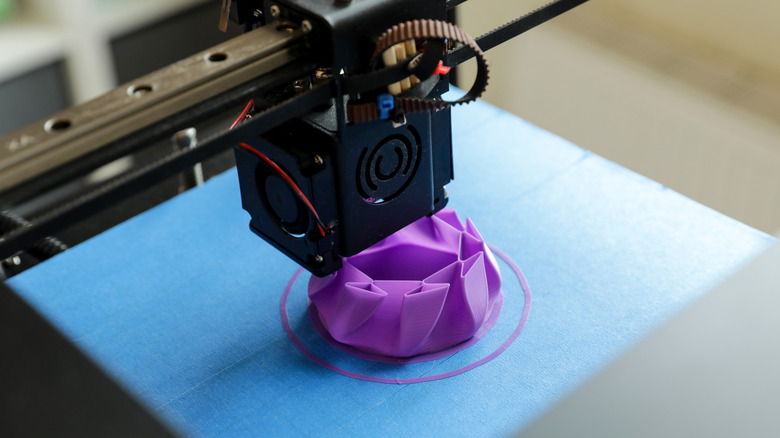
If you have limited space, it's not easy to find a large open area for printing, especially if you're going to have to lug your printer, filament, and gear with you. If you live alone, you might consider your dining room, a separate office, or potentially the living room. If you don't live alone, you'll have to ask your roommates or family if they mind because printers can make a lot of noise. Some other ideas include outside, on a back patio or in a driveway, or a community center if you live in a complex. Public spaces are available, too, called public makerspaces, which you can find in directories for most areas, and at some public libraries, as well.
It's not ideal, but another option is to simply rent an office space or a remote workspace. They have grown more prevalent since people started working from home — they're also sometimes called co-working spaces. If you really want to get creative, you could work out a way to better ventilate a smaller space. But it's likely going to take a few resources and lots of ingenuity.
It would work best with an enclosed printer that you can attach vent hoses and other outlets to. Enclosed printers are typically a little more pricey, but most of the popular 3D printer brands offer enclosed models. It's an involved hobby. Choosing between enclosed and open printers is merely one of a handful of things you need to know before getting started.