

How Long Have Rechargeable Batteries Been Around? The Answer Might Surprise You
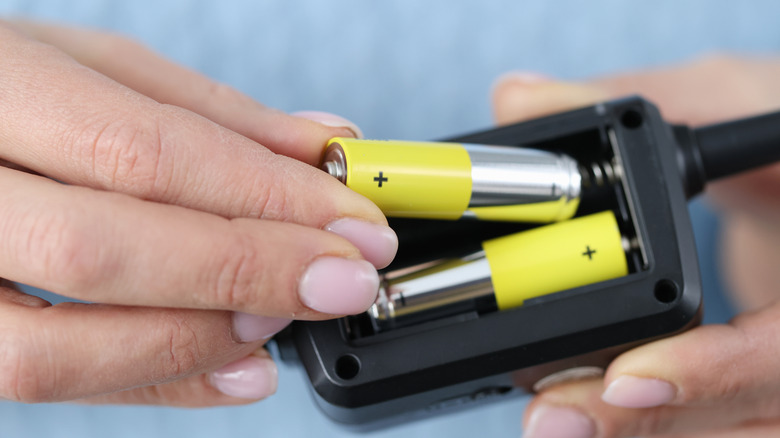
Electric batteries have been around a long time in one form or another, since the 1800s when they were first developed by Allesandro Volta. Many people are familiar with this idea, and some may even know the exact history thanks to schooling or personal studies. Even so, disposable batteries probably seem like a relatively new or recent invention. In fact, you might think they were developed more or less in conjunction with modern electronics. However, when you dig into how long rechargeable batteries have actually been around, you might be shocked to find out the real answer. It turns out rechargeables have existed nearly as long as Volta's original batteries.
A French physicist named Gaston Planté was the first to create a rechargeable battery all the way back in 1859, over 160 years ago. Perhaps even more extraordinary is the fact that his designs, which used lead-acid technology, are still around today. The earliest models consisted of a glass jar containing two pure lead sheet rolls separated by a cloth, which were submerged in a solution of sulfuric acid. The idea has changed a little over time, becoming more efficient through the use of unique alloys and updated designs, but lead-acid batteries are still used in many modern applications. That's because the materials are readily available, and the batteries are both cheap to manufacture and can provide high energy densities with solid duration. You can find lead-acid batteries in vehicles, big and small, industrial machines, and backup power systems, including support for renewable energy storage.
Of course, the old designs were certainly not USB rechargeable like some of today's sets. But their origins, at least the very first of their kind, are one and the same.
Rechargeable batteries have come a long way
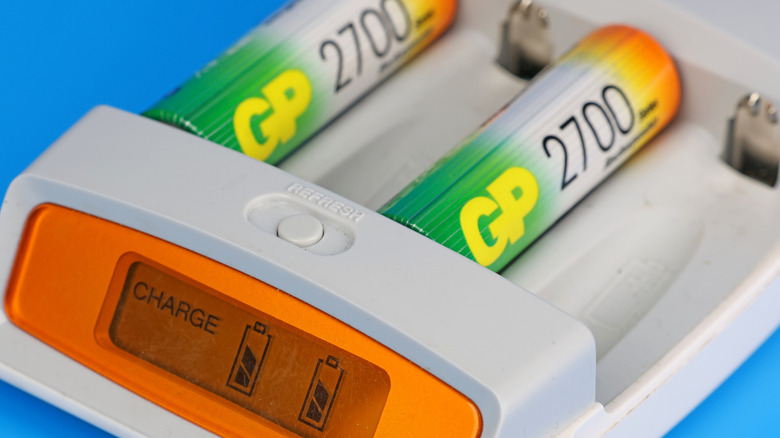
It's quite marvelous to consider that such old technology still has a purpose in today's world. It's also hard to believe that today's rechargeables, which hold up for anywhere from 800 to 1,000 charge cycles each, were inspired by a rudimentary lead-acid setup. That's especially true since Planté's original battery design lost a significant capacity after each charge. It took three months or longer of repeated charging for those basic batteries to build up enough juice for reuse. Can you imagine waiting three months before you can use your set of batteries again for your devices?
Lithium batteries were developed much more recently, starting in the late 1950s, when researchers began experimenting with the material in electrolytes and observing its properties. Later, in the 1960s, the first lithium-powered batteries hit the market. Many variants of the lithium battery have been developed over the years, each using a slightly different chemical composition.
The next question relevant to this information is, why aren't all batteries rechargeable if they've been around so long? There are two schools of thought here, one more banal than the other. The first is that disposable batteries may provide properties that are more conducive to certain use cases, like larger capacities or long-term use in low-drain devices. The other explanation is simply that they're often much cheaper to produce with less complex designs, so they're better for a manufacturer's bottom line.