

How Much Samsung Phones Cost In 2016 Vs. 2026
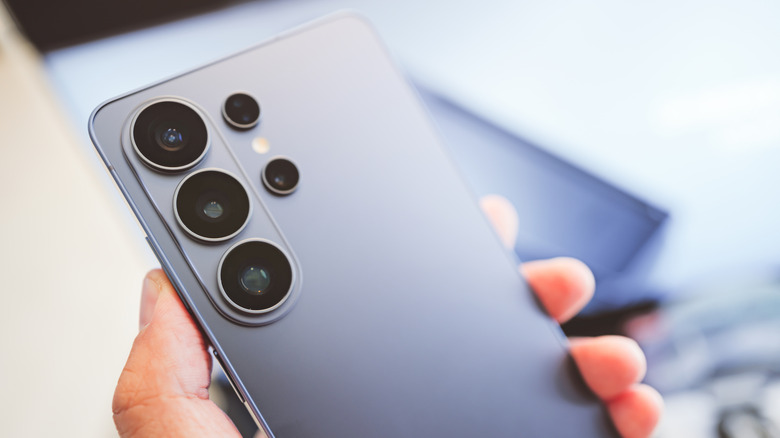
When you consider the cost of gadgets compared to what we had a decade ago, it's almost shocking. Prices in 2026 have skyrocketed; manufacturers have either cut back on hardware upgrades to keep costs down or raised prices to cover inflation. In Samsung's case, phones have nearly doubled since 2016. The Samsung Galaxy S7 and Galaxy S7 Edge were priced around $650 and $750, respectively.
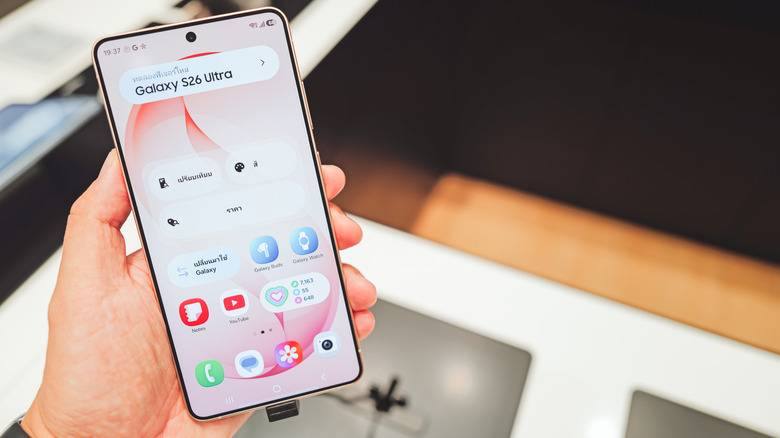
Now, in 2026, the Samsung Galaxy S26 series starts at $900, while the high-end Galaxy S26 Ultra sells for $1300. Looking back at Samsung's budget and midrange offerings in 2016 versus 2026, the pricing is fairly different. In 2016, Samsung had the Samsung Galaxy A3, Samsung Galaxy A5, and Samsung Galaxy J3, priced at $329, $399, and $110-$192 (carrier-specific), respectively. In 2026, the Korean giant's midrange and budget phones, comprising the Samsung Galaxy A57 5G, Samsung Galaxy A37 5G, and the Samsung Galaxy A17 5G are priced at $550, $450, and $250, respectively.
Samsung released the Samsung Note 7 in 2016; it filled a different niche as the most premium smartphone (realistically, more of a phablet), and this entry was famously known for being recalled after its launch. This 2016 phone, on its initial run, started around $834, depending on the carrier. Samsung has long since discontinued its Note lineup aimed at power users; however, it now offers premium foldables that consumers love, including the Samsung Galaxy Z Fold 8, Galaxy Z Fold 8 Ultra, and the Galaxy Z Flip 8, with MSRPs of $1900, $2100, and $1200, respectively.
Why are Samsung phones so expensive now?
The lowest-priced Samsung phone in 2026 is the Samsung Galaxy A17 5G at $250, whereas the cheapest in 2016 was the Samsung Galaxy J3 at $110. These phones are entry-level smartphones. That means they won't be the fastest and may have fewer software features because they don't have the hardware to support them. So you're essentially getting an everyday-use phone that can run lightweight apps fine, but might not run smoothly once you do more.
In 2016, AI didn't exist in the form it does in 2026 — it was mainly basic machine learning (it falls under the same umbrella, but works differently) and cloud-based voice assistants. Since Samsung released Galaxy AI on the Galaxy S24 series, AI has evolved significantly. Part of the cost is creating the hardware that can support it. Plus, with Samsung now promising seven years of updates on newer devices, they have to engineer their phones to handle it long term. Memory costs have also surged since 2016, something the entire tech consumer market has to deal with; this is reflected in the pricing of mobile DRAM, NAND flash memory, and AI chipsets. Then there is the issue of adding new processors, for which top manufacturers like MediaTek and Qualcomm have raised prices that these companies then pass on to the consumer.