

Can You 3D Print A Playable Vinyl Record?
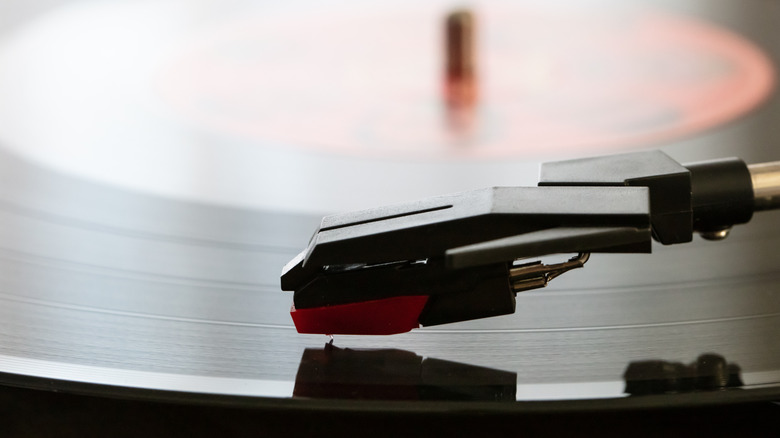
Merging two hobbies that are seemingly on the opposite ends of the spectrum is not uncommon. Take 3D printing, which is now accessible and affordable, as an example. Typewriter collectors are using the technology to make 3D-printed typewriter cases and hard-to-replace components. The same thing is happening in the music community, where audiophiles are starting 3D printing projects that make their collections more enjoyable.
Which may have you wondering if it's possible to 3D-print a playable vinyl record. Yes, it is, even with the more affordable 3D printers. One method, from user GoChee on Maker World, leans on audio editing software, like Audacity, to prepare music for 3D printing. This project involves printing 7-inch records meant to be played at either 78RPM or 45RPM. For the 45, stretching the audio (slowing it down) by 135% ensures smooth playback.
After exporting the audio, you run a Python script to convert the WAV file to TXT. From here, a separate program is used to generate the STL file, which is a model of the record for your 3D printer's software. This will give you everything needed for printing — or slicing as it's commonly referred to in the community. Keep the print speed low for accuracy's sake, and watch your vinyl record being printed.
The catch with this 3D printing project
Making a one-of-a-kind 3D-printed vinyl record may sound like fun, but don't expect much in terms of fidelity. Plenty of people feel that vinyl sounds better than digital audio because it's more alive and natural, but a 3D-printed record is a different story. It's a mess sound-wise due to 3D printers' inherent limitation: They print objects layer by layer up to 100 micrometers, which is much larger than what's required for the precise groove of a traditional vinyl record.
The material difference is also notable. Vinyl is ideal as it's dense with a smooth, glassy surface. In comparison, most materials used in 3D printing are on the soft side, while the surfaces are textured and jagged. In the end, this fun project is great if you're interested in learning more about old-school audio or need a solid conversation starter. But the sound you get is not exactly high fidelity, at least for now.