

Anthropic Owns Claude, But Who Owns Anthropic?
Since its arrival in 2023, Claude has been steadily gaining prominence as an AI chatbot like ChatGPT, while also becoming an increasingly capable AI agent for software development and business productivity. Its rising profile was turbocharged in September 2026 when Anthropic, the San Francisco-based company behind Claude, saw one of its researchers, Jacob Coxon, resign with an alarming warning that some in the AI industry believe the technology could wipe out humanity by the end of the decade if proper safeguards aren't put in place. Instead of dismissing Coxon's comments, Anthropic's head of alignment science, Evan Hubinger, went further, estimating that the chances of AI causing human extinction by 2036 are greater than 10%. With growing attention around Anthropic, you may be wondering who actually owns the company. Among the most prominent investors are Amazon and Alphabet, but as you'll see, the ownership of Anthropic extends well beyond these two tech behemoths.
Founded in 2021, Anthropic is owned by a broad group of shareholders rather than by a single company. Alongside Amazon and Alphabet, its backers also include a range of venture-capital and institutional investors, among them GIC, Coatue, Sequoia Capital, Founders Fund, BlackRock, Blackstone, and Fidelity. Anthropic's founders and employees also hold shares. But knowing who the shareholders are doesn't necessarily tell you who's pulling the company's reins. In fact, its major outside investors don't appear to have sole control over the company's board, while a Long-Term Benefit Trust has the power to appoint a majority of directors. The AI company is privately held, and while some investors and individual shareholders have been reported, its precise overall ownership breakdown isn't publicly known.
Anthropic's 'experimental' corporate structure
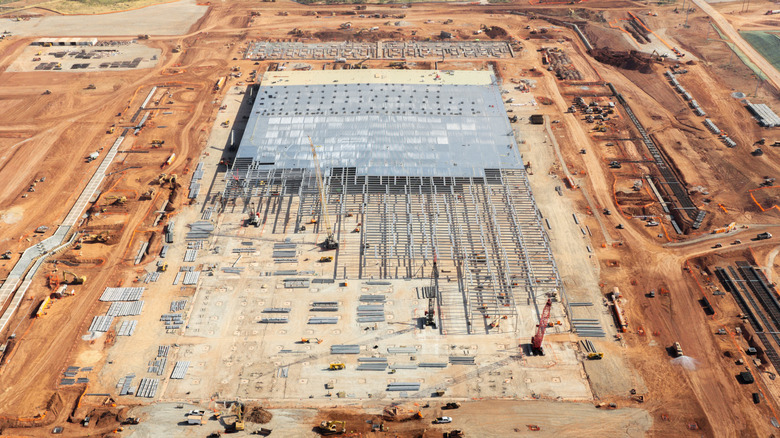
Amazon has poured $13 billion into Anthropic to date, with another $20 billion potentially to come. But despite putting such huge sums of money into the AI company, Amazon doesn't necessarily get to call the shots. As we've already pointed out, ownership and control aren't the same thing, and Anthropic has an unusual governance structure designed to keep the company's long-term mission from being dictated solely by its investors.
At the heart of that structure is the previously mentioned Long-Term Benefit Trust, an independent body created to help protect Anthropic's interests well into the future. Investors do have representation on the board, but the Trust's role means they don't have sole control over its makeup, a factor that makes it a somewhat unusual arrangement considering the large amounts of money being invested. Indeed, Anthropic itself describes the design of its corporate structure as experimental.
The setup essentially reflects Anthropic's status as a Public Benefit Corporation, a corporate structure that allows the company to pursue its public-benefit mission alongside the interests of its shareholders. The Trust, according to Anthropic, is designed to insulate its mission from short-term commercial and shareholder pressures. It means that despite a range of investors putting billions into the AI company, they don't necessarily get the final say over the direction that Anthropic takes.
The big AI gamble
Despite little in the way of profits so far, major companies are continuing to bet colossal amounts on AI outfits like Anthropic, OpenAI, and Elon Musk's xAI, in the expectation of massive returns. The AI race has created huge incentives for companies to secure an early position among the leading developers, which is why some backers are hedging their bets by investing in more than one. Success could mean strong demand for AI-powered products that transform the workplace, as well as access to advanced AI models, vast cloud-computing capacity, and an influential position in shaping the next generation of computing and technology-based services.
The companies financing the likes of Anthropic and OpenAI are committing tens of billions of dollars to AI infrastructure like chips and data centers that are needed to develop and also run increasingly advanced AI systems. This makes what's happening markedly different from the traditional venture-capital model of backing a promising-looking startup and waiting for it to grow.
But there's a huge risk that these investments fail to pay off. Anthropic and its competitors are under monumental pressure to generate enormous profits to justify the huge bets, and investors and infrastructure providers could be left exposed if demand or revenue falls short. And, oddly, for all of the billions being invested, nobody really knows if the greatest danger will come from AI failing, with potentially dire economic consequences, or from humanity inadvertently creating something that could bring about its own demise. We can only hope that neither comes to pass.