

New 3D-Printed Cubes Can Cool Your Home Without Any Air Conditioning
Air conditioning (AC) can cost a lot of money to run, especially in places like Florida, where I live. But not everywhere has it. Only 20% of Europeans have AC units in their homes, with that number around 15% globally for hot climates, according to the International Energy Agency. Moreover, a Yale study found that 57% of heat-related deaths can be prevented by AC. But air conditioners are viewed as counterproductive to climate change efforts, can be expensive to install and run, and are not always conducive to home designs and architecture in places like Europe.
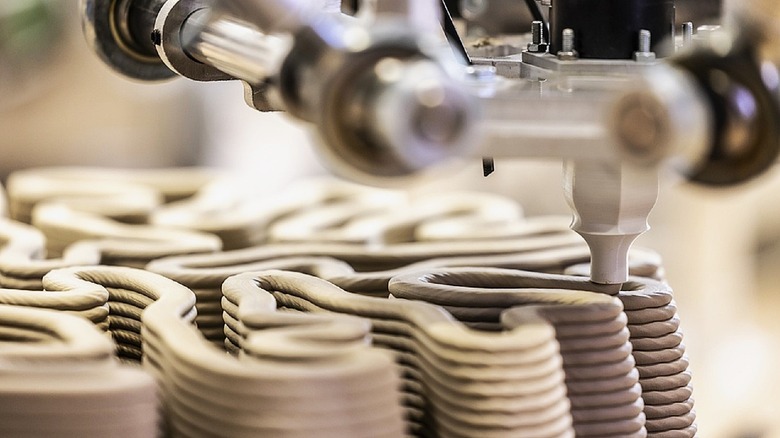
Next-gen European AC technologies are on the way. However, researchers from the Institute of Architecture and Media at Graz University of Technology (TU Graz), in Austria, have a new, innovative answer: 3D-printed ceramic cubes. The cubes employ an age-old process called passive, or evaporative, cooling. When distributed, they can reduce heat for interior spaces and lower the ambient temperature when placed outdoors. Made from a ceramic clay, the 3D-printed cubes have a porous design which creates a large surface area.
Capillary properties allow the cubes to absorb and store moisture in a relatively small space. These cubes could be built into walls, large structures, or as free-standing units. The in-house 3D printer the team is using, an A.R.G.O.S. 140200, works with earth-based materials. During a field test in a hot attic, the cubes reduced the internal temperature of the space by nearly 13 degrees Fahrenheit, creating an immediately noticeable cooling effect in the process.
A cooling cube demonstration
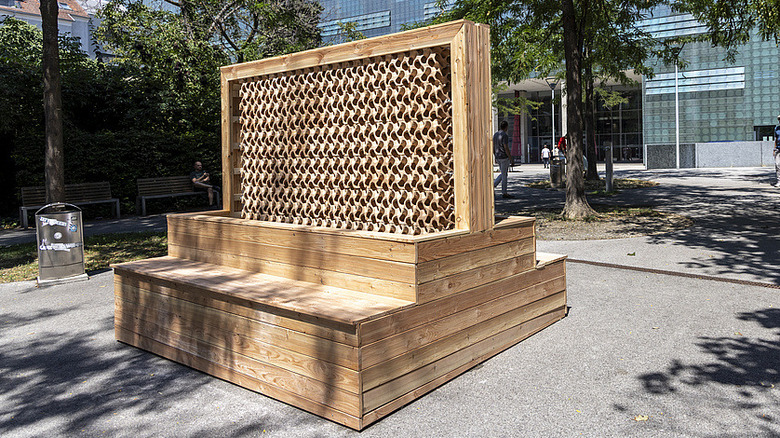
Currently, there are outdoor demonstration cube installations set up at the Museum of Perception in Graz, Austria and on the TU Graz campus. The cooling cubes are housed inside a large wooden frame, measuring about 6.5-feet square. The unique porous designs allow the installation to absorb moisture, which spreads throughout the cubes via capillary forces. This is the same process by which trees and plants move water from the ground up into the plant. Given how well these 3D-printed cubes have been shown to lower temperatures, they could be an excellent alternative to traditional air conditioning.
Particularly considering there is no ongoing need for electricity. TU Graz is currently evaluating how to develop the designs for commercial sale. There are other technologies like this in the works. One solar-powered cooling solution, that leverages ammonium nitrate, could work without requiring electricity. Adding a fan to the mix is certainly a cheap solution to cranking the AC. But what's perhaps most striking about the TU Graz method is that it can be done with commonly available materials and accessible 3D printing techniques, which may help keep overall costs down.