

Who Makes GPUs Besides Nvidia And AMD?
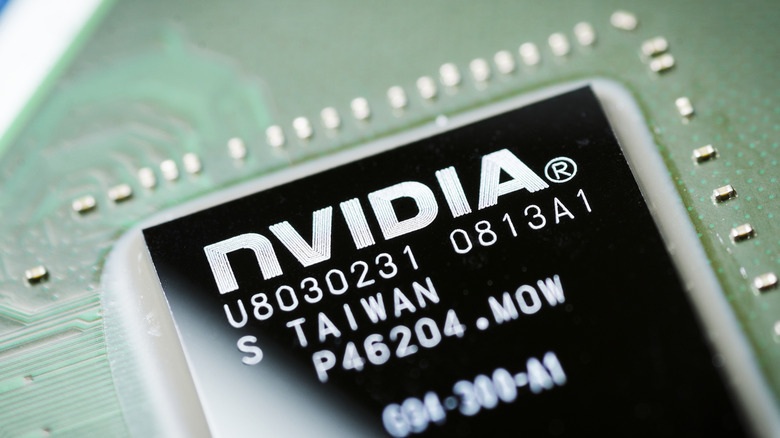
When you think about graphics cards, the first name that pops into your head is likely Nvidia. The company makes up a massive chunk of American 401(k)s and stock portfolios with a market cap in the trillions — and it's also practically the only game in town, notching about 95% share in today's GPU market. Dwarfed (but not forgotten) is AMD and its Radeon GPUs. They come in discrete cards, sure, but they've also found plenty of success as integrated GPUs in all sorts of computing surfaces, including mini PCs, handheld consoles, and laptops.
After second place comes, well, the rest of the bunch. And they really are the rest. Intel GPUs output decent power for the money, but the Arc division has never been a stable venture. Chinese upstart Moore Threads might have something competitive to offer down the line, but it isn't at that point yet. Apple, Qualcomm, MediaTek, and Arm all design their own chips, too, but since they're proprietary at some level or another, they're functionally excluded from being part of the discrete card party in the consumer market. The truth of the matter, however, is that the party barely has room for two.
Intel is the biggest alternative, but it can't compete
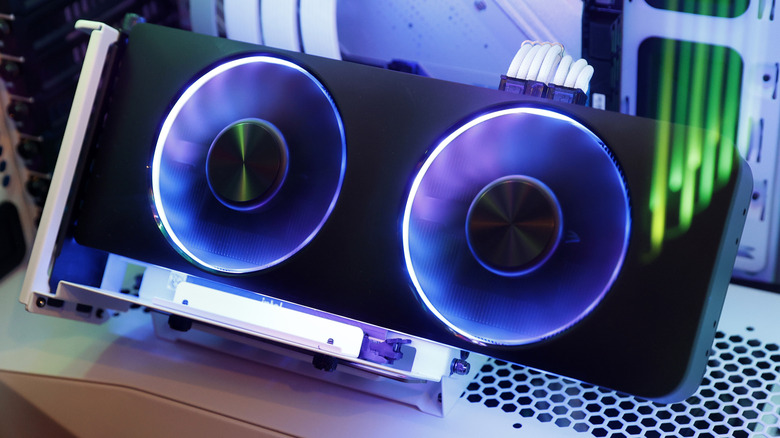
Intel's second-gen Battlemage cards have been praised for their low prices and the relatively generous specs they sport compared to comparable AMD and Nvidia cards. The consumer-grade Arc B580 and B570 aren't the only Intel cards with devotees, and some buyers have taken to the company's newer Arc Pro cards, which are geared toward workstations for technical and creative professionals.
That said, the Arc effort was troubled by some delays in its 2022 launch, and Intel's prior attempt to break into the GPU market with its Larrabee lineup — a bona fide discrete GPU flop — was also plagued with delays, performance issues, and an outright cancellation. Even after the Arc GPUs finally shipped, they had to be fed more than a year's worth of driver updates to eke out decent performance across a satisfactory breadth of titles. To make matters worse, these cards were shipped into some of the weakest GPU market conditions since 2005, which came about in part because of the COVID-era crypto-mining craze.
Speculation about Arc's demise has been around from the start, but Intel's Arc line has been riding high since Nvidia's $5 billion Intel investment in 2025. Nvidia dished out those funds, however, for Intel to develop new CPUs with integrated RTX GPUs — which would potentially displace Intel's own integrated GPUs, such as the Arc 130 and 140. While the company has insisted that it will continue to offer Arc products, the current install base doesn't seem totally convinced yet. For instance, in a Reddit thread on r/IntelArc, Alchemist users have expressed concerns about a lack of optimization for games running on newer engines.
What about other GPU makers?

Technically, "chipmakers" don't actually fabricate the chips they design. That job is left to the foundries at companies like TSMC and Samsung. You may have noticed that many GeForce and Radeon cards don't bear Nvidia or AMD branding at all, and they're instead associated with brands like ASRock, Gigabyte, and Sparkle. That's because these companies, which are known as "board partners," take chips, put them on circuit boards along with memory and other components, slap on cooling stacks, and enclose it all in a chassis. You may recall EVGA as a prominent producer, too, before it terminated its graphics card business after its relationship with Nvidia had soured.
Apple does design its own GPUs, but they come part and parcel with the chipsets they're on, which generally stay embedded in their original computers. Many mobile devices and some laptops feature integrated GPUs from either Qualcomm or MediaTek. The latter uses reference designs from Arm, a leading mobile chip designer, while the former uses its own custom blueprints. Samsung uses AMD's RDNA graphics architecture in its Exynos mobile chipsets. Given these brands are focused on making integrated chipsets on mobile devices, whose designs and form factors differ from those of dedicated GPUs, it's unlikely they'll be making desktop cards anytime soon.
Then there's Moore Threads from China, which took root in 2020 and came out with its first consumer-grade card in 2022. The MTT S80, which was designed for a domestic audience, lacked DirectX11 support until 2023, and it only gained DirectX12 support with a beta driver update in 2024. The card is compatible with only a handful of games, and recent benchmarking from a TechPowerUp forum moderator shows that it struggles to compete with current-gen cards.
In the end, Nvidia took the biggest piece of the pie
Nvidia has held a majority share in graphics card shipments since 2006. As the market's runner-up performer, AMD had a respectable share of the market up until the mid-2010s, following aggressive competition from Nvidia. Now, AMD holds less than 10% market share, but it's also been making strides against long-dominant Intel in the CPU race. Team Green's dominance has less to do with gaming or even graphics than ever before, though, and the roles of artificial intelligence, data centers, and crypto-mining in its revenue stream predates the global pandemic. The SEC even fined Nvidia in 2018 for misleading investors by misrepresenting demand from miners as demand from gamers.
Nvidia's dominance was largely made possible thanks to its Compute Unified Device Architecture (CUDA). Introduced in 2006, CUDA enables an Nvidia GPU and its associated superfast infrastructure to be used with any sort of code, not just for shaders or tracing in games. The architecture was even useful in large-scale NASA simulations and other academic endeavors, and it also proved to be quite the perk for Bitcoin and Ethereum enthusiasts using their GPUs for mining crypto, not just playing games. AMD pushed the Radeon Open Compute platform (ROCm) for its own graphics cards in 2016, but the standard requires more technical knowledge and nets less productivity on a whole than CUDA does, and there's little evidence that ROCm has contributed much to Radeon's card sales.