

The 10 Biggest GPU Flops In History

Depending on how you look at it, GPUs are one of the most important inventions in human history. What started out as a way to accelerate 3D graphics has turned into the backbone of high-performance computing. In particular, modern machine learning, which includes AI chatbots like ChatGPT, all need GPU technology to work. It's all fueled by GPUs in data centers rapidly burning through their lifespans.
But this enormous AI empire was largely funded by regular PC owners buying GPUs for work and play. If we're being honest, it was mostly play, as gaming enthusiasts were always on the hunt for higher resolutions, more realistic graphics, and smoother frame rates. Since the first 3D accelerator cards hit the market, it's been an ongoing war between GPU companies to bring the hottest graphics (sometimes literally) to market each year, and many of these companies have been casualties in the intervening time.
Making GPUs is hard, and sometimes a company releases a new model to the world, only for it to crash and burn. Sometimes so badly it can put you out of business. Deciding which GPUs qualify for inclusion in the biggest flops in history is largely a subjective process. This isn't a ranked list for that reason, and there are surely cards that you think need to be here that aren't. That said, few people could argue these chips didn't need more time in the oven.
Intel i740 (Intel, Feb 1998)
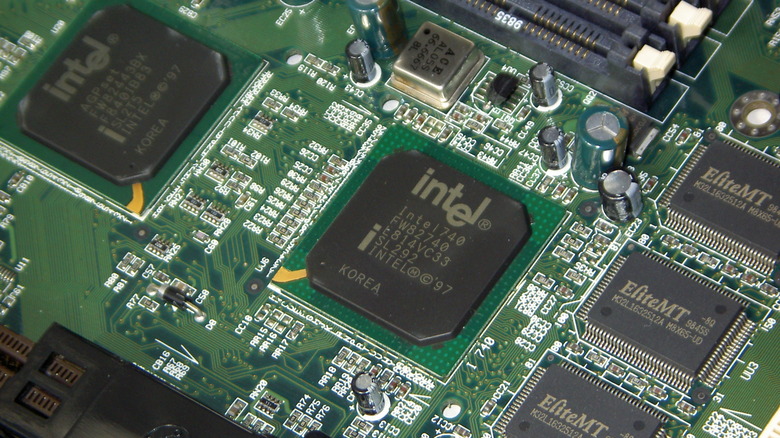
Intel's best known as a CPU giant, but the company has made several attempts at entering the dedicated graphics card market. Its Intel Arc GPUs were off to a rough start when the first benchmarks appeared in 2022, and rumors that Arc has been canceled are constantly swirling around. However, the Arc series is practically a runaway success compared to the 1998 Intel i740 cards.
This was an early card for the Advanced Graphics Port (AGP) technology and was the next step over PCI (Peripheral Component Interconnect). Instead of using a generic bus, AGP offered a dedicated connection for graphics cards, acknowledging how much bandwidth 3D accelerators needed. The Intel i740, which was the product of Intel's purchase of Chips and Technologies, had quite a bit of anticipation. Intel had a good handle on 2D graphics, and Intel also pulled in the expertise of a company called Real3D to develop the technology.
When the card finally came to market, it was trounced by the 3dfx Voodoo 2, and despite a reasonable price, no one who really cared about video game performance would want an i740. One of the problems with this card was that it used AGP to access system RAM as overflow in case it ran out of texture memory. The card came with between 2MB and 8MB of VRAM, which was less than the Voodoo 2's 8MB or 12MB options. Using this AGP memory chip tanked performance and sales.
Matrox Parhelia (Matrox, June 2002)
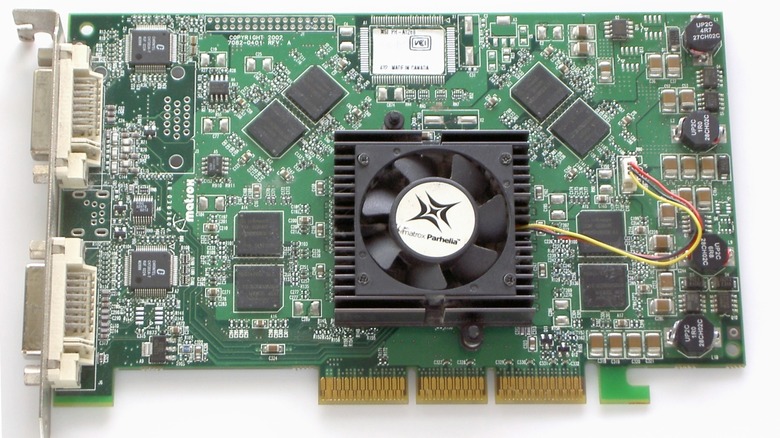
Sometimes, you go out not with a bang, but with a whimper. Matrox is still around and still dealing in graphics hardware, but the Matrox Parhelia was its swansong insofar as consumer graphics cards are concerned. Matrox had released respected graphics cards over the years, and the Parhelia had been hyped up quite a bit before its release, but once the card was out, the reviews were lukewarm at best.
Reviewers at the time were not kind. While no one came out and called the Parhelia a bad card, it was just so perplexingly below-average. Perplexing, because on paper it had better numbers than the NVIDIA GeForce 4 Ti 4600 and ATI Radeon 8500. It had about 25% more transistors than either of its main competitors. It had far more memory bandwidth and was a whole DirectX generation ahead, with twice the bus width.
Yet the other two cards offered faster GPU and memory clock speeds, and when it came to actual 3D performance in games, the Parhelia was often behind, or just a little faster than the Radeon. That doesn't sound so bad until you consider that the $400 Parhelia cost twice as much as the Radeon and $50 more than the GeForce at the time. The only killer feature of the card was its support for a triple-monitor setup, but later it would turn out that Matrox wasn't exactly honest when it claimed this was a DirectX 9 card! $400? Ouch!
NVIDIA GeForce FX 5800 Ultra (NVIDIA, Jan 2003)
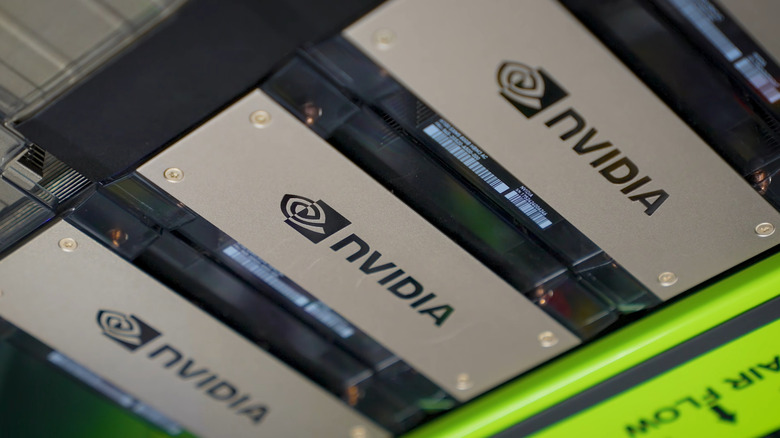
Modern PC gamers who think their GPUs are too hot and too loud have never heard the glorious, ear-piercing roar of a GeForce FX 5800 Ultra. You can enjoy this sound for yourself by just watching a clip of the card on YouTube. Nicknamed the dustbuster by its adoring fans, the FX 5800 Ultra was the top-of-the-line card from the NV30 GPU family, and it's likely one GPU generation NVIDIA would prefer we didn't bring up.
This whole family of cards had problems. As a poor high-school student at the time, I could only afford the entry-level FX 5200, but that was such a piece of junk that I sold it and bought the equivalent ATI Radeon instead.
Contemporary hardware reviewers slammed the 5800 Ultra for being loud, hot, and expensive, but also for offering poor image quality. NVIDIA had reduced the shader precision for the whole NV30 family on an architecture level in a bid to speed up performance. Presumably hoping no one on their low-res retro CRT displays would notice. Sadly, anyone with eyeballs noticed, and to make it worse, the intended performance gains weren't universal. Game developers had to code their games to take advantage of the performance-enhancing NV30 architecture. NVIDIA would quickly release the FX 5900 (NV35) with a tweaked architecture to address the issues of NV30, but the other problem at this time was strong competition from the opposing Radeon card, though that wouldn't last.
Intel Larrabee (Intel, planned 2010; cancelled)
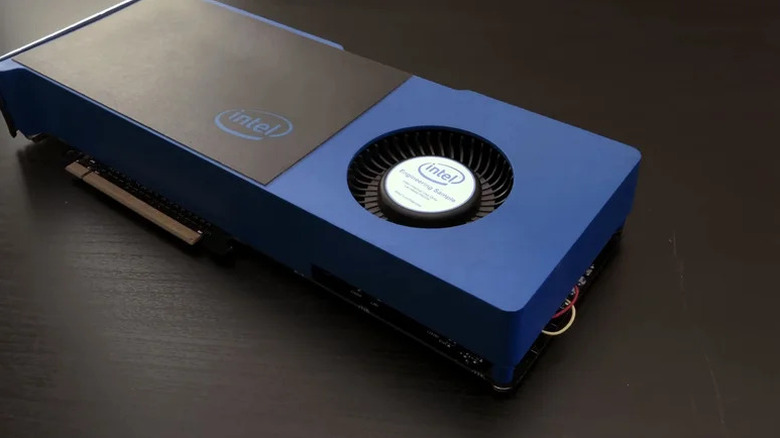
Not deterred by its failure with discrete graphics cards in the late '90s, Intel was cooking again. This time, instead of following mainstream GPU trends, Intel was going to lean on its CPU expertise and reinvent GPUs practically from the ground up.
Larrabee is an architecture based on Intel's x86 CPU technology. It would have a high core count, possibly more than 16, which at the time was a wild number. Today this sounds quaint, when we have as many as 256 cores in one CPU, and my humble laptop has 24 CPU cores. For context, modern GPUs have thousands of simple processors that work in parallel. Nonetheless, at the time Larrabee sounded very exciting, since each of those modified x86 CPU cores had a ton of theoretical processing power. Which, on paper, would blow every other graphics card out of the water.
I distinctly remember reading multi-page magazine articles about Larrabee back then and genuinely thinking we were about to experience a revolution. However, it turns out that Intel jumped the gun on announcing Larrabee. It was a mistake to reveal a rough launch window, and claims about Larrabee's performance were all theoretical. As development went on, it became clear that Larrabee would not be easy to pull off. The business brains realized that the card could not be sold at a price anyone would find appealing, and ultimately it was canceled. However, Larrabee's technology still contributed to Intel's later CPU technology.
ATI/AMD Radeon HD 2900 XT (AMD, May 2007)
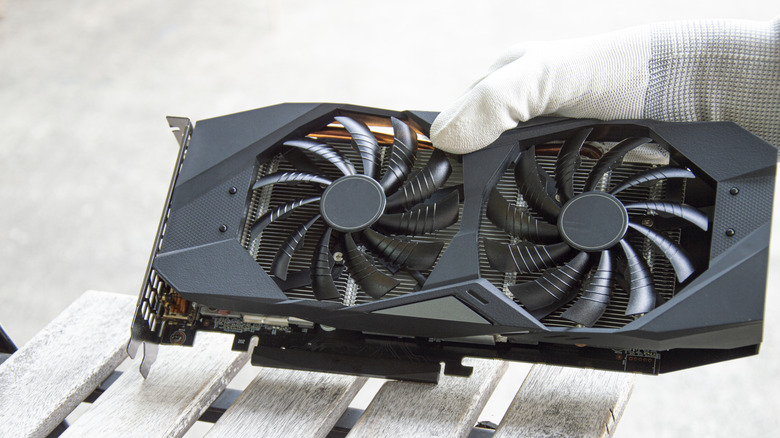
It's easy to think of ATi as the perpetual underdog in the world of GPUs, and that perception never changed when the company was bought by AMD, itself the perpetual CPU underdog. Although, these days AMD is actually giving Intel a beating on the CPU front, with numerous monster chips on our list of the most powerful desktop CPUs.
However, the glass-half-full view is that ATi (and later AMD) offered an unbeatable price-to-performance ratio. ATi's entry-level and mid-range cards were often unbeatable on the bang-for-buck front, but at the high end NVIDIA flexed its engineering expertise. This issue arguably reached its peak with the ATi Radeon HD 2900 XT. Another paper monster with a massive 512-bit bus and DirectX 10 support.
The problem was that this card was late. By the time it arrived, NVIDIA's 8800 cards had blown the socks off high-end gamers. The 2900 was still hanging around as a budget alternative after the 3000-series successor cards were released, but the NVIDIA 8800GT was a bit faster and, most importantly, not hot, loud, or power-hungry. The 8800GT is what I actually bought back then, and that card stayed relevant for over a decade. Today, AMD has effectively abandoned the high-end GPU market, choosing to compete at the low and mid-range instead. The 2900 XT was one of the major gut punches that brought the company to that point over the years.
NVIDIA Titan Z (NVIDIA, May 2014)
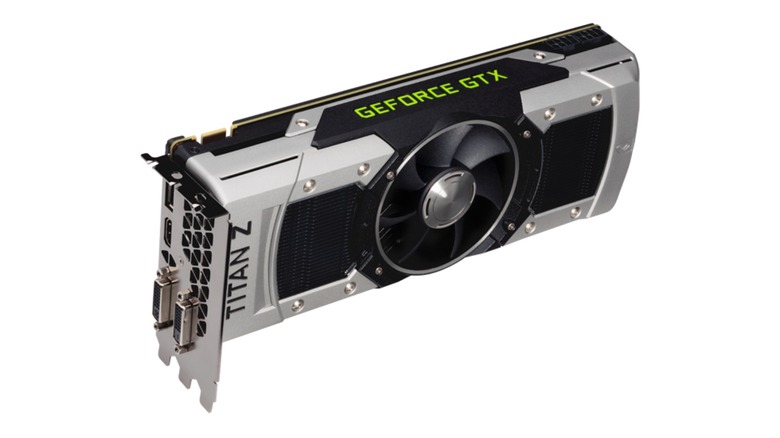
This is the first card on the list new enough to still technically be usable on a modern computer, but you wouldn't want to, even if you could. The NVIDIA Titan Z launched at a ludicrous $2,999, and maybe that would have been fine, except the hardware was nowhere near worth that much.
This is an exotic dual-GPU, triple-slot card that shares 12GB of VRAM, with 6GB allocated to each GPU. It uses NVIDIA SLI technology that allows the GPUs to share the workload. In theory, this means you can achieve higher performance levels than the best single GPU can offer. In reality, SLI was finicky, didn't give performance improvements that matched the cost, and often introduced new problems like microstutter or visual artifacts.
Even worse, AMD's R9 295X2 dual-GPU card was literally half the price for pretty much the same performance. So even if you were mad enough to want a dual-GPU setup, you'd have to be especially divorced from reality to choose the Titan Z. It wasn't long before severe price cuts were applied to the MSRP, but even then you'd get better results from combining two separate cheaper cards in SLI. The Titan Z just had too little memory, and the GPU clock speed was a problem. In 2021, NVIDIA discontinued support for SLI, and if you're a gamer, there's simply no need for dual graphics cards anymore. The Titan Z also happens to be the last dual-GPU card NVIDIA ever released.
NVIDIA RTX 4080 12 GB (NVIDIA, planned Oct 2022)
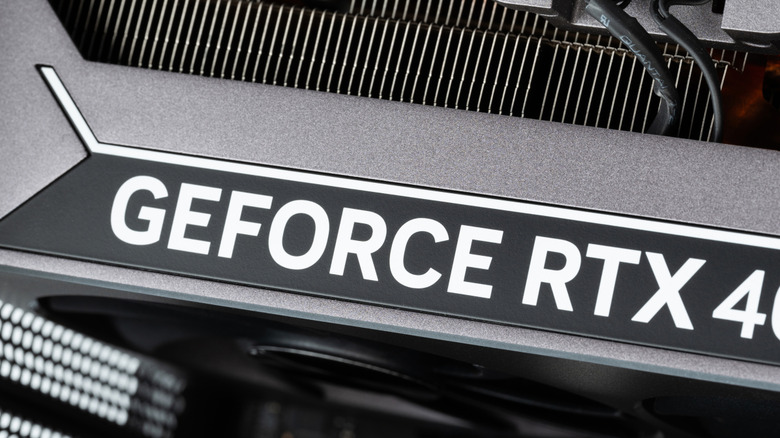
As far as we can tell, this is the only GPU ever to flop so hard that the company had to "unlaunch" it. That's right. Presumably, there were already RTX 4080 12GB cards sitting in a warehouse, ready to go, when NVIDIA decided the backlash and PR disaster surrounding the card had gone over the line and it was better to absorb the cost of a rebranding exercise.
So, why was the RTX 4080 12GB so controversial? The simple answer is that there were going to be two RTX 4080 cards: the RTX 4080 16GB and the RTX 4080 12GB. To the average consumer, it's reasonable to think that these two cards are identical in every way except for the amount of VRAM. However, if you look at the actual spec sheets, these are two completely different tiers of cards! The 12GB model has a much narrower memory bus and only 7680 CUDA cores versus 9728. This effectively made it around 30% slower than the 16GB variant. The card was later released as the RTX 4070 Ti, at a lower launch price. With a new name and new price, this version of the card was well-received.
AMD Radeon VII (AMD, Feb 2019)
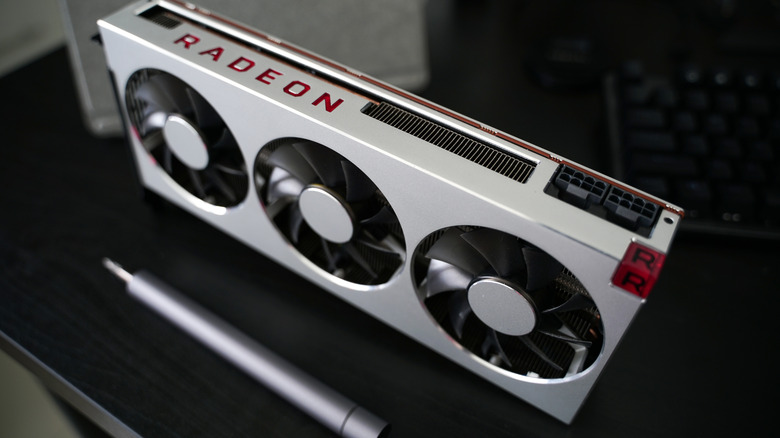
It turns out it's possible to release a product that's technically cutting-edge, but also somehow behind the times. While that sounds like an oxymoron, AMD managed this feat with the Radeon VII. This card is the first 7nm GPU, which should mean more performance with less power and noise. Except the Radeon VII was loud and power-hungry. It also made use of 4096-bit High Bandwidth Memory (HBM) with an enormous (for the time) 16GB VRAM allocation.
The card was priced to go up against the NVIDIA RTX 2080, and on paper it looks like the Radeon should smash it. The 2080 only has 8GB of VRAM and a 256-bit bus. However, even in 4K testing, where that wide bus should make the most difference, the Radeon VII was merely on par with NVIDIA's card.
Usually, this would still be a decent situation to be in. At least you're not worse or more expensive than the competition, so the product is still viable. Except, the 20-series did something completely new that AMD had entirely missed in its plans. On an NVIDIA card, "RTX" has a specific meaning. These cards have special ray-tracing and AI silicon that allow for extremely advanced lighting effects and machine-learning techniques to upscale and smooth out image quality. The Radeon VII did not have these features, and so immediately looked old-fashioned by comparison. Even worse, RTX cards kept getting better for free, as NVIDIA improved the algorithms that could run on that specialized hardware.
AMD Radeon RX 6500 XT (AMD, Jan 2022)
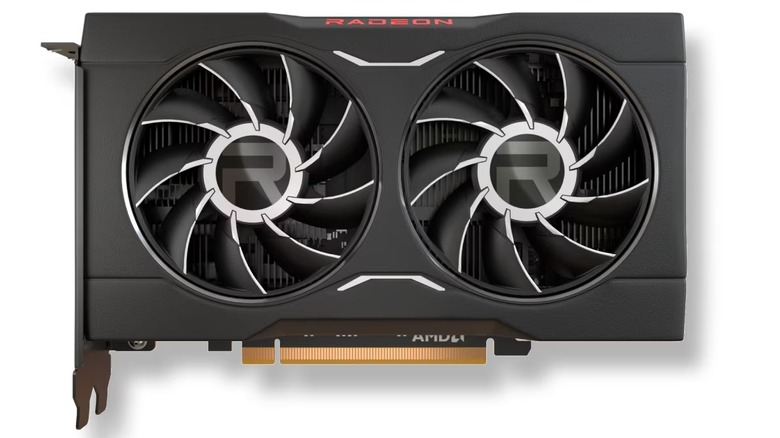
You might notice that this AMD GPU has "RX" in its name, which indicates that AMD did eventually add hardware ray-tracing, but that fact doesn't really apply to the 6500XT since this GPU is so cut down compared to the other RDNA 2 cards that you can't even make use of this feature. This strange little card was released in the middle of a massive GPU shortage with extreme consumer demand for anything affordable, yet even these special circumstances could not make this card enter the shopping carts of gamers. In a review by CNET, the outlet hilariously referred to it as "the moped of gaming GPUs," and that tells you almost everything you need to know.
So, what exactly was the issue here? First, 4GB of VRAM in 2022 was completely inadequate for basic 1080p gaming. So even as an esports card, it made no sense. Secondly, the card could only use four PCIe lanes with its 64-bit bus. This was barely tolerable when using PCIe 4.0, but customers in this price bracket could very well be using a PCIe 3.0 motherboard, and then four lanes would be a bottleneck even for the pokey GPU on the 6500 XT.
The NVIDIA GTX 1650, a popular GPU we recently recommended as ready to replace, soundly beats the 6500 XT. A card that could be found cheaper, especially used, since it had sold so many units to begin with. Therefore, AMD had effectively released e-waste.
3dfx Voodoo 5 6000 (2000)
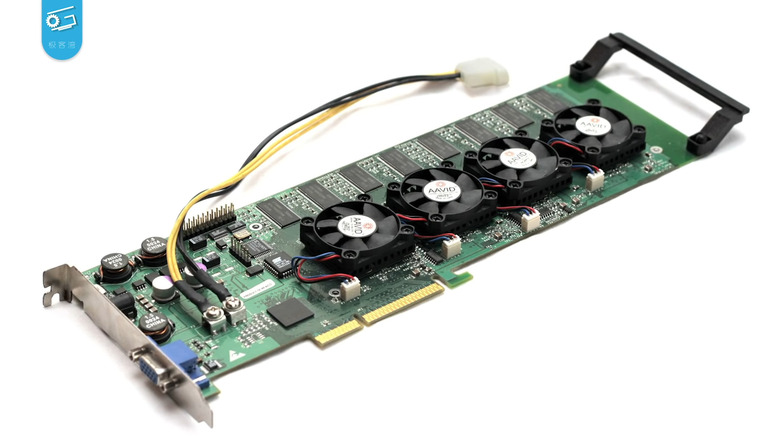
This last GPU is the stuff of mythology. There is no final retail version of this card, since very few prototypes and test cards were ever made. 3dfx was a graphics giant that had taken the PC market by storm with its original Voodoo 3D accelerators.
However, NVIDIA's arrival proved a tough nut to crack for 3dfx. With each new generation of Voodoo card, it became clear the company couldn't figure out how to compete. The Voodoo 5 6000 would be the ultimate card that could go head-to-head with the fastest NVIDIA competition, but it was ridiculously complicated. This card had four processors, each with 32MB of VRAM, making this the first 128MB graphics card. Voodoo used SLI (not to be confused with the totally different NVIDIA SLI) to split the workload between the cards.
This is also the first card we could find that needed external power, since its 60W TDP was in excess of the AGP slot spec. Today, external power is the norm for GPUs, but if this card had eventually come to public release, very few people would have PCs that could accommodate its size or power requirements. Making this card cheap enough was also deemed infeasible. Some of the few units made have entered private ownership. In benchmarks of these units, the Voodoo 5 falls slightly behind NVIDIA's single-GPU GeForce 3. So 3dfx made the right choice, and the tech lives on since the company was bought by NVIDIA.